

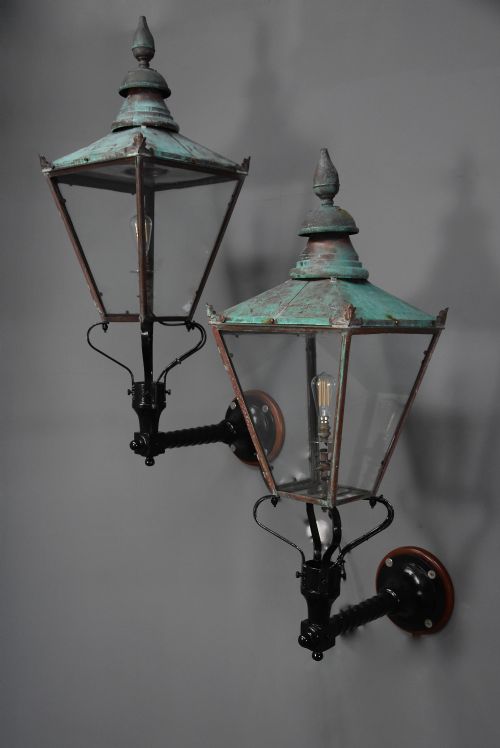
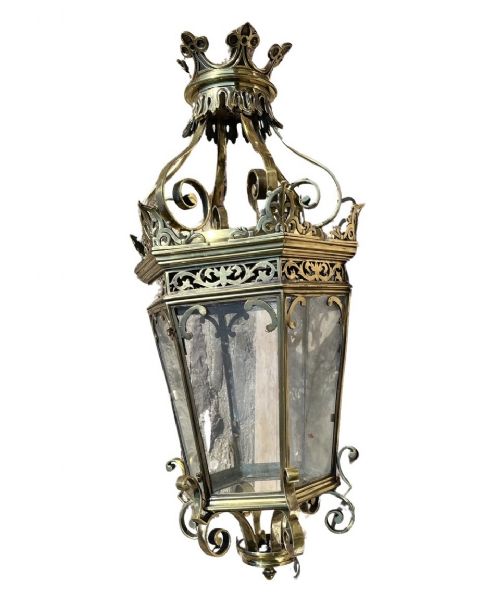


Large Glazed Lantern
A large glazed lantern anchors a hallway or porch with presence, offering generous light through glass panels.
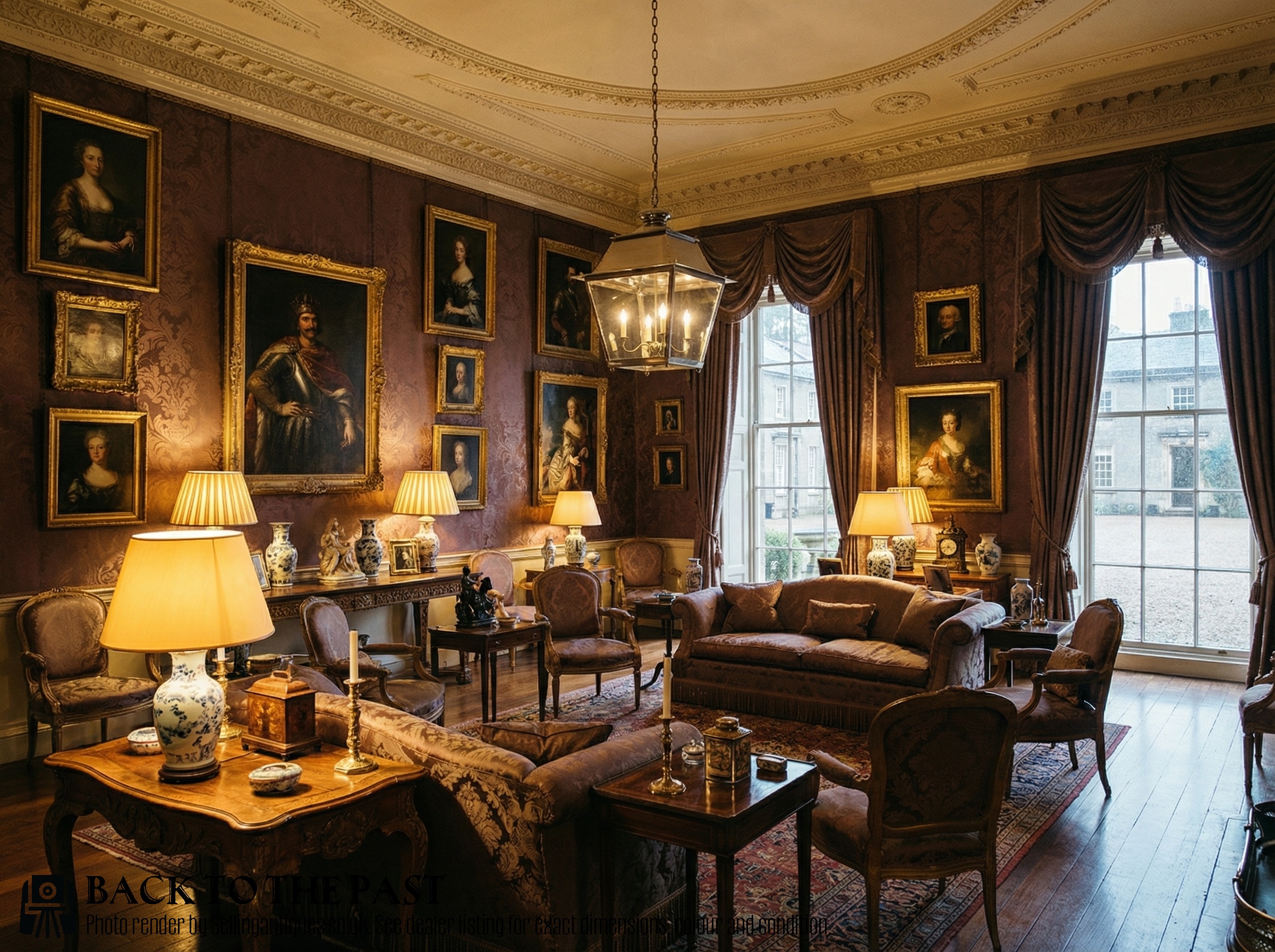
Large Glazed Lantern
A large glazed lantern serves as a prominent architectural fitting designed to light hallways, porches, and exterior walls. Buyers search for these pieces to bring substantial scale and character to high-ceilinged spaces.
The selection ranges from hexagonal brass hall pendants to copper street lanterns and heavy wrought iron wall fixtures. French chateau, industrial, and Gothic revival styles appear frequently across the inventory.
Originating from periods spanning the Victorian and Edwardian eras into the early twentieth century, these lights display diverse regional designs. French gilded bronze and English brass examples dominate the available forms.
How they were made
Manufacturers built these lanterns using sturdy metal frames of brass, copper, steel, or wrought iron to support heavy glass panes. Brass and copper components often received detailed casting or spinning, while iron frames relied on blacksmith forging.
Glass panels include bevelled and flat panes secured within metal channels, sometimes featuring hinged doors for internal access. Gilded bronze and silvered finishes added decorative lustre to formal hall and hanging lanterns.
The inventory spans the Victorian and Edwardian eras through to the 1930s.
What varies in quality
Quality rests in the weight of the metal gauge, the crispness of casting detail on mounts, and the integration of structural brackets. Superior examples utilise heavy cast brass, thick wrought iron, or substantial copper rather than thin pressed sheet metal.
The treatment of the glass and framing joints distinguishes finer pieces, where bevelled panes fit snugly into rebated metal channels. Original surface patination and robust hanging loops also elevate the integrity of the lantern.
REVO Leicester
The Large Glazed Lantern Glossary
- Bevelled glass
- Glass panes with angled edges ground down to catch and refract light distinctively. This technique adds depth and a decorative sparkle to the lantern body.
- Hexagonal form
- A six-sided structural layout frequently utilised in hanging and hall lanterns to distribute illumination evenly. It offers a more complex silhouette than simple square or round designs.
- Porch lantern
- A weather-resistant lighting fixture mounted externally beside a doorway or within an open porch. These pieces utilise robust copper or iron construction to withstand outdoor conditions.
- Gilded bronze
- Bronze metal treated with a thin layer of gold leaf or gold powder for a luxurious metallic finish. It appears predominantly on finer French interior hall lanterns.
- Wrought iron
- Iron beaten and twisted by hand into decorative structural shapes while hot. This material provides immense strength and allows for ornate scrollwork on wall brackets.
Large Glazed Lantern: Frequently Asked Questions
Where should I hang a large glazed lantern?
These fixtures suit high-ceilinged entrance halls, stairwells, and sheltered exterior porches where their physical scale commands attention. They provide both ambient illumination and a strong decorative focal point upon entering a property.
Ensure the ceiling height or wall space can support the physical bulk and weight of the specific metal frame. Hanging versions require secure joist fixing, while wall-mounted variants need sturdy masonry or timber anchor points.
How do I wire a vintage lantern?
Vintage lanterns generally require modern rewiring to meet current electrical safety standards and accommodate standard bulb fittings. A qualified electrician can thread modern flex through the existing internal channels without altering the outer metalwork.
Retaining the original candle tubes or internal cluster fittings preserves the historical aesthetic while integrating safe contemporary wiring. Many pieces accommodate multiple light bulbs to provide sufficient illumination through the glass panels.
How do I date a brass lantern?
Dating relies on examining manufacturing techniques, screw threads, glass types, and stylistic indicators associated with periods like the Victorian era or 1930s. Hand-cut threads, heavy cast brass components, and specific decorative motifs point towards distinct eras.
Comparing the physical construction methods against known regional styles helps narrow down the decade of production. Patination and wear patterns on the metal surface also offer clues to the age of the piece.