
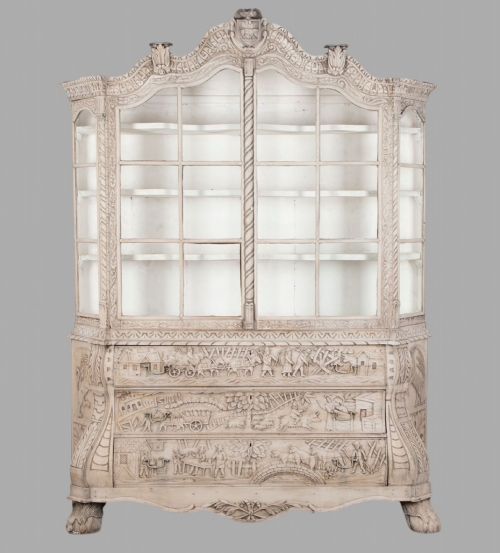
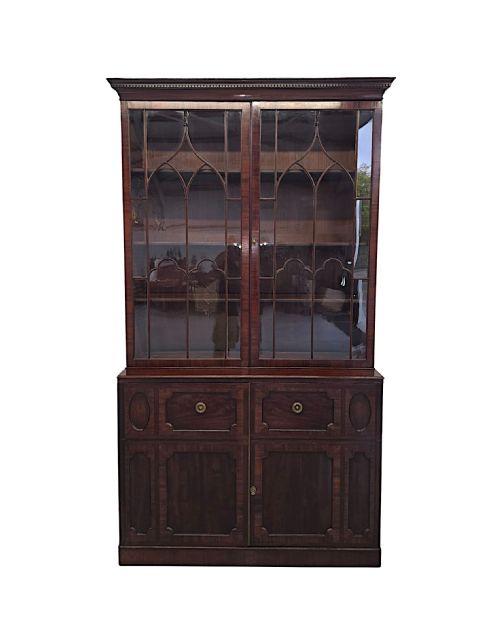
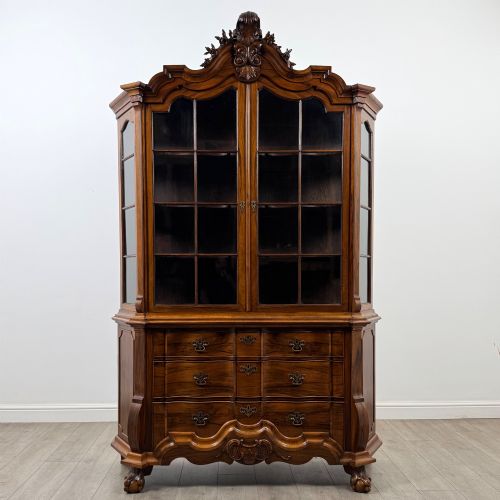
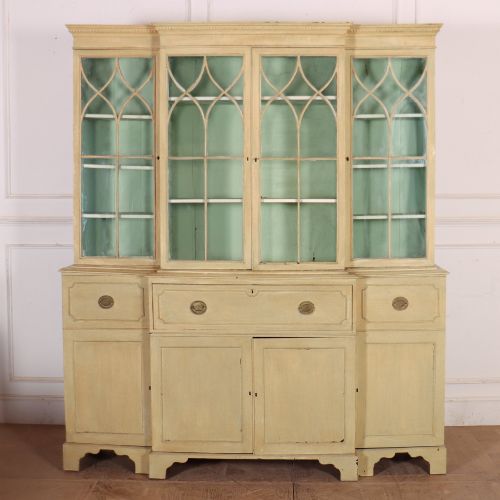
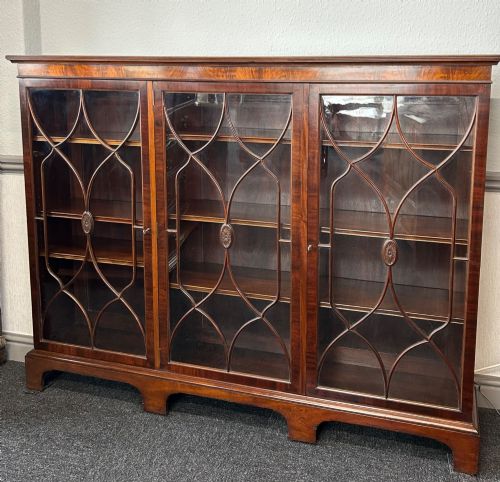
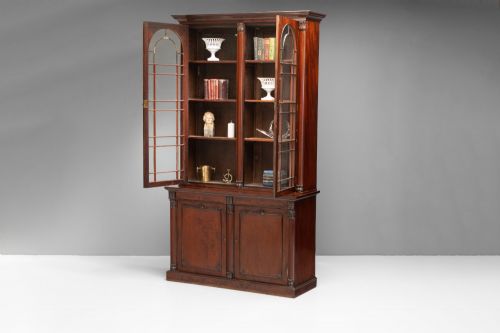

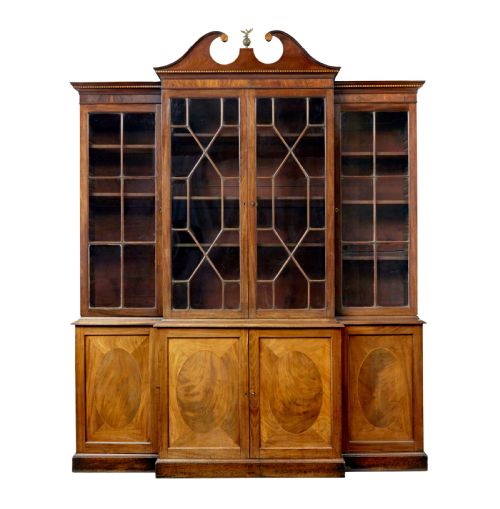
Large Glazed China Cabinet
A large glazed china cabinet holds collections behind glass panes, offering display space combined with storage.
Large Glazed China Cabinet
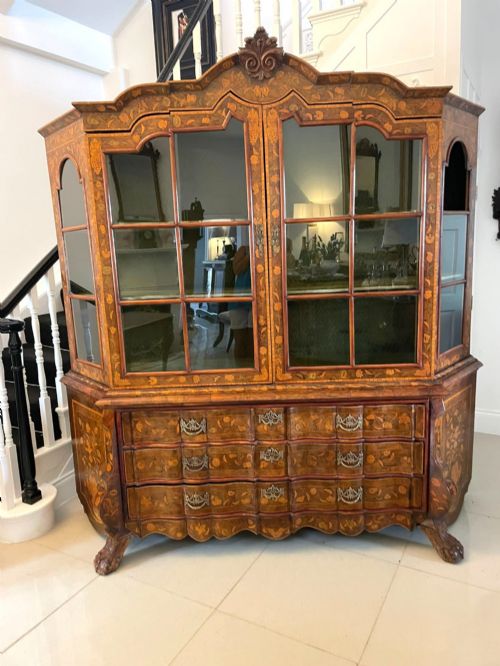
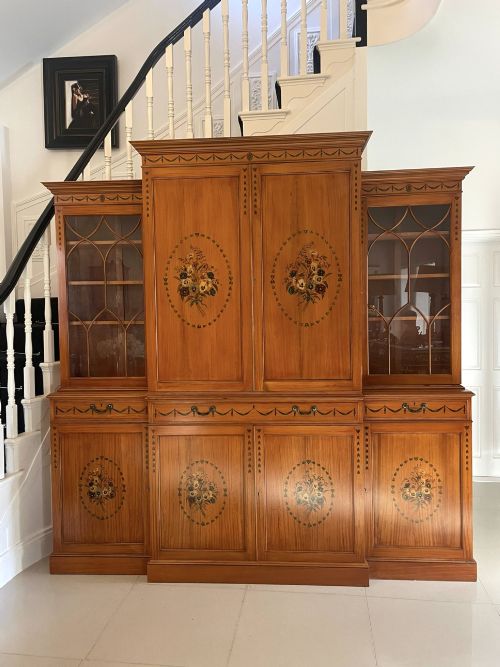
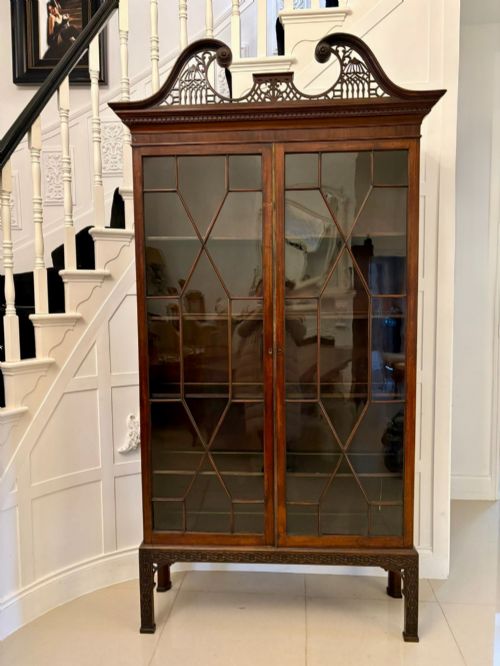
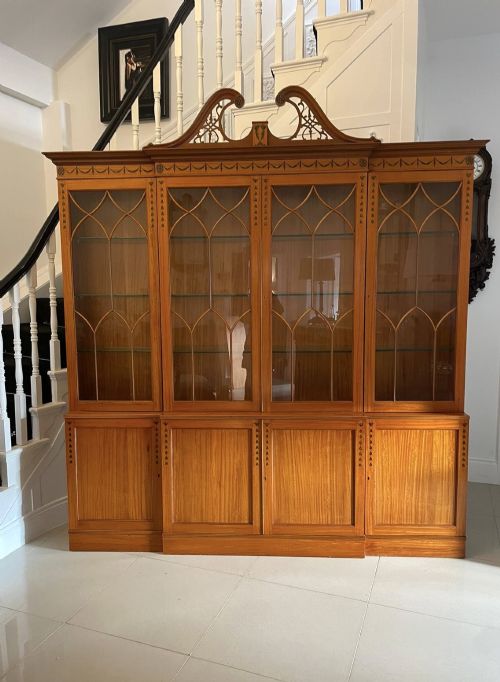
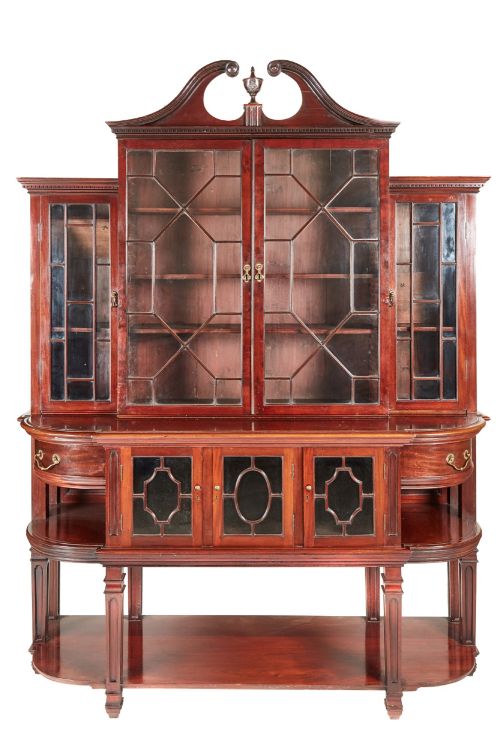
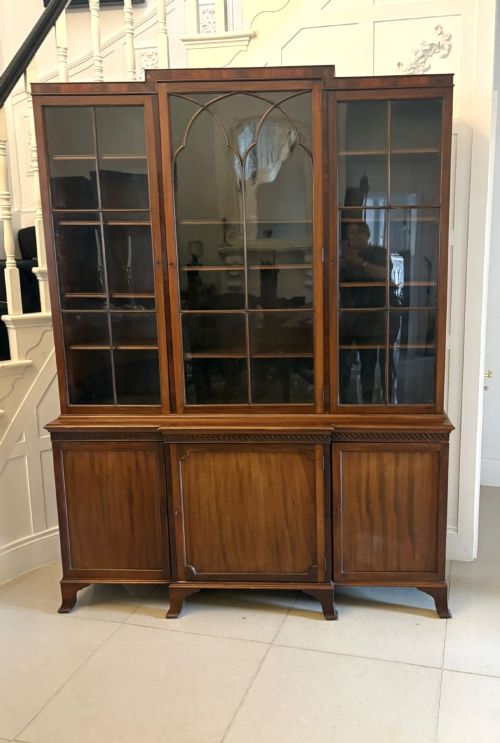
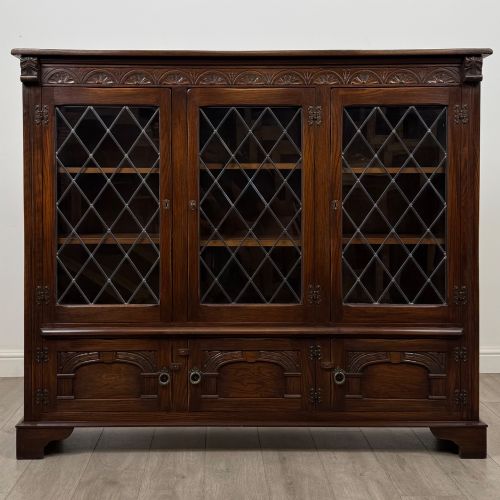
A large glazed china cabinet combines timber frameworks with transparent glass doors to protect and display porcelain, books, and decorative objects. These pieces range from upright library bookcases to low drawing room display cabinets and breakfront forms.
Nineteenth century mahogany, satinwood, and walnut examples dominate the selection, often featuring astragal glazing bars and inlaid decoration. Breakfront profiles provide architectural presence through projecting central sections.
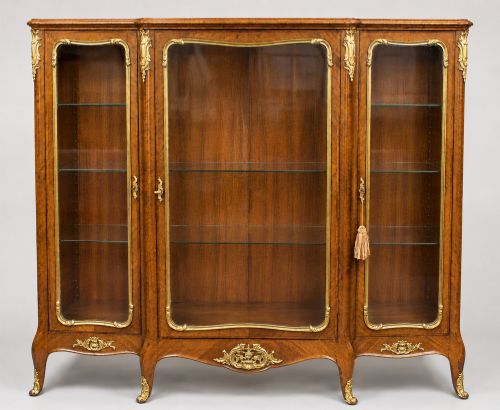
Makers adapted classical vocabulary across the Victorian, Edwardian, and revival periods, producing substantial upright storage units alongside serpentine and bombe display furniture.
How they were made
Cabinetmakers constructed carcass frames in solid hardwoods such as mahogany and oak, applying veneers of satinwood, burr walnut, and kingwood to prominent surfaces. Timber selection determined both structural stability and decorative grain patterns.
Glazing techniques divided door apertures into geometric panes using slender timber bars or cast brass mounts. Ormolu mounts, parcel-gilding, and floral marquetry completed the decorative schemes of French and English reception room furniture.
Listings feature woods including mahogany, satinwood, oak, kingwood, ormolu, and walnut across Victorian and Edwardian periods.
What varies in quality
The refinement of timber preparation and the precision of veneer matching separate standard production from exhibition pieces. Hand-carved mouldings and original painted decoration indicate skilled workshop execution.
Structural integrity depends on the thickness of timber used for back panels and shelving, alongside the quality of brass hardware and locking mechanisms fitted to doors.
Wylie and Lochhead·Linke
The Large Glazed China Cabinet Glossary
- Astragal
- A small convex moulding used in cabinetmaking, often applied to divide glass panels in doors. These delicate wooden strips create traditional multi-pane window effects.
- Breakfront
- A cabinet design where the central section projects forward from the flanking wings. This configuration adds architectural depth to large bookcases and display units.
- Ormolu
- Gilt bronze mounts applied to furniture for decorative enrichment. French vitrines frequently utilise these cast metal ornaments around glass doors and corners.
- Vitrine
- A glass-fronted display cabinet designed specifically for showing porcelain and small objects. These pieces rely heavily on glass panels to maximise internal light.
- Marquetry
- Inlaid patterns formed by fitting contrasting veneers into a prepared ground wood. Floral motifs and geometric borders appear across walnut and satinwood surfaces.
Large Glazed China Cabinet: Frequently Asked Questions
How do I clean the glass?
Use a soft microfibre cloth with a mild vinegar solution applied directly to the cloth rather than the wood. Avoid getting moisture onto timber frames or antique polished surfaces.
Take care around delicate astragal bars and glued joints when wiping large panes.
Where should I place the cabinet?
Position the piece away from direct sunlight and strong heat sources to prevent timber warping and veneer cracking. Stable indoor humidity protects both the wood and internal display contents.
Allow sufficient clearance for doors to open fully without striking adjacent walls.
How do I secure heavy books?
Distribute weight evenly across internal timber shelves to prevent bowing over extended periods. Place heavier volumes on lower shelves to maintain overall stability.
Check shelf supports periodically, particularly in large breakfront bookcases.
Can shelves be adjusted?
Many nineteenth century and Edwardian cabinets feature fixed wooden shelving rather than adjustable peg systems. Altering shelf heights generally requires professional workshop intervention.
Plan your display heights around the fixed interior clearances of the chosen cabinet.