
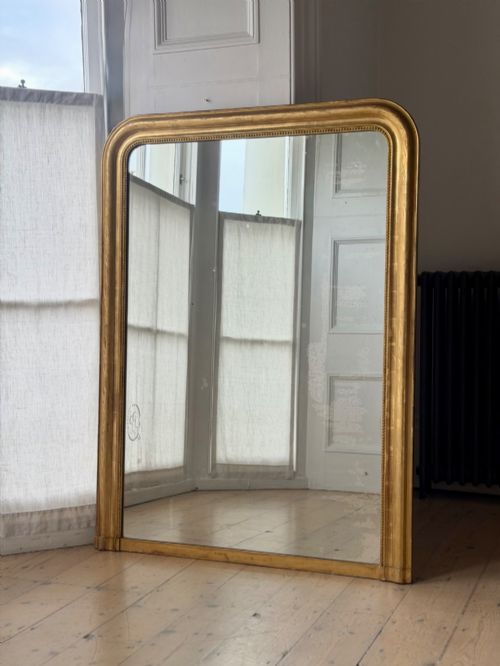
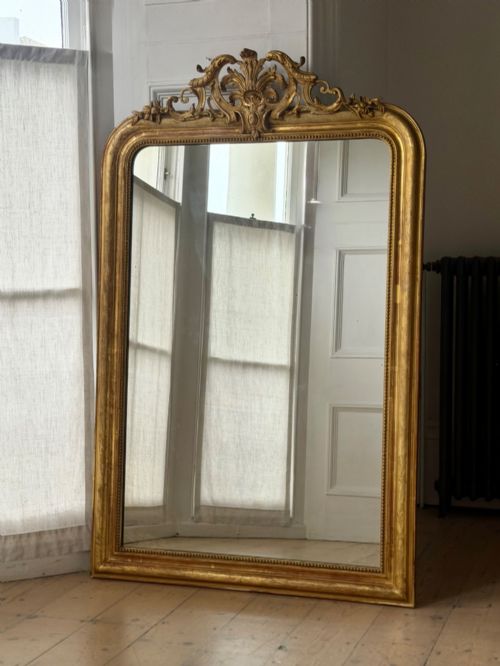
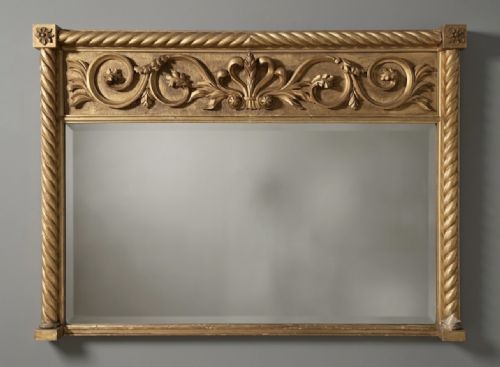
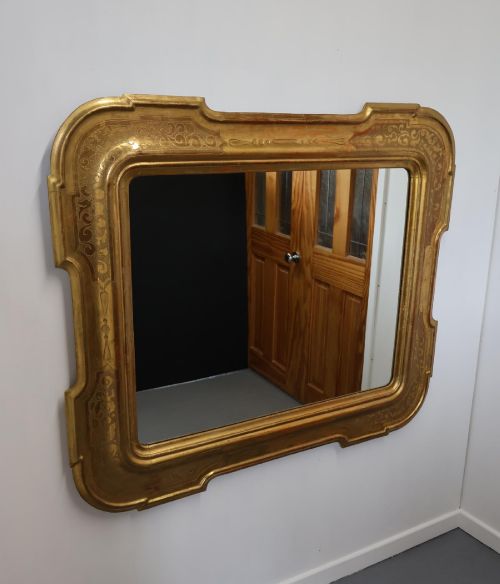
Large Gilded Overmantel
A large gilded overmantel brings scale, reflected light, and distinct architectural presence to a reception room chimney breast.
Large Gilded Overmantel
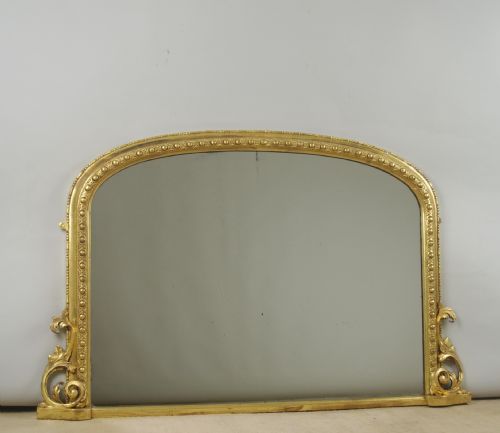
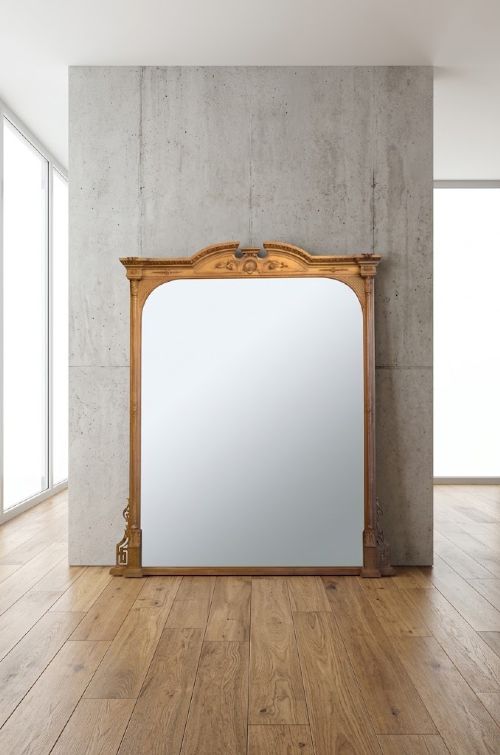
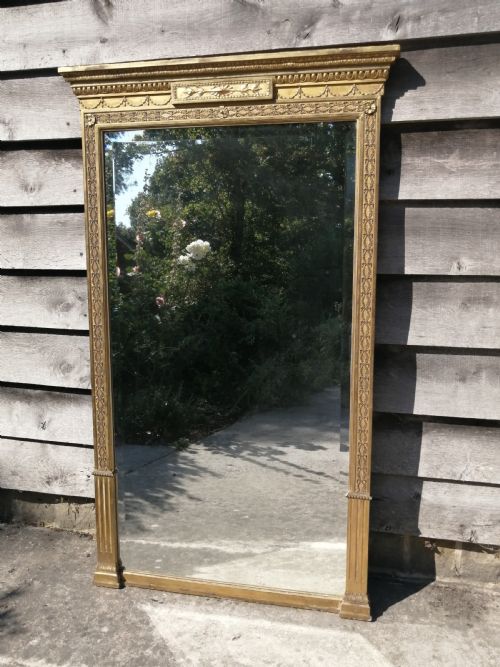
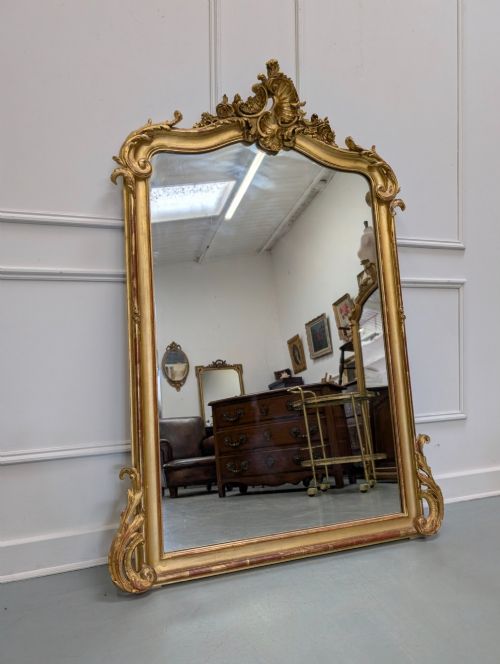
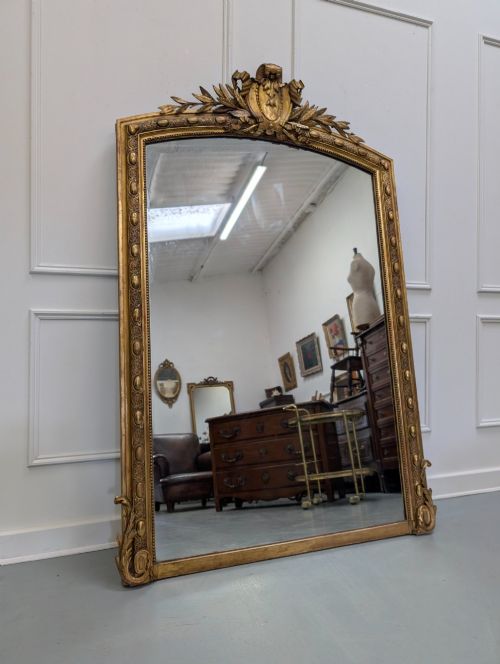
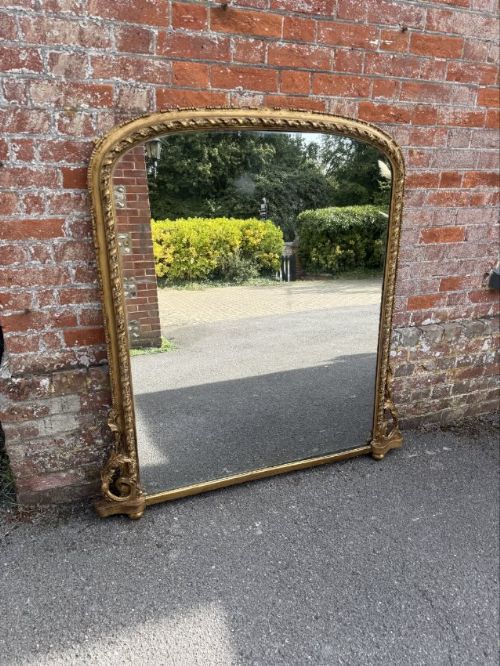
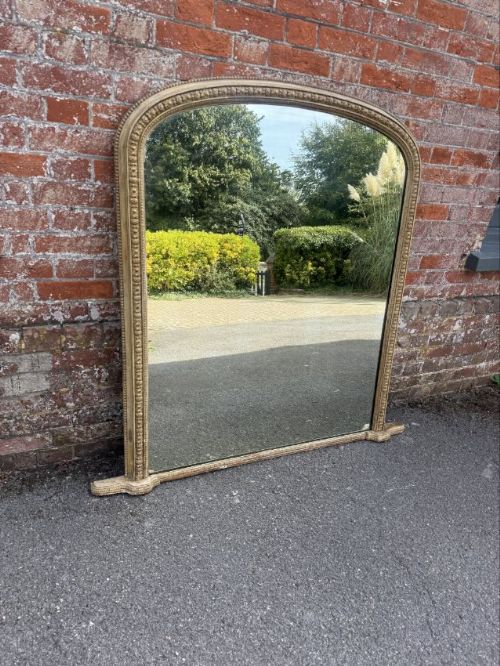
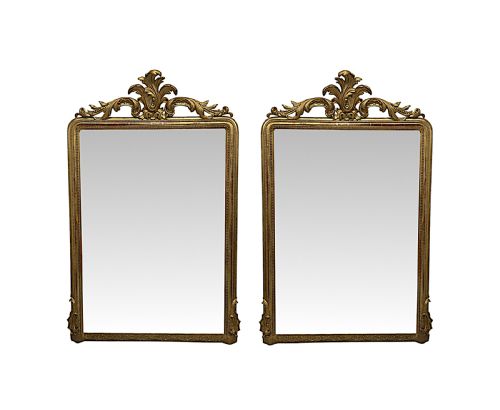
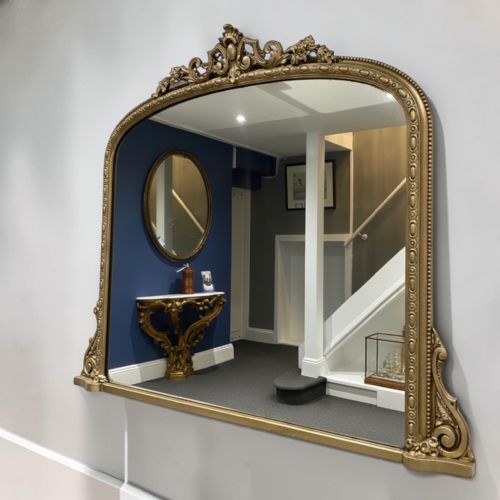
A large gilded overmantel is a substantial mirror designed to sit directly above a fireplace mantelpiece, drawing the eye upwards and anchoring the proportions of a high ceiling. These imposing looking-glasses date primarily from the nineteenth century, encompassing Victorian, Regency, and French Louis Philippe styles alongside robust Rococo Revival interpretations. English carved wood and gesso arched top examples appear frequently alongside tall continental wall mirrors bearing ornate crests.
Makers and workshops utilised generous dimensions to amplify natural daylight in formal drawing rooms, often incorporating triple plate configurations or deep frames. While many pieces originate from English cabinet makers, French chateau and Florentine designs also populate the selection with distinct decorative motifs. The primary function remains centered on reflecting interior space while serving as a commanding focal point within period domestic architecture.
Materials and Construction
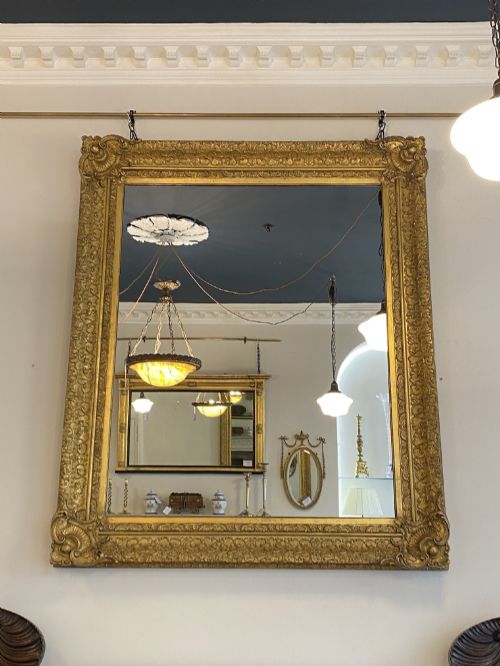
The physical structure relies heavily on solid carved wood foundations built to support considerable weight, supplemented by applied gesso and composition ornamentation to achieve intricate surface relief. Artisans then applied gold leaf or metallic gilding across the frames, often combining burnished and matte finishes to catch changing ambient light. Mirror glass within these large formats frequently exhibits historical characteristics such as foxing or mercury backing.
Framing techniques involve joining robust timber corners with specialised wooden backing boards, while decorative crests and side scrolls are secured using traditional animal glues and hidden pins. The interplay between hand-carved wooden detailing and moulded composition allows for deep, sculptural foliage, scrolls, and architectural pediments without imposing excessive strain on the wall fixings.
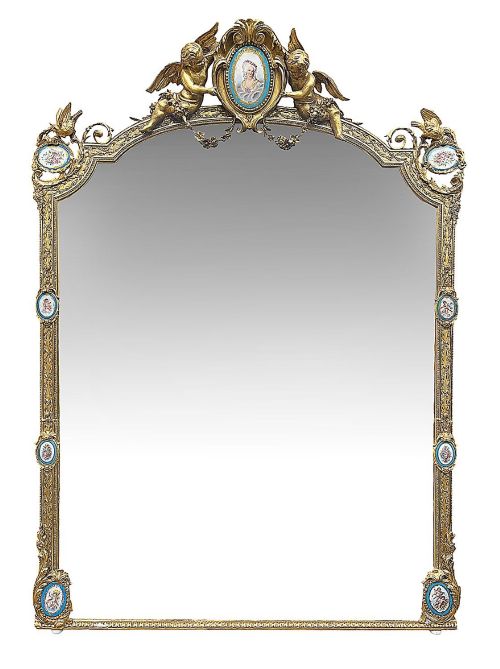
Some nineteenth-century French mirrors still watch quiet pastoral oil paintings resting quietly in their upper panels instead of glass.
Defining Quality
Quality in a large gilded overmantel rests on the crispness of the hand-carved wooden elements versus the repetitive uniformity of moulded composition details. Superior examples exhibit deep, clean undercutting in the foliage and scrolls, whereas lesser pieces rely heavily on thick plaster composition that can obscure underlying definition. The integrity of the original gilding, judged by how well the gold leaf adheres and patinates over time, further distinguishes finer workshop output from later decorative adaptations.
Proportion and structural soundness also dictate the standing of a piece, particularly given the immense lateral tension exerted by heavy glass plates within tall frames. Better constructed mirrors retain their original pegged joinery and supporting battens, ensuring the heavy weight distributes evenly across the mantelpiece or wall brackets without sagging or placing stress on the reflective glass.
Nosotti
The Large Gilded Overmantel Glossary
- Gesso
- A plaster-like mixture applied to wooden frame foundations to create a smooth, sealed surface for subsequent gilding. This material allows artisans to carve or impress intricate relief patterns before applying gold leaf.
- Giltwood
- Timber that has been coated with thin sheets of gold leaf or metallic powder. It provides a warm, reflective finish characteristic of formal nineteenth-century interior decoration.
- Overmantel
- A large mirror or painting specifically scaled to hang on the wall directly above a fireplace mantel. These pieces were traditionally designed to complement the architectural woodwork of the chimney breast.
- Pier glass
- A tall, narrow mirror designed to hang on the wall space between windows, often reflecting natural light back into the room. They share many stylistic traits with contemporaneous overmantel mirrors.
- Foxing
- Small dark spots or cloudy patches that develop within the silvering of antique mirror glass over decades of oxidation. Collectors often value this natural ageing as a sign of genuine antiquity.
- Louis Philippe
- A mid-nineteenth-century French architectural and furniture style known for restrained, elegant curves and rounded upper corners. Mirrors from this period favor understated frames with subtle decorative crests.
Large Gilded Overmantel: Frequently Asked Questions
How do I hang a heavy overmantel safely?
These mirrors carry substantial weight due to large timber frames and thick glass plates, requiring professional wall anchors fixed directly into masonry or heavy timber studs. The hanging wire or brackets must distribute the load evenly across reinforced mounting points.
Positioning the base securely on the mantelpiece itself provides essential weight-bearing support, reducing the sheer strain placed on the upper wall fixings.
What distinguishes an overmantel from a pier mirror?
An overmantel is specifically proportioned to span the horizontal width of a fireplace breast, often featuring a landscape or arched format suited to that architectural space. A pier mirror is typically taller and narrower, designed explicitly for the wall section between two windows.
While both utilise similar gilding techniques and nineteenth-century decorative styles, their original domestic placement dictates their dimensions and framing emphasis.
How should I clean antique giltwood frames?
Dusting requires only a very soft, dry brush or feather duster to remove surface particles without disturbing delicate gesso or flaking gold leaf. Moisture and modern chemical cleaning agents will permanently damage historic gilding and exposed composition work.
Professional conservation is recommended if the surface accumulates stubborn grime or if structural stabilization becomes necessary over time.
How can I tell a Victorian mirror from a Regency one?
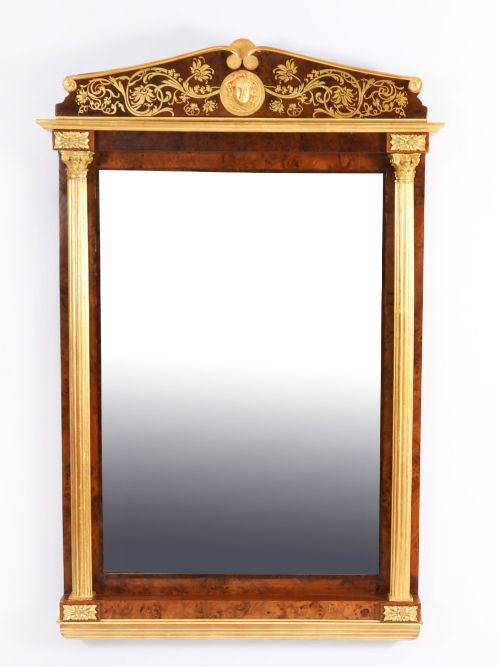
Regency mirrors frequently incorporate classical architectural motifs such as ball-studded friezes, reeded columns, and bold ebonised details reflecting early nineteenth-century neoclassical tastes. Victorian pieces tend toward heavier, more exuberant ornamentation, embracing floral carvings, elaborate cartouches, and deep Rococo Revival scrolls.
Examining the construction methods on the reverse, including the type of backboards and fixing nails, helps confirm the manufacturing era.