







Large Framed Tapestry
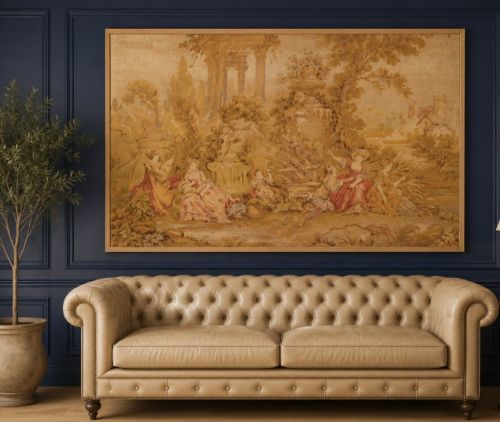
A large framed tapestry brings depth, texture and centuries of woven narrative into a room, offering an immediate architectural presence.
Large Framed Tapestry
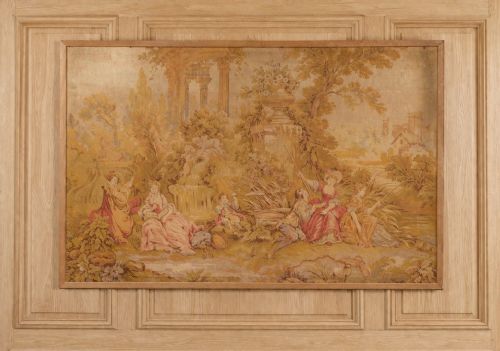
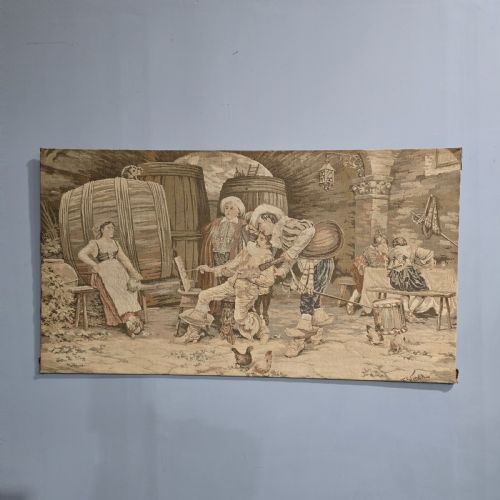
When you search for a large framed tapestry, you encounter substantial textile works preserved behind glass or mounted within wooden surrounds, spanning centuries of decorative arts. These pieces encompass woven wall hangings, needlework panels, Berlin wool work pictures and embroidered fire screens designed to anchor a major interior wall.
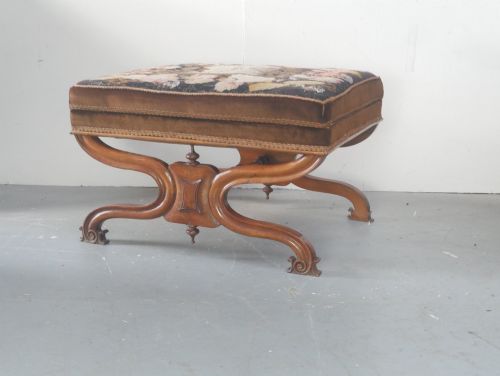
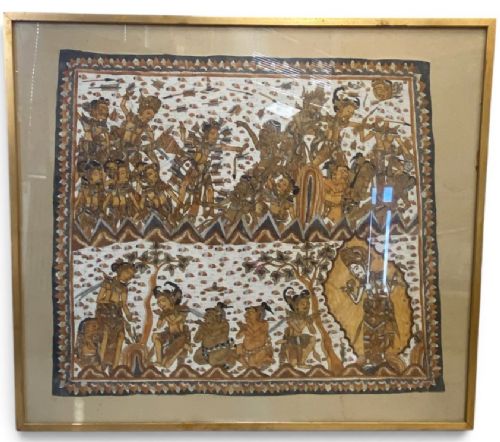
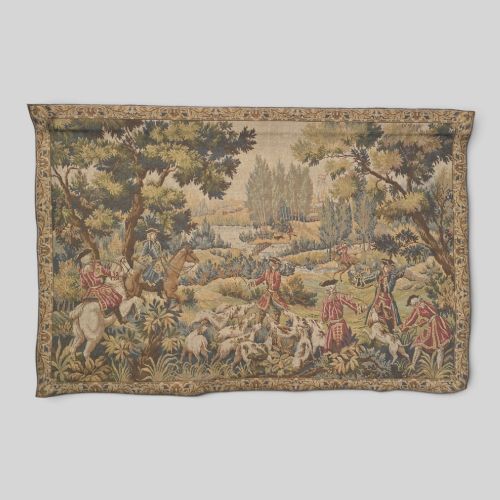
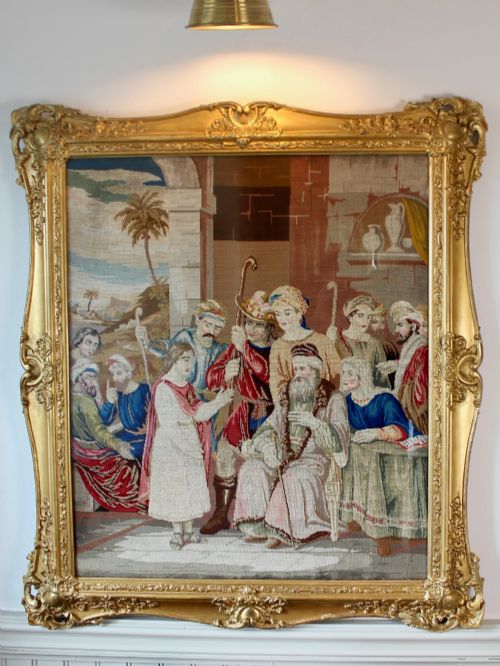
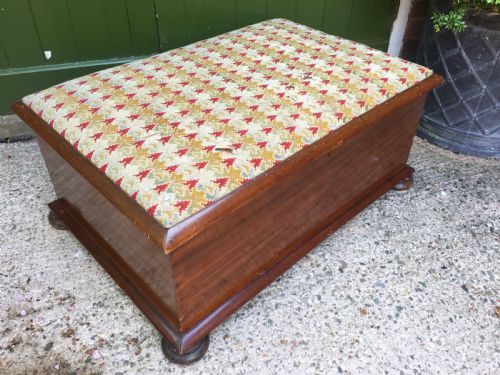
The selections on this page range from eighteenth-century French woven panels and nineteenth-century wool work depictions to later twentieth-century textile art and Balinese Kamasan paintings. Forms vary widely from flat wall art to upholstered furniture elements such as ottomans, settees and stools retaining their original textile tops.
Origins stretch across British, French, German and Asian traditions, utilising frames fashioned from walnut, mahogany, giltwood and plain wood. Each object serves primarily as wall art or large-scale interior decoration, carrying historical narratives from biblical scenes to pastoral landscapes.
Materials and construction
The physical substance of these works relies on natural textiles such as wool, silk, cotton and canvas combined with supportive wooden framing in walnut, mahogany or giltwood. Many needlework pieces employ specific stitches like petit-point and gros-point on canvas grounds to build up dense pictorial surfaces.
Protective glazing frequently houses delicate textiles, while structural elements utilise traditional cabinet-making timbers to support the heavy fabric panels. Woven examples rely on horizontal and vertical threads interlaced on looms, whereas needlework relies on hand-stitched yarns following painted or counted charts.
Large Framed Tapestry Retail Price Guide 2026
Typical asking prices for large framed tapestry among the pieces listed under this phrase on Sellingantiques today, from the lower quarter to the upper quarter. They describe what is for sale here now, not the wider market.
Periods represented span from the eighteenth century through Victorian and Edwardian eras up to the early twentieth century.
Factors determining quality
The distinction between ordinary and exceptional works rests on the finesse of the needlework or weave and the integrity of the original frame. Finely executed petit-point detail and sophisticated chromatic range separate superior pictorial panels from simpler decorative hangings.
Original frames matching the period of the textile elevate a piece significantly compared to later or replacement surrounds. The stability of the fabric ground and the clarity of the imagery also dictate the standing of any given panel.
The Large Framed Tapestry Glossary
- Petit point
- A form of needlepoint embroidery executed on fine canvas using tiny tent stitches that allow for intricate detail and subtle shading. This technique defines the most pictorial nineteenth-century wall works.
- Gros point
- A coarser needlework stitch used for larger areas of design or hard-wearing surfaces like upholstery on ottomans and stools. It provides a robust, textured foundation.
- Berlin wool work
- A type of embroidered needlework popular in the nineteenth century, worked in wool on canvas using printed colour-coded charted designs. It produced vibrant narrative and portrait pictures.
- Giltwood
- Wood that has been treated with a thin layer of gold leaf or gilt gesso, commonly utilised for ornate nineteenth-century and French style frames. This finish enhances the decorative impact of the surrounding wall art.
- Kamasan
- A traditional style of classical painting originating from Bali, typically depicting epic narratives of deities and warriors on textile supports. These works are structured in distinct horizontal registers.
Large Framed Tapestry: Frequently Asked Questions
How do I hang a heavy textile piece?
Heavy framed textiles require secure wall fixings anchored directly into structural studs or masonry using appropriate picture-hanging brackets.
Because the combined weight of timber, glass and fabric can be considerable, professional installation ensures the piece remains stable and safe.
Where should I place a framed tapestry?
These works suit principal reception rooms, hallways or above substantial pieces of furniture where their scale commands the space. They provide an immediate focal point in traditional or eclectic interiors.
Avoid positioning delicate textiles in direct, strong sunlight to prevent fading of wool, silk and cotton yarns over time.
How do I clean textile art?
Framed pieces protected by glass generally require only gentle dusting of the exterior frame and glass surface with a soft cloth.
Unglazed textiles or delicate needlework should be left untouched by liquid cleaners and assessed by a professional textile conservator if cleaning becomes necessary.
What is the difference between woven and needlework?
Woven tapestries are created on a loom where warp and weft threads interlace simultaneously to form both the structure and the picture. Needlework is stitched by hand onto an existing pre-woven canvas ground using a needle and yarn.
Both methods produce pictorial wall art but involve entirely different manual techniques and workshop practices.