
Large Framed Portrait Art
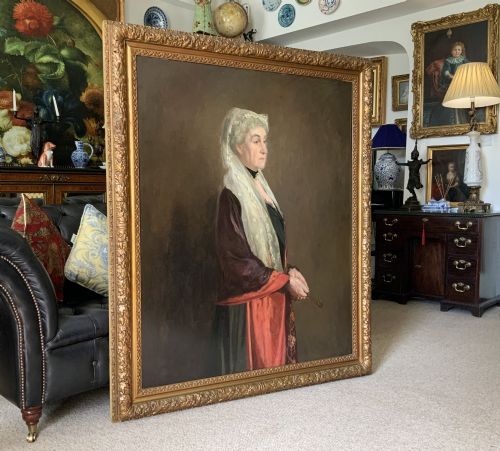
Large framed portrait art commands a room, bringing historical presence and scale to an interior through oils, pastels, and prints.
Large Framed Portrait Art
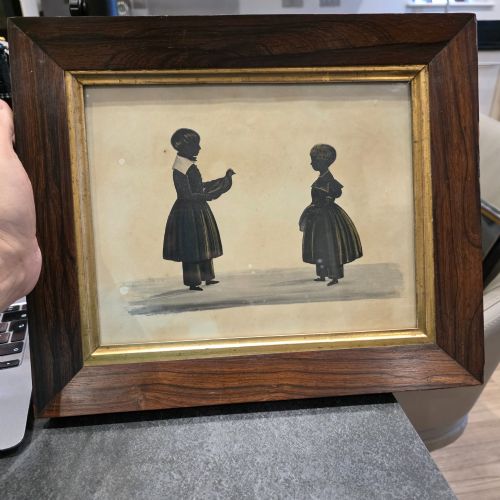
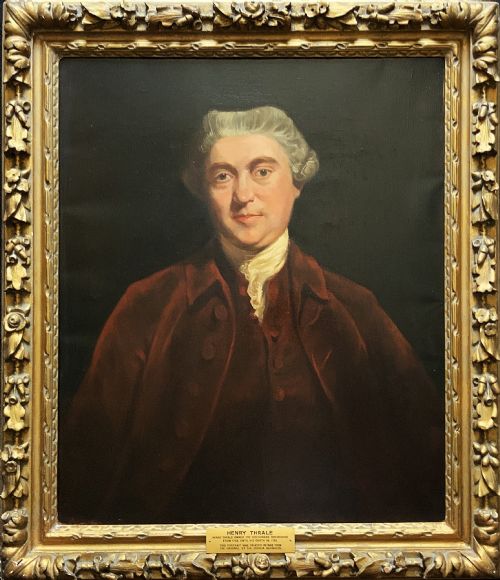
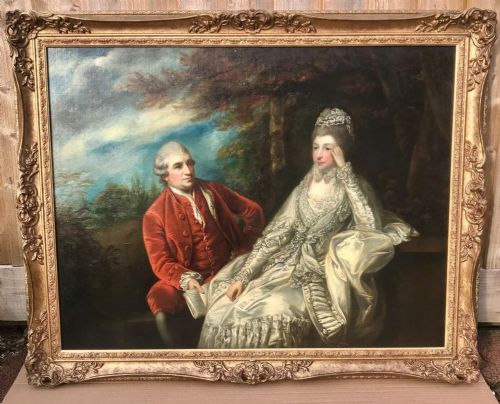
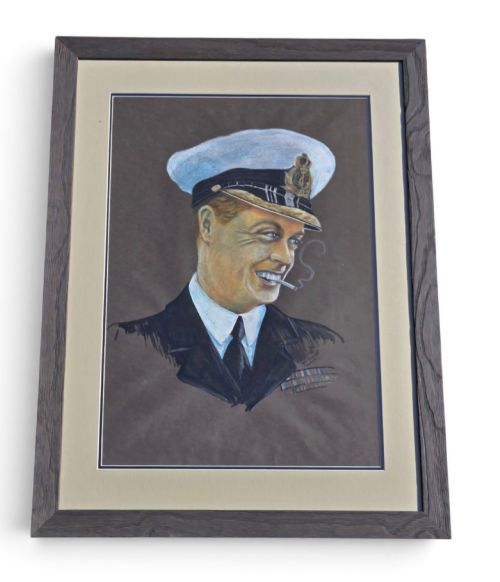
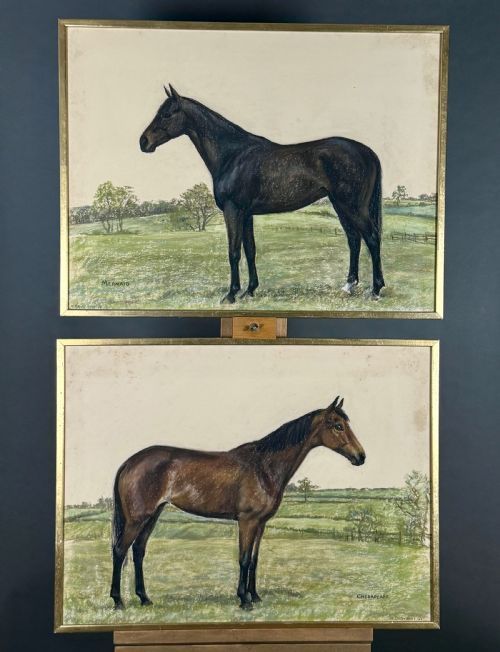
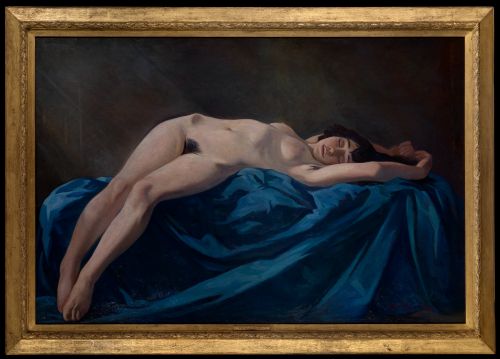
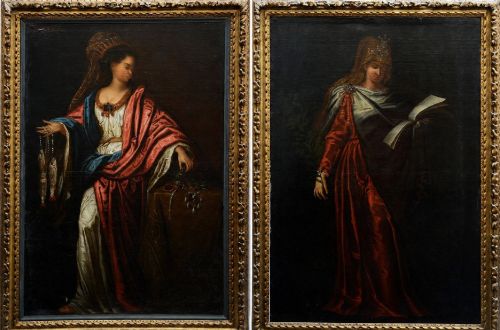
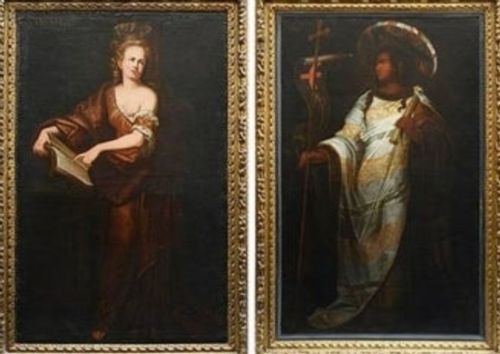
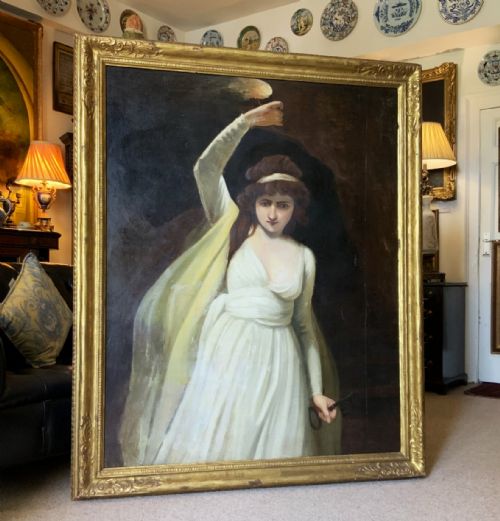
Buyers seeking large framed portrait art encounter substantial works spanning the eighteenth, nineteenth, and twentieth centuries, often executed in oil on canvas or pastel on paper. These pieces range from grand military and aristocratic depictions to intimate studies, Chinese ancestral scrolls, and reverse paintings on glass.
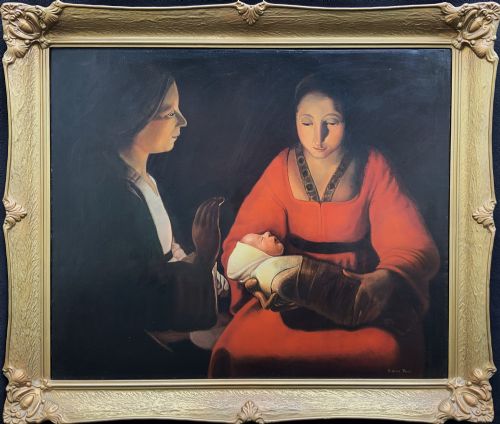
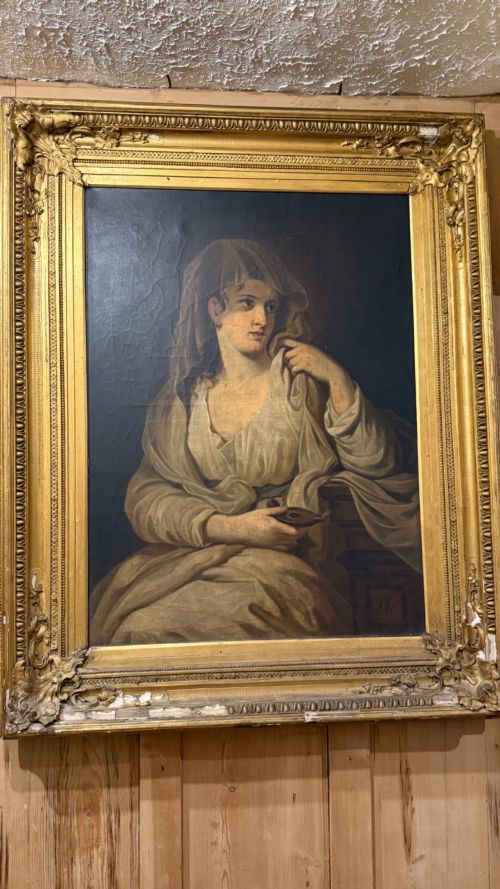
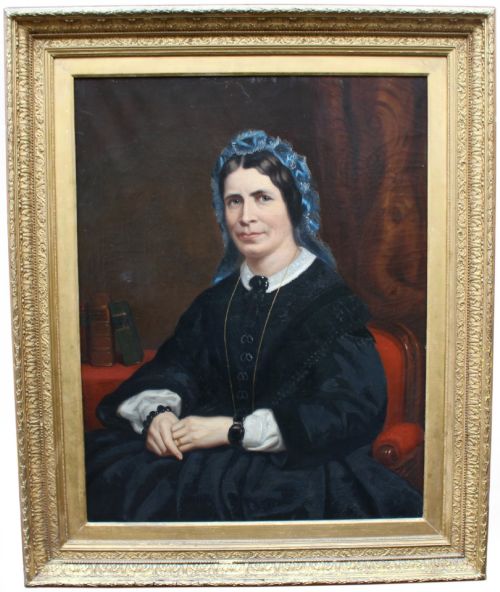
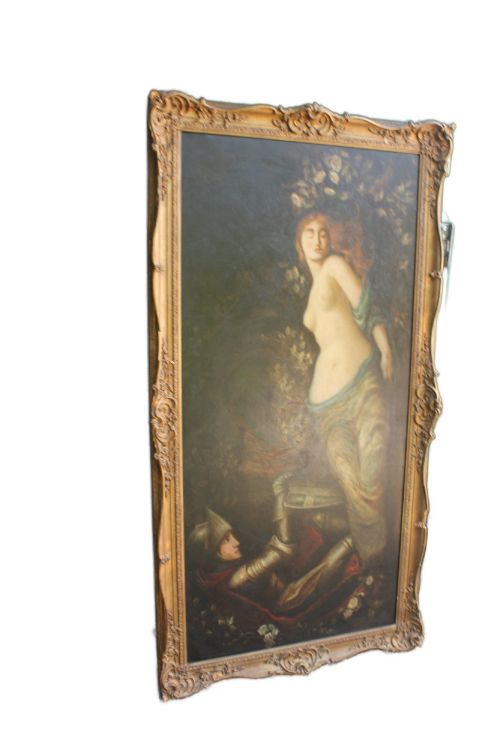
The selection here leans heavily towards nineteenth and eighteenth-century oil paintings, alongside Edwardian and later twentieth-century interpretations after old masters. Many examples arrive within heavy giltwood frames that match the considerable scale of the canvases within.
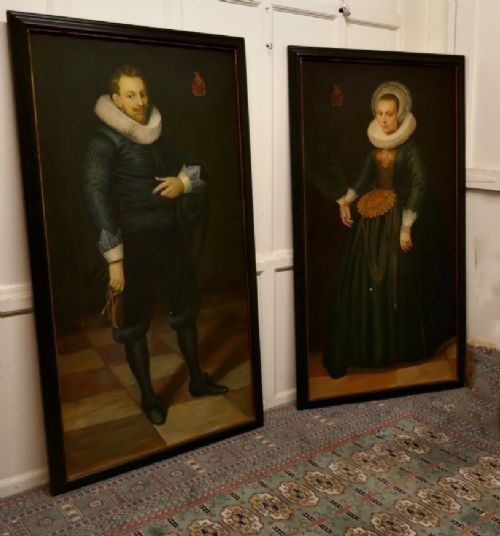
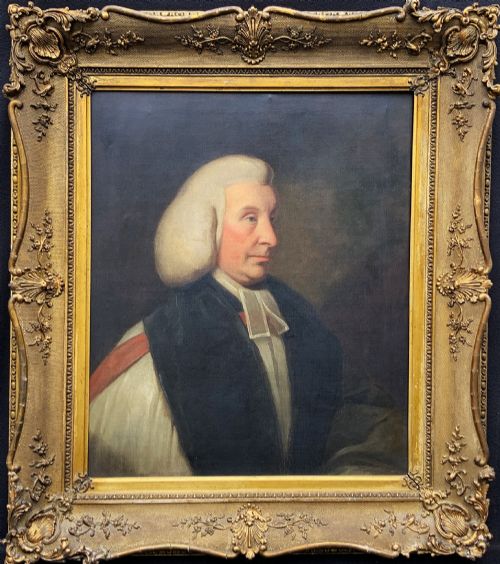
Subjects include identifiable historical figures, clergy, military officers, and children, frequently rendered with deep chiaroscuro or academic precision. Pairs and matching sets appear alongside single statement works, offering significant visual weight for domestic or institutional walls.
How they were made
Painters applied oil paint to stretched canvas, board, or vinyl canvas, building depth through successive glazes and opaque layers. Pastels on paper required protective glass glazing, while reverse paintings on glass utilised meticulous hand application directly onto the rear surface.
Frames were constructed from wood and embellished with plaster or gesso mouldings before receiving heavy gilding or silvering. Joinery on older stretchers and frames typically employs traditional pegs and hand-cut mitres rather than modern fixings.
Several portraits preserve the likenesses of subjects posing alongside livestock, large birds, and loyal pets.
What varies in quality
The standard of execution in large framed portrait art rests upon the anatomical precision of the hands and face, the handling of drapery, and the subtlety of light across the subject. Superior works display confident brushwork and psychological depth from the artist, whereas lesser pieces rely on stiff transposition or mechanical reproduction.
Frame integrity and originality also dictate worth, with period giltwood mouldings that retain their original burnished surfaces holding distinct visual superiority over later replacements. The preservation of the underlying canvas without excessive overpainting preserves the artist's original touch.
Georges de La Tour·Cornelis Van Der Voort·Sir Joshua Reynolds·David & Eva Maria Garrick·W.R. Waters·John Opie RA·George Watson·Harold Knight RA·Frans Hals·Godfried Schalcken·Raphael·William Henry Mander·Thomas Sidney Cooper·Van Dyck
The Large Framed Portrait Art Glossary
- Giltwood
- Wood carved and coated with gold leaf or metal leaf over a prepared gesso ground. It provides the reflective, ornate border typical of period picture frames.
- Chiaroscuro
- The strong contrast between light and dark within a painting. This technique creates dramatic three-dimensional volume in portraits.
- Reverse painting on glass
- An artwork applied directly to the back of a glass panel so the finished image is viewed through the front. It yields a glossy, preserved surface.
- Stretcher
- The wooden frame that holds a canvas taut. Period pieces utilise wedged corners to allow for future tension adjustment.
- Pastel
- A medium consisting of powdered pigment and a binder rolled into sticks. Works on paper require glazing to prevent the pigment from dusting.
Large Framed Portrait Art: Frequently Asked Questions
How do I hang a heavy portrait safely?
Large framed portrait art requires secure wall anchors driven directly into structural studs or masonry rather than standard plasterboard fixings. Heavy giltwood frames demand weight-rated mirror plates or substantial multi-point wire systems to distribute the load evenly.
Position the centre of the canvas at standard eye level, typically around eye height from the floor, unless placing the piece above a mantelpiece. Ensure the wall surface is stable and capable of supporting the combined weight of canvas and deep wooden moulding.
How do I clean an old oil painting?
Dust accumulated on the surface should be removed gently using a very soft, dry brush, sweeping lightly across the canvas without applying pressure. Avoid using water, household cleaners, or damp cloths on exposed paint or unvarnished areas.
Professional conservators should handle deeper cleaning, varnish removal, or the stabilization of craquelure. Amateur intervention risks stripping original glazes or damaging fragile pigment layers.
What is a reverse glass painting?
Reverse glass painting involves the artist applying pigments directly onto the rear side of a glass sheet, working backward from fine details to background layers. When viewed from the front, the glass acts as a protective glaze that imparts a high gloss.
This technique was popular in Chinese export art and European decorative pieces during the eighteenth and nineteenth centuries. The resulting surface requires careful handling to prevent moisture from reaching the unsealed paint behind the glass.
How do I tell an original from a copy?
Original portraits display natural craquelure, brush texture, and pigment variation under close inspection with a magnifying glass. Copies or decorative prints often reveal dot matrices, uniform flat surfaces, or mechanical canvas textures under raking light.
Examine the back of the canvas or panel for age oxidation, old maker stamps, wax seals, and exhibition labels. Stretchers and framing materials should align historically with the purported date of the portrait's creation.