
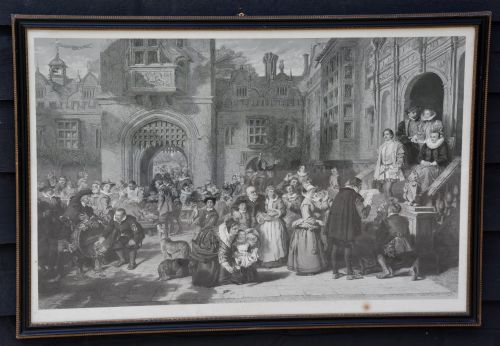


Large Framed Architectural Engraving
A large framed architectural engraving brings monumental classical design and ancient ruins directly to an interior wall.
Large Framed Architectural Engraving
A large framed architectural engraving presents detailed depictions of classical buildings, ancient ruins, and grand interior schemes from past centuries. These striking works of wall art capture the ambition of historical designers and the grandeur of antiquity through meticulous line work on paper.
Buyers browsing this selection will most frequently encounter nineteenth-century interpretations alongside significant eighteenth-century plates. Subjects range from Greek temples and Athenian antiquities to Vatican loggie interiors and extensive London river scenes.
Many examples arrive presented behind glass within period frames of gilded wood, gold leaf, or traditional dark timber. Sets of four coloured prints and individual folio sheets offer versatile ways to incorporate substantial historical perspective into a room.
Materials and construction
These works utilise traditional ink printed onto substantial paper sheets, capturing fine lines produced by skilled engravers working from detailed architectural drawings. Selected nineteenth-century sets introduce hand colouring to enhance the classical scenes and decorative compositions.
Protection and presentation rely upon traditional framing materials including wood, gilt, and glass. Original Hogarth frames and gilded mouldings secure the paper works while providing the classic aesthetic expected of period wall art.
Current listings feature architectural engravings spanning the eighteenth and nineteenth centuries, incorporating both neoclassical subjects and Victorian decorative plates.
Factors of quality
Quality rests significantly upon the precision of the engraving work and the historical importance of the draughtsman or publisher involved in the plate's creation. Finely detailed lines depicting complex classical capitals, friezes, and figures distinguish superior printings from simpler decorative reproductions.
The integrity of the paper and the preservation of the original framing elements also determine the standing of a piece. Clean paper surfaces, clear impressions, and authentic period frames like original Hogarth mouldings or gilded wood elevate the overall character of the work.
James Basire·Ottaviani
The Large Framed Architectural Engraving Glossary
- Engraving
- A printmaking method where an artist cuts lines directly into a metal plate with a sharp tool to hold ink. This technique allows for exceptional fine detail in architectural illustrations.
- Neoclassical
- A style originating in the mid-eighteenth century inspired by the classical art and architecture of ancient Greece and Rome. It dominates the design motifs found across these architectural plates.
- Hogarth frame
- A distinct narrow wooden picture frame profile featuring inner stepped decoration, typically finished in dark tones or gilt. These frames frequently accompany eighteenth and nineteenth-century works.
- Lithograph
- A planographic printmaking process based on the repulsion of oil and water, utilised for later nineteenth-century architectural plans and prints. It enabled faithful reproduction of complex graphic layouts.
- Antiquities
- Remnants of ancient civilisations, particularly classical Greek and Roman structures, which provided the primary visual subject matter for eighteenth-century engravers.
Large Framed Architectural Engraving: Frequently Asked Questions
How do I hang a large framed architectural engraving?
These substantial works demand secure fixings into solid wall anchors or studs due to the combined weight of timber frames and glass. Position the centre of the piece at standard eye level to replicate the display standards of period galleries and libraries.
Ensure the hanging location avoids direct sunlight to protect the aged paper and ink from fading over time. Pairing individual large plates with complementary sets creates a balanced focal point along a hallway or drawing room wall.
What periods do these architectural engravings come from?
The selection spans both the eighteenth and nineteenth centuries, including Victorian interpretations and earlier neoclassical plates. Eighteenth-century examples often record archaeological expeditions to classical sites such as Athens.
Victorian pieces frequently include educational architectural plans and hand-coloured decorative sets. Each era brings distinct paper qualities and framing styles that reflect the prevailing taste of the time.
Are these engravings original period pieces?
The listings comprise authentic period works printed in the eighteenth and nineteenth centuries rather than modern photographic reproductions. The paper, ink application, and accompanying wood or gilded frames correspond to historical production methods.
Specific plates record foundational archaeological documentation, such as eighteenth-century visual records of Greek monuments and Vatican interiors. These historical artefacts carry the physical markers of their age and previous use.
How should I care for framed paper art?
Maintain stable indoor humidity and temperature levels to prevent the paper substrate from warping or developing foxing spots. Keep the glass clean using a microfiber cloth without spraying cleaning solutions directly onto the wooden or gilt frame.
Period frames constructed from wood and gold leaf require gentle dusting with a dry brush. Protecting the works from excessive moisture and ultraviolet light ensures the engravings endure for decades to come.