
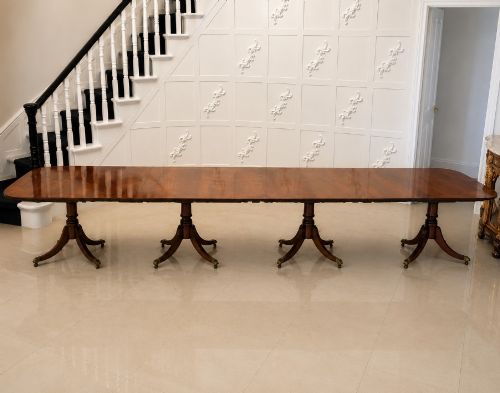
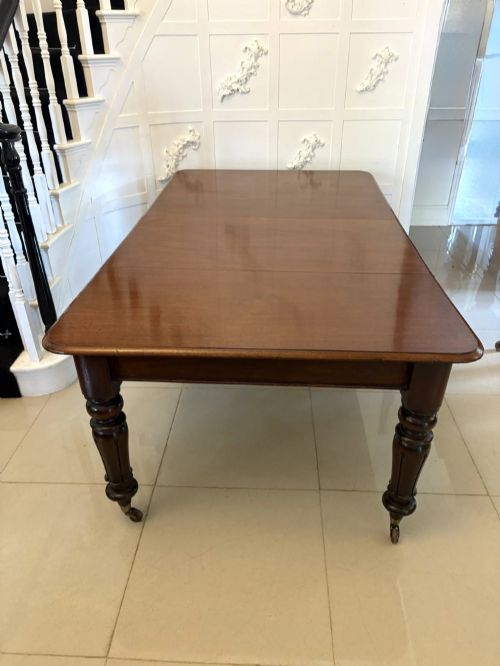
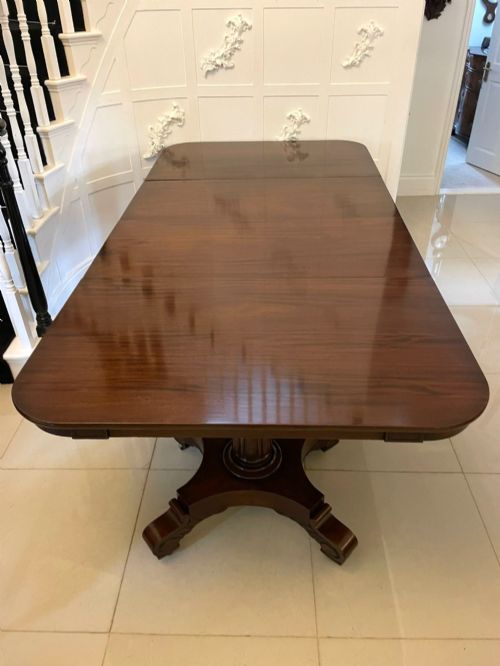
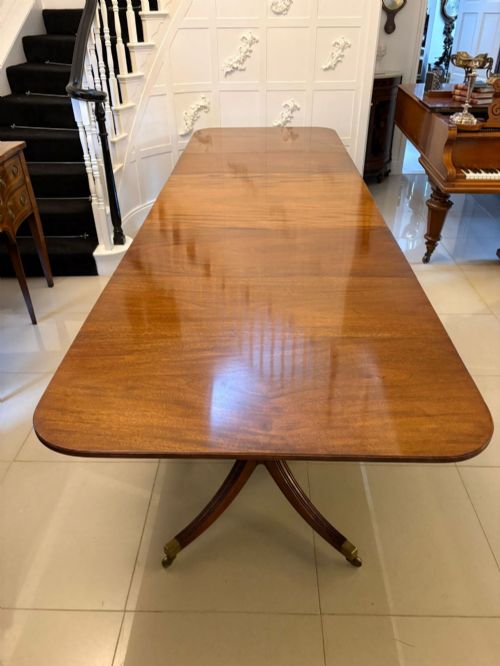
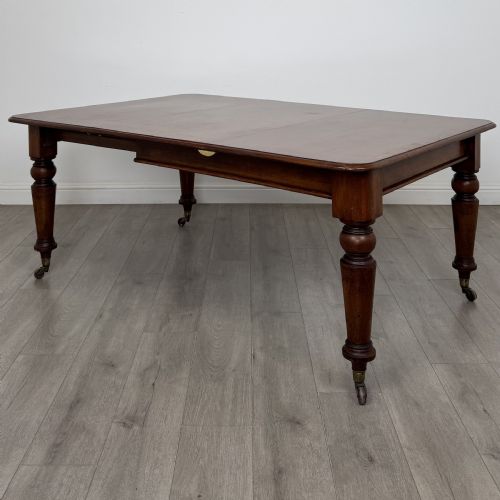
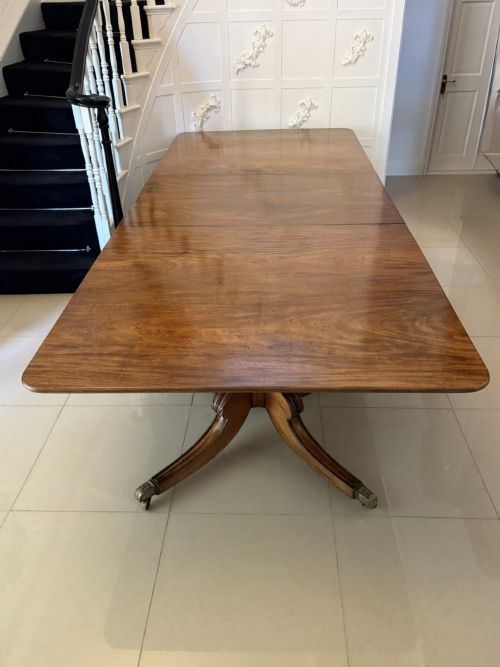
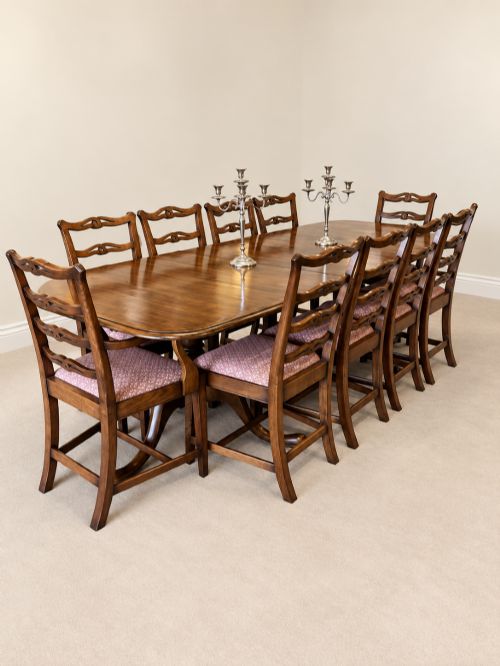
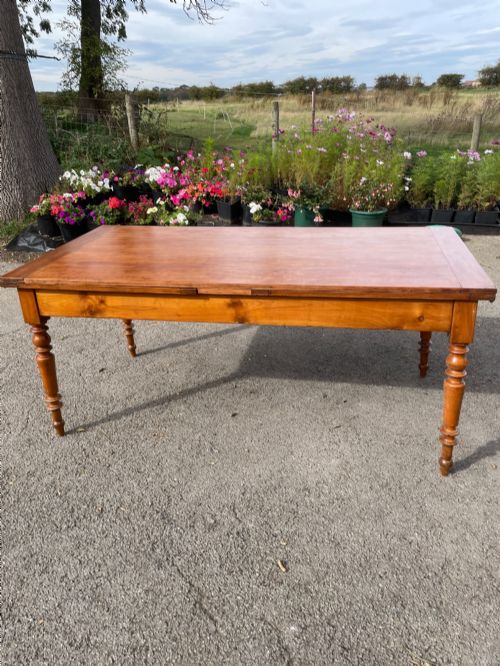
Large Extending Table
When you search for a large extending table, you uncover substantial timber dining pieces designed to host crowds across centuries of entertaining.
Large Extending Table
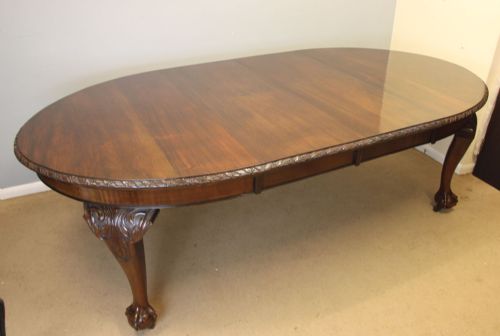
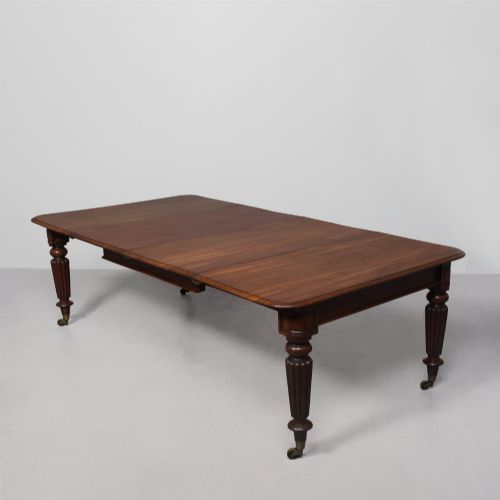
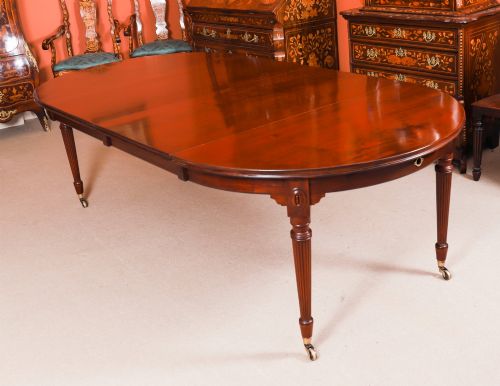
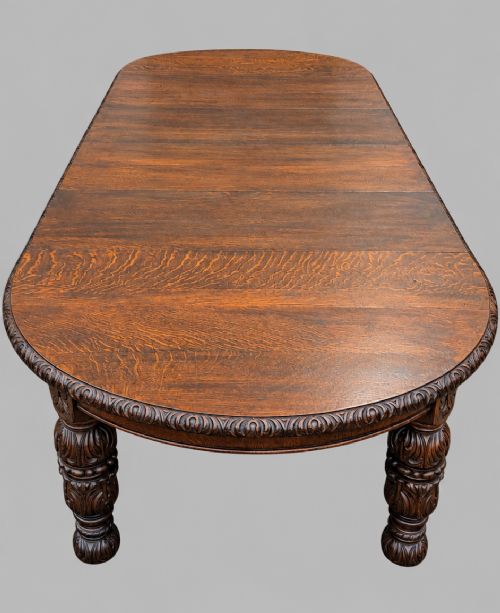
A large extending table is a substantial dining piece built to accommodate gatherings ranging from ten to over twenty guests using removable leaves or winding mechanisms.
The versions most commonly met on this page span the Georgian, Regency, and Victorian periods, alongside later revival pieces, constructed primarily to serve grand dining rooms.
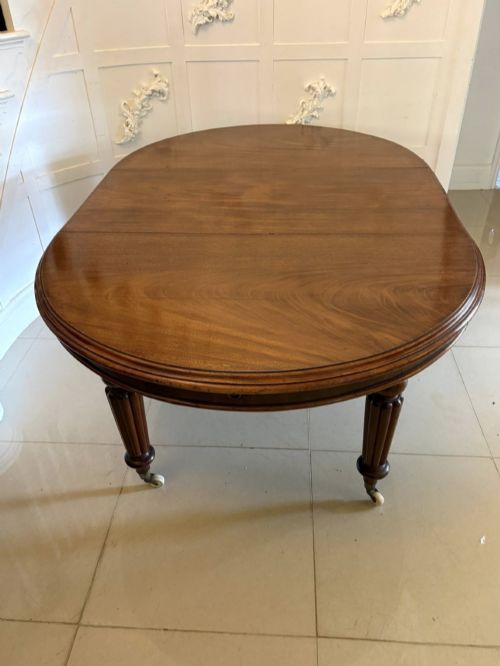
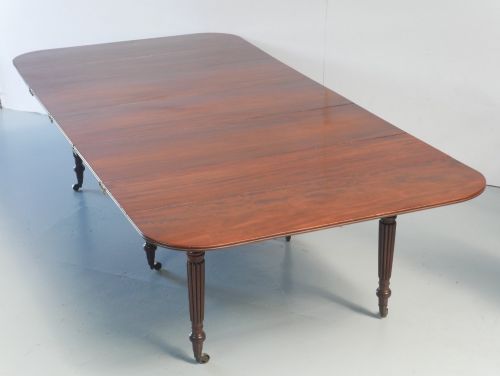
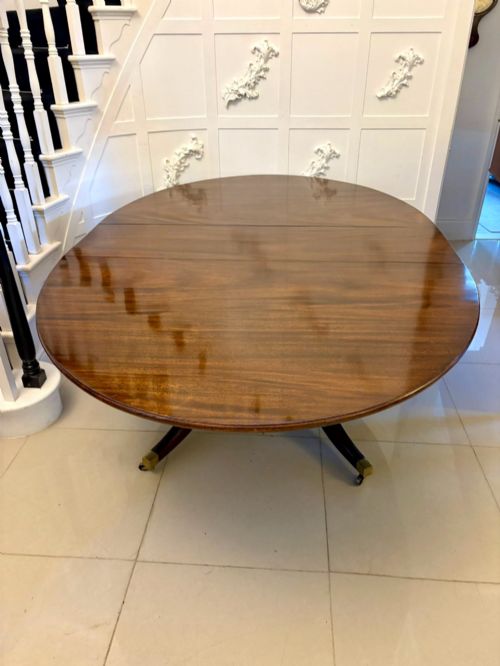
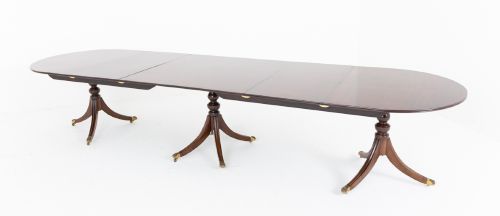
Formations include multi-pedestal bases with brass castors and sturdy oak or mahogany frames designed for versatility in scale.
How they were made
Craftsmen relied heavily on figured mahogany, oak, and walnut, often selecting timber with pronounced grain patterns for the main tops and leaves.
Structural support was achieved through timber pillars, heavy pedestals, and internal leaf carriers or pull-out mechanisms that allowed the frame to expand smoothly.
Metal components such as brass castors and winding hardware facilitated movement and weight distribution across expansive lengths.
Listings feature mahogany, oak, and walnut woods across Georgian, Victorian, and Edwardian periods.
What varies in quality
The tier of a large extending table depends on the selection of figured timber veneers and the structural integrity of the pillar assemblies.
Superior examples feature original matching leaves, precise winding mechanisms, and robust pedestals that support considerable lengths without sagging.
Gillows·Wylie and Lochead
The Large Extending Table Glossary
- Pedestal
- A central support column, often branching into multiple legs, used to hold up large dining surfaces. These columns frequently feature carved details or brass castors.
- Leaf
- A removable section of timber inserted into the table top to increase its overall length. Multiple leaves allow the furniture to expand for large dinner parties.
- Wind-out
- A mechanical system operated by a handle that expands the table frame to accept extra leaves. This mechanism relies on internal screws and wooden tracks.
- D-End
- A table form featuring semi-circular ends that can be detached or separated from central sections. This design was particularly popular during the Georgian and Regency eras.
Large Extending Table: Frequently Asked Questions
How do I extend the table?
Many tables utilise a mechanical wind-out system operated with a handle to separate the ends. Once the frame pulls apart, extra timber leaves drop into the centre.
Other formats rely on pull-out rails or draw-leaf designs where leaves slide out from beneath the main surface. Proper alignment ensures the top remains level across its extended span.
How many people can sit at one?
Capacity scales directly with the number of leaves inserted into the frame. Standard lengths often seat ten to twelve guests comfortably.
Grand multi-pedestal examples stretching past five metres easily accommodate twenty or more diners. Leg placement and pedestal count dictate where chairs fit along the sides.
What rooms suit these tables?
These dining pieces require substantial floor space to allow full extension and chair movement. High ceilings and large proportions complement their heavy pedestals and long spans.
They function as the primary centrepiece in formal dining rooms or spacious country kitchens. Measuring the room with the table fully opened prevents clearance issues.