


Large Extended Conference Table
These large extended conference tables provide the scale and presence required for boardrooms and grand dining halls alike.
Large Extended Conference Table
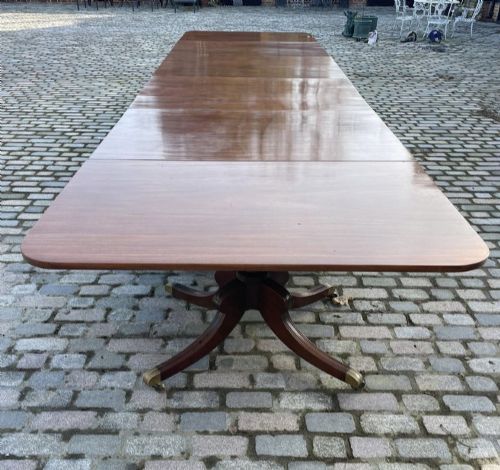
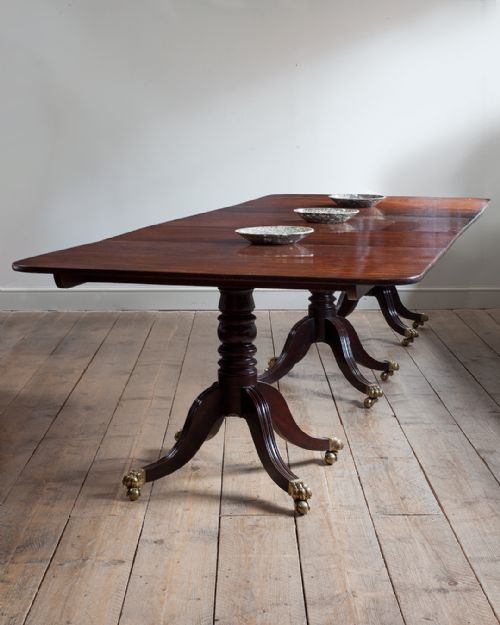
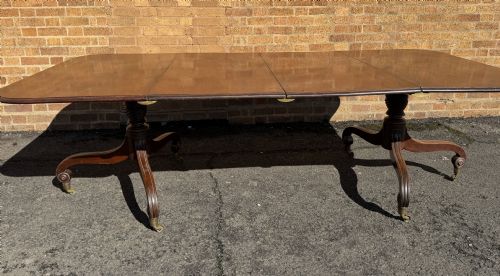
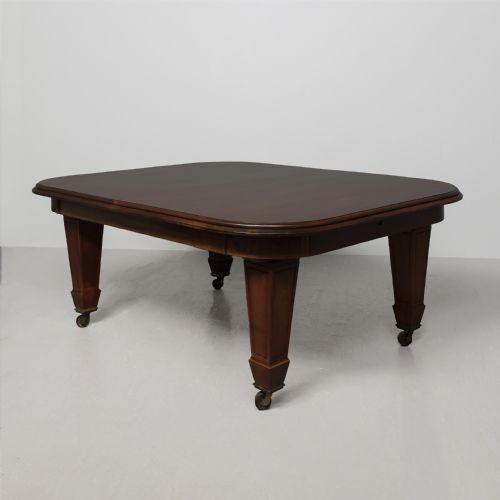
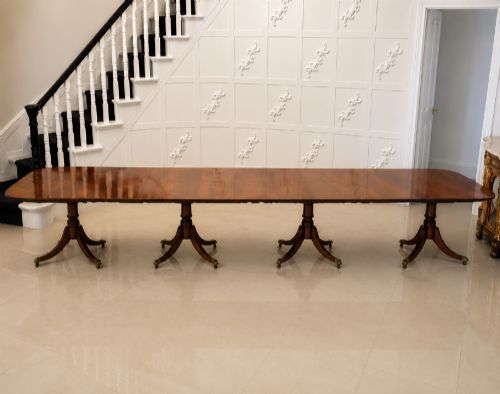
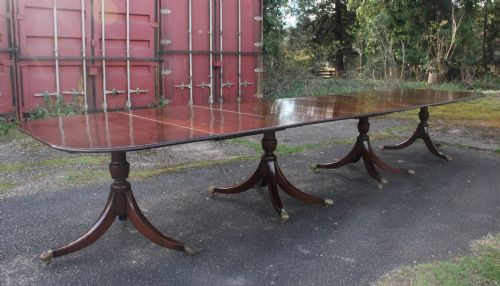
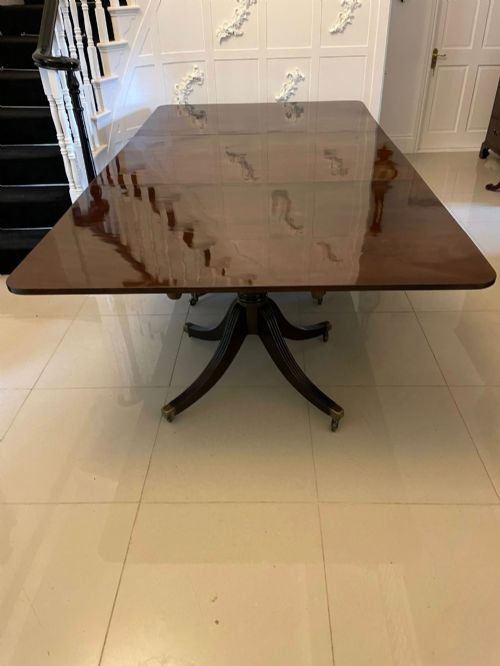
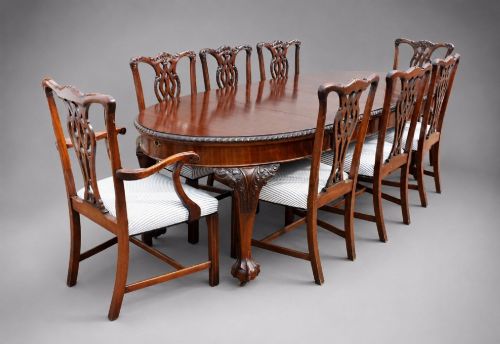
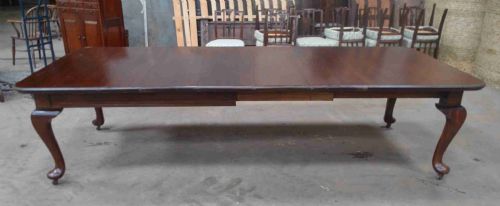
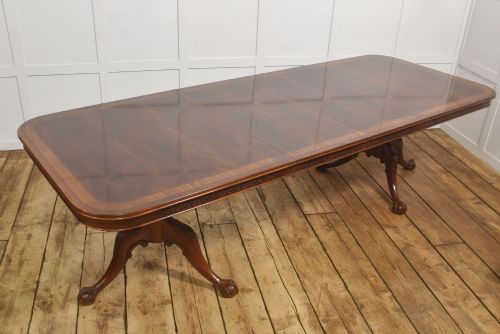
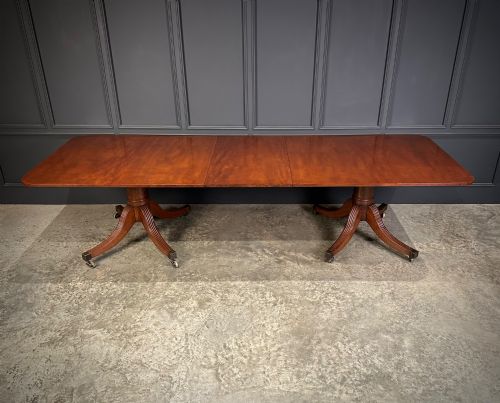
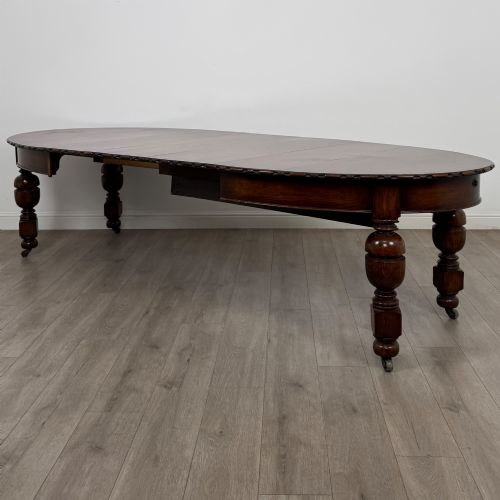
A large extended conference table brings monumental proportions and remarkable versatility to formal spaces, accommodating significant gatherings with ease. When searching for a large extended conference table, buyers encounter multi-pillar designs spanning from the Georgian and Regency eras through to the Edwardian period.
The form typically relies on modular pedestals or leaves that allow the surface to expand or contract according to requirements. Many examples seat upwards of twelve guests, while the largest recorded specimens host over twenty individuals across multiple pillars and leaves.
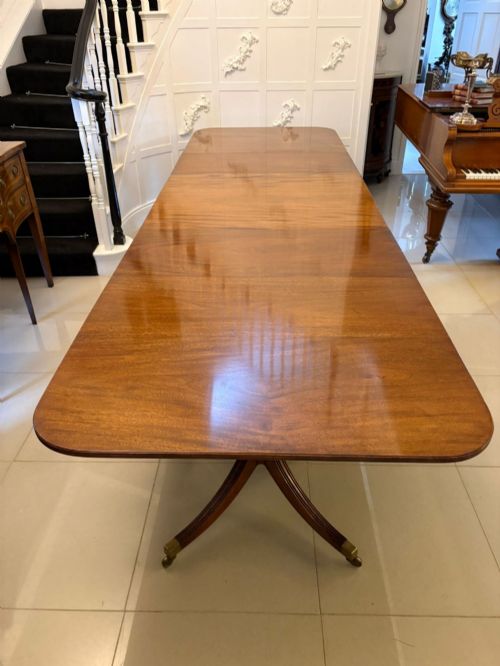
Mahogany dominates the selection, frequently highlighted by figured veneers, alongside occasional variants in oak and walnut. Makers from past centuries engineered these pieces to function reliably as both banquet surfaces and working tables.
Materials and construction methods
Craftsmen utilised solid timbers and choice veneers, selecting dense mahogany for its stability and rich grain patterns. Oak and walnut also appear, offering alternative textures and deeper tones for different interiors.
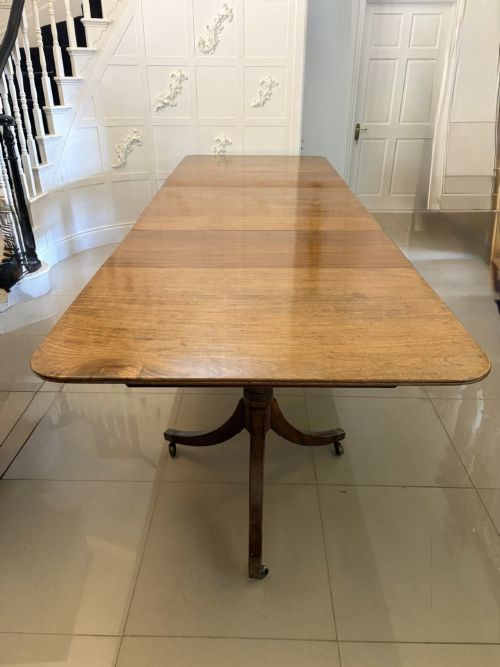
Structural integrity depends on substantial pillar supports, often fitted with brass castors to facilitate movement across heavy carpets. Leaves were engineered to drop in smoothly, supported by runners that maintain level surfaces under heavy loads.
Listings feature mahogany, oak, and walnut tables spanning the Georgian, Regency, Victorian, and Edwardian periods.
Distinctions in quality and execution
Superior examples display exceptional figure in the timber veneers, matched grain across inserted leaves, and finely carved pedestals with reeded legs. Cabinetmakers exercised strict control over timber seasoning, ensuring the top boards remain flat across extensive spans.
The precision of the extension mechanism separates ordinary work from master craftsmanship, allowing multi-pillar tables to open smoothly without sagging. Finer pieces retain original brass fittings, subtle inlay work, and robust weight distribution across every pillar.
Gillows·Wylie & Lochead·Maple & Co·Whytock & Reid
The Large Extended Conference Table Glossary
- Pedestal
- A central support column, usually resting on multiple splayed legs, that holds up the main top boards. These columns distribute weight effectively on large tables.
- Leaf
- A removable section of timber inserted into the centre of an extending table to increase its overall length. Multiple leaves allow the table to adapt for smaller or larger gatherings.
- Reeded leg
- A support decorated with parallel convex mouldings carved directly into the wood. This detail appears frequently on Regency and nineteenth-century furniture.
- D-end
- A table end shaped in a semi-circle resembling the capital letter D. These sections often detach to form console tables or combine with leaves to create a long banquet surface.
Large Extended Conference Table: Frequently Asked Questions
How do multi-pillar tables extend?
Multi-pillar tables utilise wooden runners fixed beneath the framework that pull apart to accept independent leaves. Additional central pedestals provide crucial structural support when the table reaches maximum length.
This modular arrangement ensures the surface remains level and sturdy across spans exceeding several metres.
What periods do these tables represent?
The selection spans from the Georgian and Regency periods through the Victorian era and into early twentieth-century revivals. Each era brings distinct proportions and leg carvings, ranging from restrained D-ends to ornate multi-pillar formats.
Craftsmen across these periods maintained high standards of timber selection, particularly with figured mahogany.
How many people can these tables seat?
Seating capacity varies from ten or twelve guests on twin-pillar models up to twenty-eight guests on massive four-pillar banquet tables. The inclusion of multiple original leaves determines the ultimate capacity.
Measuring the room and checking the extended dimensions ensures adequate clearance for chairs all around.
How should I care for a polished mahogany surface?
Maintenance involves dusting with a soft cloth and applying appropriate beeswax periodically to nourish the timber and protect the polished finish. Avoiding direct sunlight and extreme temperature fluctuations preserves the rich colour of the mahogany.
Using heat-resistant mats protects the antique polish from accidental damage during gatherings.