







Large Enamel Vases
Large enamel vases command attention in any room, bringing weight, vibrant colour and intricate detail to mantelpieces and halls.
Large Enamel Vases
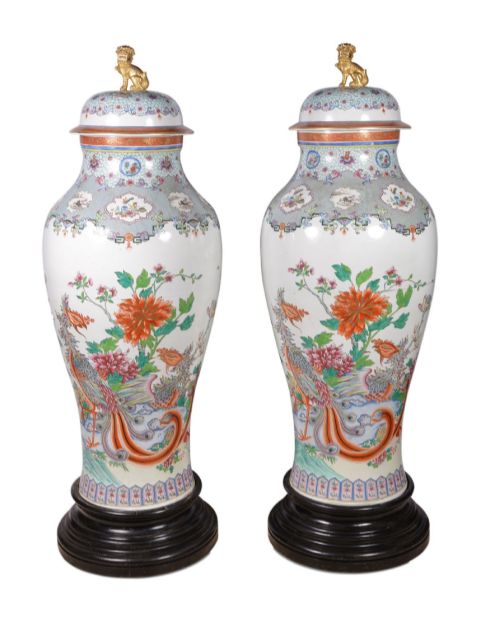
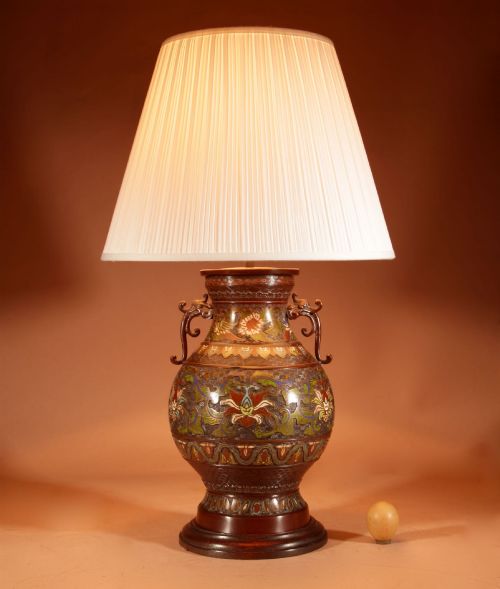
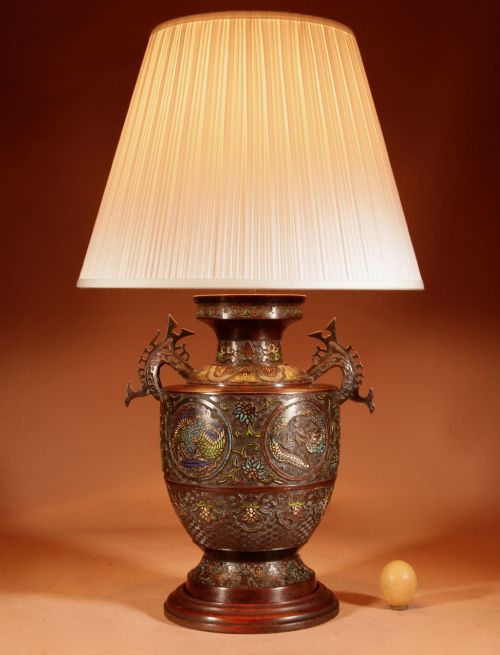
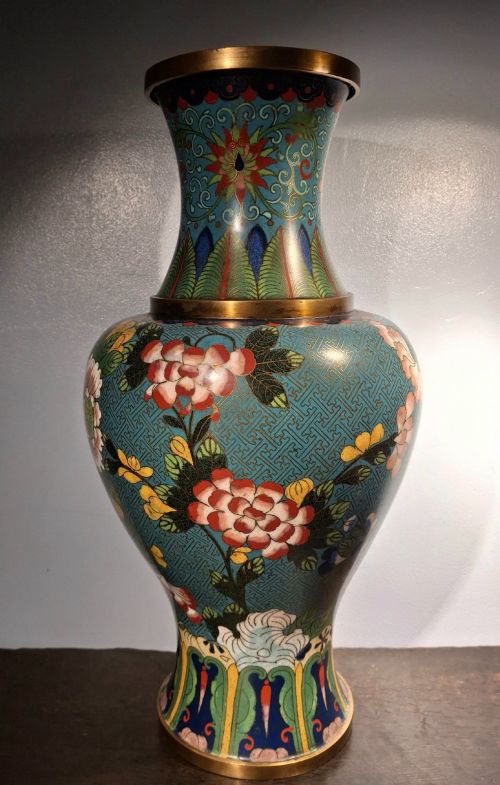
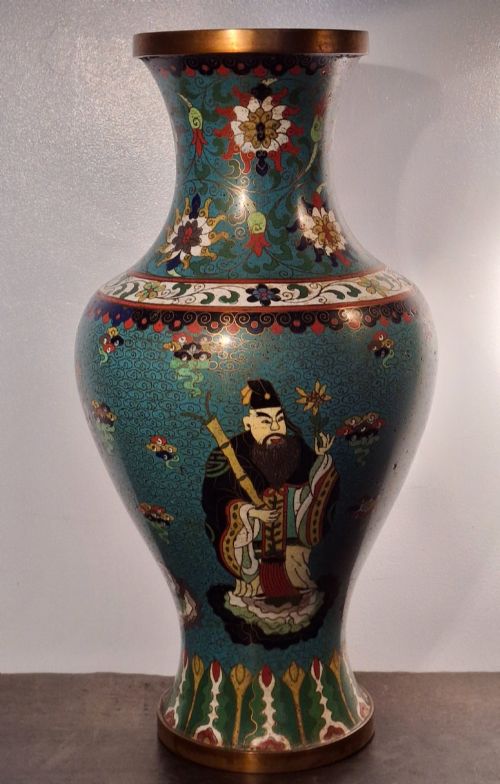
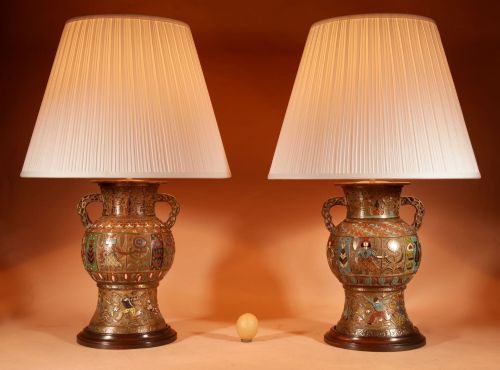
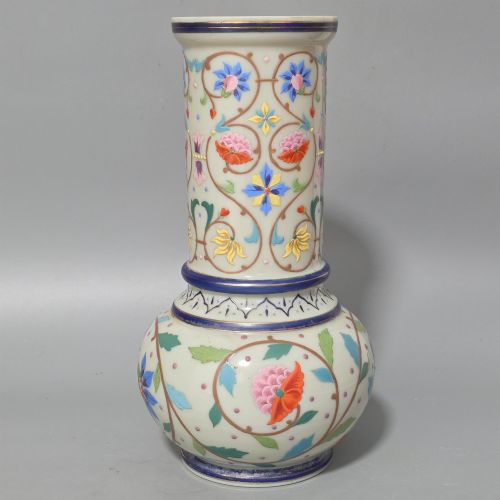
Large enamel vases encompass monumental Chinese cloisonné palace vessels, Japanese Meiji period bronze and champlevé examples, and Victorian glass decorative pieces. When searching for large enamel vases, a buyer meets these historic styles spanning the nineteenth and twentieth centuries, often rendered in substantial scales.
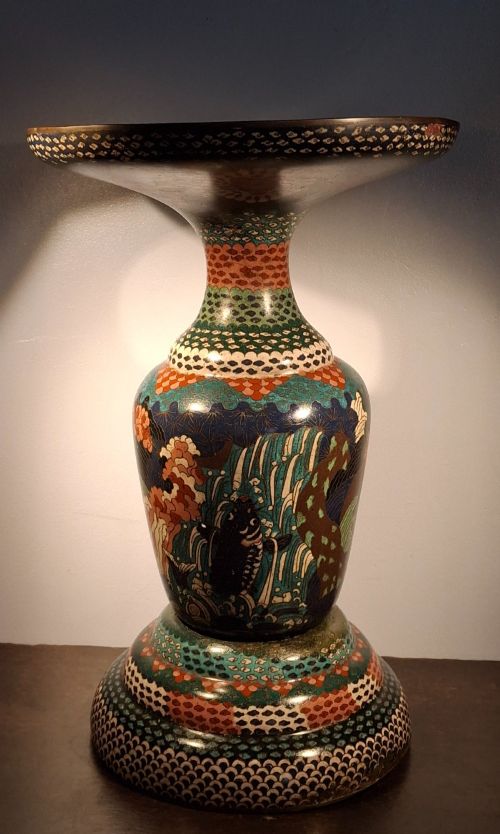
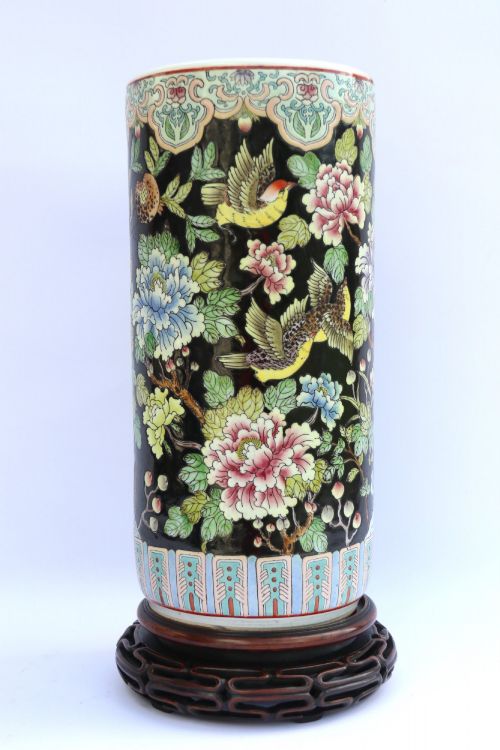
Vessels decorated with floral motifs, scholars, phoenixes, and leaping koi dominate the selection, showing the broad decorative vocabulary of the Victorian and Meiji eras. Buyers encounter both covered baluster jars and open trumpet vessels designed to display complex surface ornamentation.
How they were made
Metal vessels utilise cloisonné and champlevé techniques where thin wires or cast recesses hold vitreous coloured pastes before kiln firing. These metallic foundations often incorporate copper, bronze, and brass, sometimes enhanced with gold leaf or ormolu mounts.
Ceramic and glass alternatives employ hand-painted enamel decoration applied over porcelain, opaque glass, or crystal grounds. Makers such as St Louis and Legras combined etched surfaces with gold enamel highlights to achieve depth and texture in landscape and floral scenes.
Large Enamel Vases Retail Price Guide 2026
Typical asking prices for large enamel vases among the pieces listed under this phrase on Sellingantiques today, from the lower quarter to the upper quarter. They describe what is for sale here now, not the wider market.
Several large cloisonné vessels feature leaping koi that appear ready to splash out of their bronze wire bounds.
What varies in quality
Quality rests in the precision of the metalwork cells and the uniformity of the fired enamel, where superior examples display tight wirework and smooth, polished surfaces without pitting or cloudiness. The complexity of the hand-painted or cloisonné design dictates the overall fineness of the piece.
Scale and proportion also separate standard production wares from monumental palace vessels intended for exhibition. Intact original components, such as hardwood stands, matching covers, or untouched bronze mountings, elevate the standing of the work significantly.
Thomas Webb·St Louis glassworks·Mary Gregory·Legras·Seiko-en Chokei
The Large Enamel Vases Glossary
- Cloisonné
- A metalwork technique where fine wires form raised partitions, or cloisons, to contain coloured enamel pastes before firing. This method creates detailed, compartmentalised patterns across the surface of vases and vessels.
- Champlevé
- A method where troughs or cells are hollowed out of a metal surface and filled with enamel before firing. It differs from cloisonné by sinking the design directly into the bronze or copper body rather than soldering wires on top.
- Famille rose
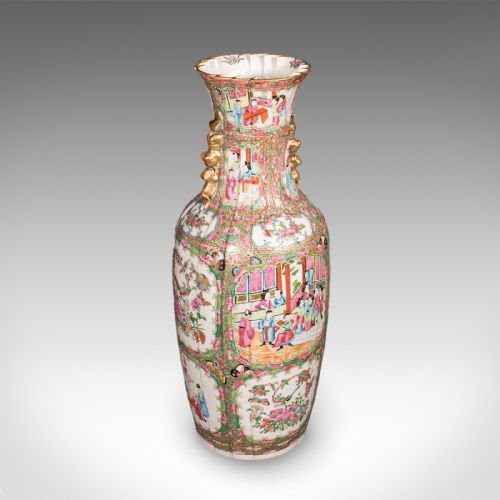
- A Chinese porcelain palette introduced in the Qing dynasty, distinguished by opaque pink enamel derived from colloidal gold. The style permits subtle tonal gradations in floral and figural compositions.
- Satsuma
- Japanese earthenware pottery featuring a crackled ivory glaze decorated with polychrome enamels and gilt. These wares were widely produced during the Meiji period for export markets.
- Mantle lustre
- A decorative glass or ceramic vase hung with crystal prisms, designed to sit on a mantelpiece and reflect candlelight. Victorian examples often utilise ruby or coloured glass bodies.
Large Enamel Vases: Frequently Asked Questions
How do I care for large enamel vases?
Dust these vessels gently with a dry, soft cloth to prevent abrasion to the delicate enamel or metal surfaces. Avoid liquid cleaners, chemical solvents, or immersion in water, which can damage historic glass bodies or discolour metallic mounts.
Keep pieces away from direct sunlight to protect pigmented enamel pastes from fading over time. Ensure they rest on stable, level surfaces capable of supporting their substantial weight.
Where should I display a monumental vase?
These large vessels function best as floor-standing centrepieces in spacious hallways, reception rooms, or entrance foyers. Their scale demands clearance so the detailed surface patterns can be appreciated from multiple angles.
Pair shorter urns or vases with sturdy hardwood stands or place them on heavy side tables to anchor their visual mass. Ensure the location avoids heavy foot traffic where the vessel might be accidentally knocked.
What is a palace vase?
Palace vases are exceptionally tall, monumental vessels created in nineteenth-century Asian workshops for grand domestic interiors and export exhibitions. Their impressive height often exceeds ninety centimetres, requiring specialised kilns and skilled artisans.
These pieces typically feature dense pictorial schemes involving mythological birds, floral arrangements, or courtly figures. Their scale and technical ambition mark them out from standard domestic table wares.