


Large Decorative Rug
A large decorative rug anchors a substantial room with centuries of artisan heritage and intricate traditional pattern.

Large Decorative Rug
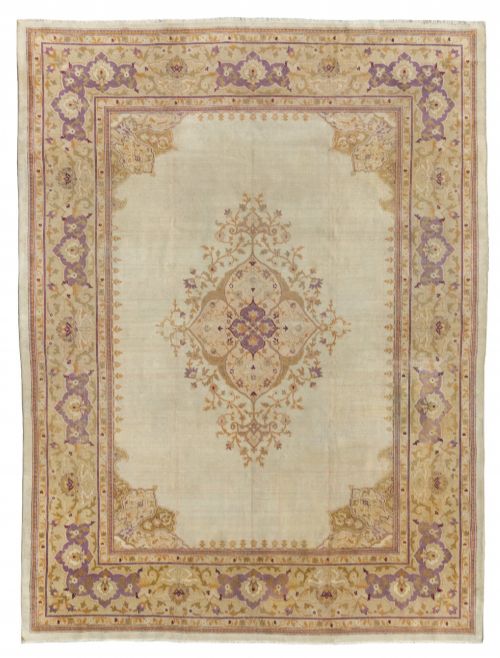
When you search for a large decorative rug, you encounter substantial floor coverings originating primarily from Persian, Ottoman, and North Indian weaving traditions. These pieces span from the eighteenth century through to the early decades of the twentieth century, encompassing expansive room-size formats.
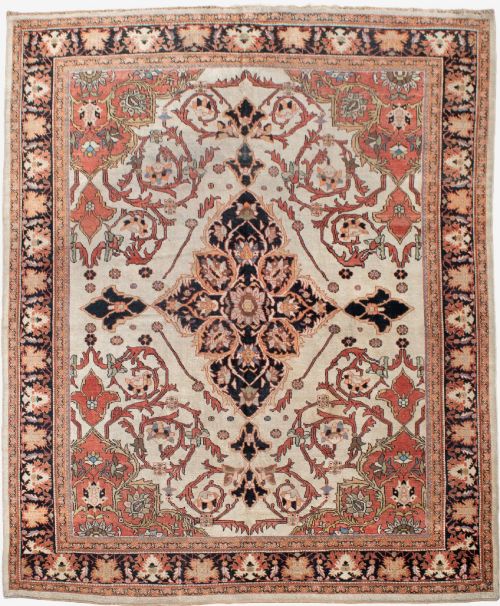
You are most likely to meet traditional Persian room-size carpets on this page, particularly Heriz, Mahal, and Ushak types woven in grand dimensions. These formats were designed to anchor significant spaces, utilising generous scales to suit large reception rooms.
The selection ranges from robust village carpets to refined workshop productions. Each piece demonstrates the distinctive regional motifs and colour palettes characteristic of its weaving centre.
What varies in quality
Quality rests upon the fineness of the knot density and the precision of the design execution. Tighter knotting allows for sharper delineation of traditional motifs and greater longevity under foot.
The character of the wool and the depth of the dye work distinguish superior examples. Age and honest wear add patina, while structural integrity ensures the carpet remains serviceable for modern interiors.
Many of these grand carpets spent a century warming draughty country houses before finding their way onto modern wooden floors.
The Large Decorative Rug Glossary
- Warp
- The vertical threads stretched on the loom that form the foundation of the carpet. The visible fringes at either end of the rug are the extension of these structural cords.
- Weft
- The horizontal threads passed across the warp strands to lock the rows of knots in place. Together with the warp, they create the grid that supports the pile.
- Pile
- The upright surface of cut wool loops that forms the soft nap of the rug. This is the part that receives the wear and displays the decorative design.
- Kilim
- A flat-woven carpet or rug made without a pile by tightly interweaving warp and weft threads. These pieces offer a lighter, reversible alternative to knotted carpets.
- Fragment
- A surviving portion of a larger historic carpet, often preserved for its design or antiquity. These pieces are typically mounted or utilised in specific interior settings.
Large Decorative Rug: Frequently Asked Questions
How do I clean a large decorative rug?
Professional dusting and specialist washing are essential for maintaining antique wool carpets. Avoid household detergents or excessive moisture which can damage natural dyes and cotton foundations.
Regular gentle vacuuming without a beater bar removes surface grit before it settles deep into the pile. Specialist conservators should handle any deep cleaning or structural repairs.
Where should I place a room-size carpet?
These large formats suit principal reception rooms, dining areas, and expansive hallways where furniture can sit comfortably atop the field. Ensure the rug leaves a uniform border of exposed flooring around the perimeter of the space.
Use a quality underlay beneath the carpet to prevent slipping and cushion the fibres against hard subfloors. This extra layer also reduces friction between the wool pile and the ground.
How do I identify a Heriz carpet?
Heriz carpets typically feature bold, geometric medallion designs with robust corner spandrels. The wool is known for its durability, often yielding a heavier, sturdier handle than finer urban Persian weaves.
These village carpets from north-west Persia often incorporate strong terracotta and navy tones. Their sturdy construction made them popular choices for high-traffic rooms.
What is the difference between Ushak and Mahal carpets?
Ushak carpets, originating in Turkey, generally display large-scale floral motifs rendered in softer, muted pastel or terracotta tones. Their looser knotting style gives them an expansive, painterly quality.
Mahal carpets come from the Persian district of Farahan and feature all-over Herati or medallion patterns. They tend to have balanced, decorative layouts suited to traditional interiors.