

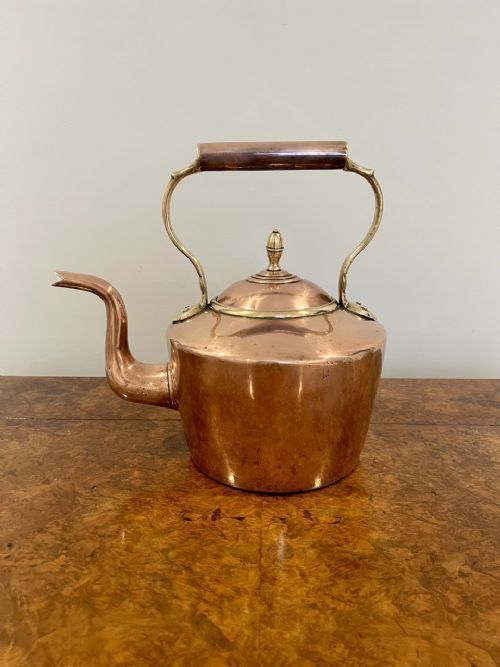


Large Copper Tea Vessel
These large copper tea vessel examples are substantial utilitarian metal pieces designed for heating water in domestic settings.

Large Copper Tea Vessel
A large copper tea vessel takes the form of kettles, samovars, and water urns originating from the Georgian and Victorian periods. Most items seen in this category date specifically to around eighteen hundred.
The inventory comprises substantial tea vessels fashioned from copper, frequently augmented with brass, iron, bone, and wood components. These items served a practical function in large households before modern plumbing.
Buyers encountering this phrase find hollowware designed for boiling and dispensing water. The selection spans standard kettles alongside hanging water urns and samovars.
How they were made
Smiths constructed these heavy vessels primarily from sheet copper, often joining elements with brass fittings, iron handles, and turned wood or bone insulators. The metal was beaten or rolled into shape and joined mechanically or with solder.
Details such as brass taps and handles added durability and contrast to the warm tone of the polished copper bodies.
Large Copper Tea Vessel Retail Price Guide 2026
Typical asking prices for large copper tea vessel among the pieces listed under this phrase on Sellingantiques today, from the lower quarter to the upper quarter. They describe what is for sale here now, not the wider market.
The listings span the Georgian and nineteenth-century periods, incorporating materials such as copper, brass, bone, iron, and wood.
What varies in quality
Differentiation in these pieces rests upon the precision of the metalwork, the weight of the copper utilised, and the integrity of associated brass and iron components. Pieces exhibiting finer construction demonstrate superior craftsmanship in their spouts and handles.
The presence of original fittings like turned bone or wood insulators separates standard utility examples from superior ones.
The Large Copper Tea Vessel Glossary
- Samovar
- A heated metal container traditionally used to boil and heat water in Russia. These large vessels often feature an internal central tube.
- Urn
- A tall vessel, typically with a base and often featuring a tap, used for holding water. These were designed for large gatherings.
- Hanging water urn
- A specific form suspended on a frame or bracket to facilitate tipping or dispensing water. This configuration appears in Georgian examples.
- Insulator
- A component made of wood or bone positioned on a handle to prevent heat transfer. These parts protect the user's hand during use.
Large Copper Tea Vessel: Frequently Asked Questions
What is a large copper tea vessel?
It is a hollowware metal container from the Georgian or Victorian eras used for heating and dispensing water. These pieces include kettles, samovars, and urns.
They were built for heavy domestic use, employing durable materials like copper, brass, and iron to withstand daily boiling.
How were these vessels used?
They sat on hearths or stands to boil water for tea and other domestic needs. The larger forms served whole households.
Water was heated directly within the metal body and dispensed via attached taps or poured from the spout.
How do I date a copper tea vessel?
Dating relies on stylistic markers associated with periods such as the Georgian era or the nineteenth century. Construction techniques also provide clues.
Details like hand-beaten copper surfaces and specific brass hardware configurations point towards eighteenth or nineteenth-century origins.
What materials are typical?
Copper forms the primary body of the vessel, supplemented by brass for taps and trim. Iron, wood, and bone appear in handles and insulators.
These mixed materials ensured structural strength and protected users from heat.