




Large Copper Fire Bin
A large copper fire bin brings warmth and a rich metallic hue to a fireside, serving both as a practical fuel store and a striking decorative vessel.
Large Copper Fire Bin
When searching for a large copper fire bin, you are looking at substantial hearth vessels designed to hold logs, coal, or kindling by the fireplace. These pieces often double as garden planters or general storage vessels, reflecting their versatile utility over the centuries.
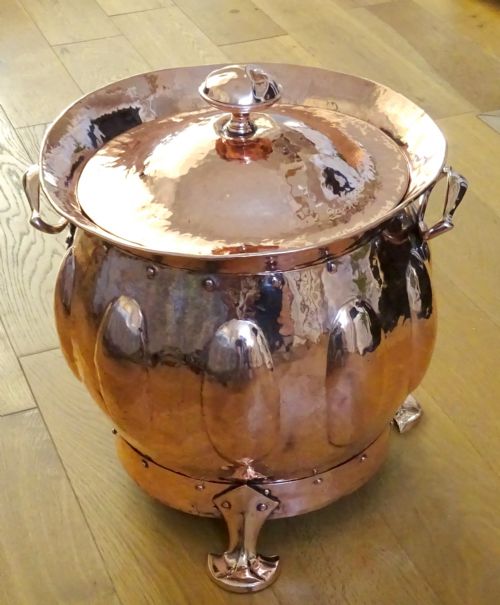
The versions you are most likely to meet on this page hail primarily from the nineteenth century, including Georgian and Victorian periods, as well as early twentieth-century examples featuring Art Nouveau styling.
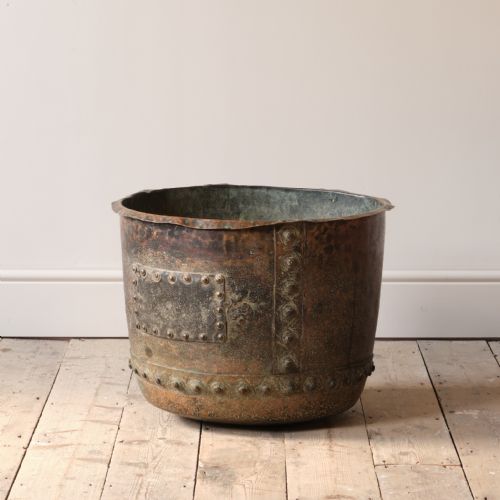
Forms range from straightforward riveted boilers and scuttles to shaped buckets and handled bins, frequently accompanied by brass fittings and iron mounts that highlight their robust domestic history.
How they were made
These vessels rely heavily on sheet metal construction, hammering copper into deep bodies with reinforced rims to withstand daily hearth use. Heavy riveting secures the overlapping seams, creating a strong structural joint that doubles as a decorative border.
Many examples incorporate contrasting materials, pairing warm copper bodies with sturdy brass handles, feet, or rims, and sometimes incorporating iron elements for added durability.
Surface finishes vary from polished metallic sheens to natural verdigris patinas accumulated over decades of exposure near fires or in gardens.
Large Copper Fire Bin Retail Price Guide 2026
Typical asking prices for large copper fire bin among the pieces listed under this phrase on Sellingantiques today, from the lower quarter to the upper quarter. They describe what is for sale here now, not the wider market.
Listings here feature items spanning from the Georgian era and the nineteenth century through to the early twentieth century, utilising copper, brass, and iron.
What varies in quality
The calibre of a piece rests largely on the thickness of the metal sheet and the integrity of the hand-beaten form. Heavier gauge copper holds its shape better over generations of service and resists denting around the rim.
Subtlety in construction details distinguishes superior examples, such as neatly turned edges, cleanly hammered rivets, and well-balanced brass handles or lion-mask mounts rather than plain or clumsy attachments.
The harmony of proportion and the character of the aged patina elevate certain items, showing an honest transition from utilitarian fireside object to prized decorative antique.
The Large Copper Fire Bin Glossary
- Verdigris
- A green patina or crust that forms naturally on copper, brass, or bronze over time through atmospheric oxidation. This weathered surface is often valued by collectors for its antique character.
- Riveted
- Joined together using metal bolts or pins that are hammered flat at the ends. This technique provides both exceptional structural strength and a distinct industrial aesthetic on metal vessels.
- Scuttle
- A metal bucket or coal hod designed for carrying fuel to a fireplace, typically featuring a swing handle and sometimes a tilted opening. These items were essential everyday hearth accessories in past centuries.
- Planter
- A deep vessel or pot used for growing or displaying plants, a secondary function frequently adopted by large metal bins once retired from fireside duty.
Large Copper Fire Bin: Frequently Asked Questions
What were large copper fire bins used for?
These bins were primarily utilised beside the hearth to store logs, coal, or peat for feeding the household fires.
Their robust construction and generous capacity kept fuel tidy and dry while adding a reflective metallic warmth to the room.
How do I date a copper fire bin?
Dating relies on observing construction methods, such as hand-beating marks and heavy copper riveting typical of earlier periods, compared to machine-finished elements found later.
Stylistic cues like Georgian proportions or Art Nouveau curves also point towards specific eras of manufacture.
Can I use an antique fire bin outside?
Many of these vessels already double as garden planters and tolerate outdoor settings well due to the inherent weather resistance of copper.
However, placing them outdoors will encourage further verdigris development and natural patination over time.
How should I clean antique copper?
Most collectors prefer to leave an aged patina untouched, gently dusting the surface rather than aggressive polishing that removes historical character.
If cleaning is desired, mild soapy water and a soft cloth will remove dirt without stripping the underlying metal skin.