

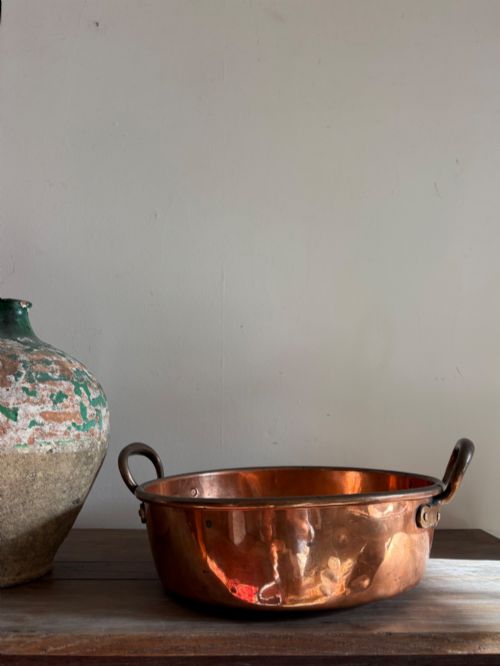
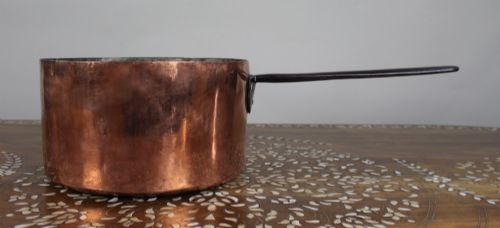


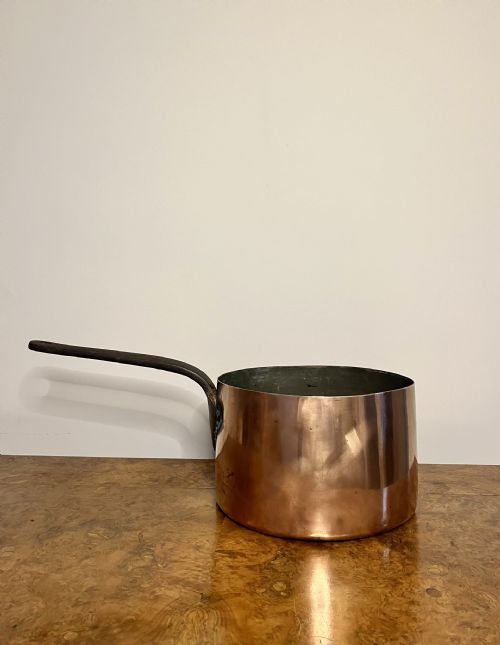


Large Copper Cook Pot
These large copper cook pot examples are heavy kitchen vessels built for serious heat, offering both solid utility and rich historic warmth.
Large Copper Cook Pot
When you search for a large copper cook pot, you find substantial kitchenware dating from the Georgian and Victorian eras. These pieces include deep preserve pans, saucepans, and cauldrons designed for heavy daily use.
The versions you meet most frequently on this page span the nineteenth century, often featuring sturdy brass handles and substantial weight. They range from simple rustic farmhouse vessels to refined kitchen copper stamped by makers like Liptons.
These items serve equally well as striking fireside accessories or functional kitchen pans. Their generous proportions and visible age make them central pieces for period interiors.
Materials and construction
The primary material is heavy-gauge sheet copper, chosen for its exceptional thermal conductivity. Makers shaped these pots by hand, often joining seams with meticulous dovetailing or riveting before finishing the surface.
Handles and fittings typically utilise cast brass or wrought iron, secured firmly to the copper body with robust rivets. Tin linings were traditionally applied to the interior surfaces to prevent direct contact between food and the copper.
Large Copper Cook Pot Retail Price Guide 2026
Typical asking prices for large copper cook pot among the pieces listed under this phrase on Sellingantiques today, from the lower quarter to the upper quarter. They describe what is for sale here now, not the wider market.
Listings feature pieces spanning the Georgian and Victorian eras, dominated by nineteenth-century copper, brass, and iron kitchenware.
Judging quality and character
Quality in a large copper cook pot rests on the thickness of the metal and the integrity of its original construction. Heavy walls and solid brass handles indicate a piece built for demanding kitchen work rather than decorative display.
Patina and surface marks tell the story of active service over the centuries. Retaining original handles, lids, and maker stamps elevates a piece, distinguishing standard kitchen utilitarian items from exceptional examples.
Hodges and Sons·Liptons
The Large Copper Cook Pot Glossary
- Preserve pan
- A wide, shallow cooking vessel designed specifically for boiling fruit and sugar. These pans feature open tops to encourage rapid evaporation during jam making.
- Cauldron
- A large round pot with a rounded base and carrying handles, traditionally suspended over an open fire or hearth. They are cast or beaten from heavy metal to withstand direct flames.
- Saucepan
- A deep cooking pot with a single long handle, used for general stove work. Period examples often pair heavy copper bodies with stout brass grips.
- Patina
- The natural surface sheen and oxidation developed through age, handling, and use. It represents the physical history of the metal over generations.
Large Copper Cook Pot: Frequently Asked Questions
Can I still cook with a vintage copper pot?
Many of these historical vessels retain their structural integrity and can be used on modern heat sources if properly maintained. However, you must check the interior tin lining to ensure safe food preparation.
Most buyers choose to utilise them as decorative kitchen accents or impressive fireplace accessories rather than risking damage to antique metalwork.
How do I tell a Georgian pot from a Victorian one?
Georgian pots, often associated with the George III period, typically display simpler hand-beaten forms with heavy wrought iron or brass fittings. Their construction methods reflect earlier blacksmithing and coppersmithing traditions.
Victorian pieces frequently show more standardised manufacturing techniques alongside heavier brass handles and occasional maker stamps or retailer marks.
Why do some pots have iron handles while others have brass?
Wrought iron handles appear more frequently on utilitarian hearth pieces where extreme heat resistance is paramount. Iron offers immense strength for lifting heavy contents over open fires.
Cast brass handles became common on refined kitchen saucepans and preserve pans, offering a brighter aesthetic and comfortable grip for domestic staff.
How should I clean aged copper?
Light dusting and occasional gentle washing with warm soapy water preserves the natural historic surface without removing character. Avoid harsh chemical cleaners that strip away authentic age.
Leaving the dark oxidation intact highlights the hammered texture and varied tones accumulated over centuries of service in period kitchens.