




Large Copper Charger
A large copper charger offers a commanding focal point for a wall or table, bringing substantial metallic weight and detailed handwork into a room.
Large Copper Charger
A large copper charger functions as a grand decorative platter, wall plaque, or tray designed to display intricate metalwork across a broad surface. When searching for a large copper charger, buyers encounter pieces spanning the Victorian era, the nineteenth century, and the Arts and Crafts movement.
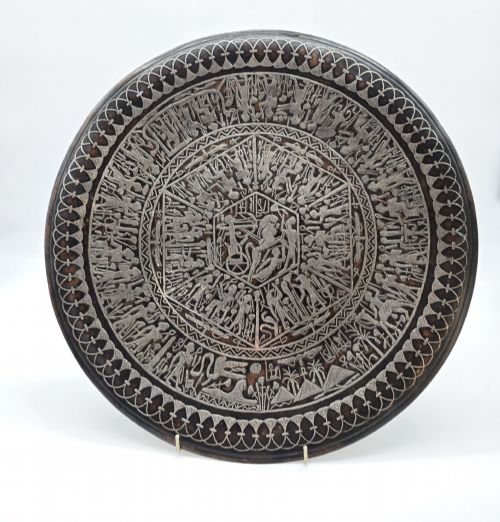
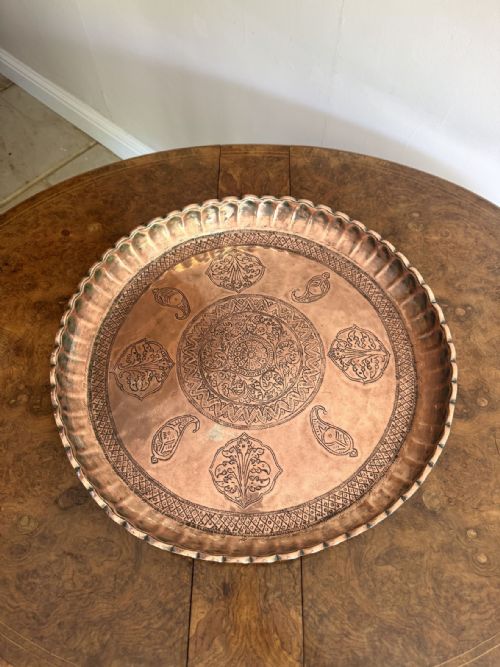
The selections on this page encompass various global traditions, featuring Egyptian Cairo Ware, Japanese Meiji period cloisonne enamel, Anglo-Indian repousse work, and Persian engraved designs. Wall chargers and decorative trays dominate the forms, frequently utilising circular formats to showcase pictorial or geometric motifs.
Makers and workshops from diverse origins applied distinct aesthetic languages, ranging from the dragon and bird symbolism of Japanese metalwork to the dense surface patterns of Middle Eastern Cairo Ware and Raj period Indian vessels.
How they were made
Makers constructed these large vessels primarily from sheet copper and mixed metals, occasionally incorporating brass wire, silver, enamel, and wood components. Repousse and engraving techniques allowed artisans to hammer and carve detailed relief work directly into the metal surface.
Japanese cloisonne examples required applying fine metal wires to form cells on a copper base, which were then filled with coloured enamel pastes and fired multiple times. Other traditions relied on skilled hand-engraving and mixed metal inlays to achieve contrasting textures and tones across the broad expanse of the charger.
Large Copper Charger Retail Price Guide 2026
Typical asking prices for large copper charger among the pieces listed under this phrase on Sellingantiques today, from the lower quarter to the upper quarter. They describe what is for sale here now, not the wider market.
Mounting a large copper charger with an owl gazing perpetually at Mount Fuji brings an unexpected avian supervisor into the dining room.
What varies in quality
The standard of execution in repousse relief and enamel work dictates the visual distinction of a piece, separating simple production items from masterwork creations. Crispness of chisel marks, depth of hammer work, and the complexity of pictorial compositions reveal the hand of a skilled artisan.
The integrity of the primary metal substrate and the preservation of original surface finishes heavily influence the overall character. Pieces that retain their complex mixed metal inlays or undisturbed enamel work demonstrate superior original craftsmanship.
Hugh Wallis
The Large Copper Charger Glossary
- Charger
- A large ornamental plate or platter traditionally used for display rather than dining. These substantial pieces often hang on walls or rest on dedicated stands.
- Repousse
- A metalworking technique where the artisan hammers the metal from the reverse side to form a raised design in relief. Details are then refined from the front using chisels and punches.
- Cloisonne
- An ancient decorative art form employing fine metal wires soldered to a metal base to create compartments, which are subsequently filled with enamel and fired.
- Cairo Ware
- Metalware produced in Egypt during the late nineteenth and early twentieth centuries, typically featuring copper or brass inlaid with silver and other contrasting metals in intricate Islamic geometric patterns.
- Meiji Period
- The era in Japanese history spanning from 1868 to 1912, characterised by a rapid opening to Western trade and the production of highly refined arts for export, including advanced enamel chargers.
Large Copper Charger: Frequently Asked Questions
How were large copper chargers used?
Historically, large chargers served as impressive display pieces on sideboards or dining tables to signal wealth and status. Many examples also functioned as wall plaques to decorate grand interiors.
Today, buyers primarily use them as striking wall hangings or centerpieces on large tables to introduce metallic texture and historic character into a room.
How do I hang a heavy wall charger safely?
Hanging a heavy metal charger requires secure wall anchors and a properly rated bracket or spring-clip hanger that supports the entire rim without putting stress on decorative elements. It is essential to mount the fixture directly into wall studs or use heavy-duty toggle bolts.
Ensure the rim depth matches the grip of the hanger, and check the weight distribution before leaving the piece unsupported on the wall.
How do I distinguish Japanese cloisonne from Middle Eastern metalwork?
Japanese cloisonne chargers feature smooth glass enamel surfaces divided by thin wire outlines, often depicting natural subjects like birds, dragons, and landscapes. These pieces rely on colourful vitrified pastes fused to a copper foundation.
In contrast, Middle Eastern and Cairo Ware pieces present exposed metal surfaces decorated with chased, engraved, or mixed metal inlaid patterns of geometric and calligraphic designs without enamel infill.
How should I clean an antique copper charger?
Antique copper chargers generally benefit from minimal intervention to preserve their historic patination and original surface character. Dusting with a soft, dry cloth is usually sufficient for routine maintenance.
Avoid abrasive polishes or harsh chemical dips, as these treatments strip away centuries of oxidation and can permanently damage delicate enamel work, silver inlays, or hand-engraved details.