


Large Club Armchair
A large club armchair offers unmatched comfort and presence, bringing deep seats and sturdy frames into a study or library.
Large Club Armchair
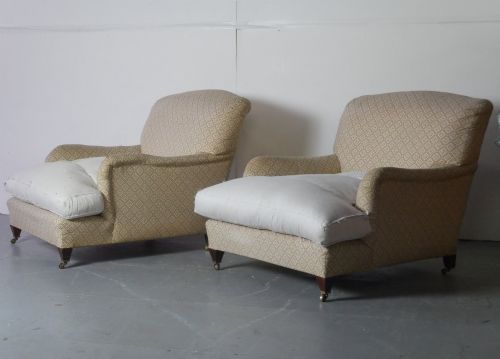
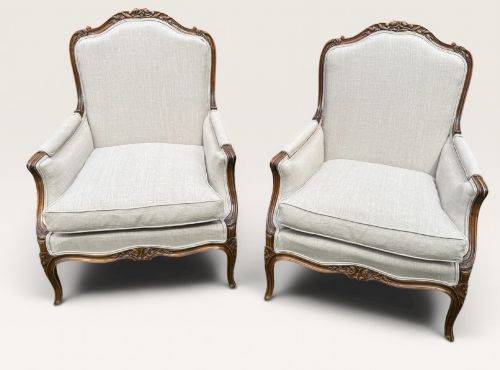
A large club armchair represents deep seating and generous proportions designed for relaxation, most frequently seen in nineteenth century and early twentieth century English and French examples.
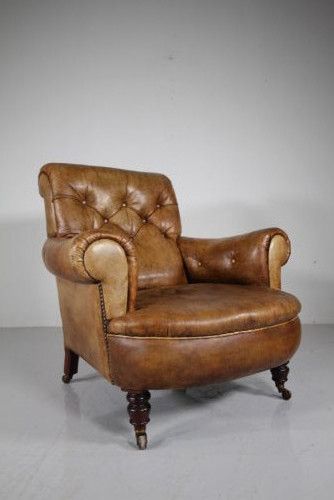
Buyers will encounter various interpretations on this page, ranging from Victorian leather library chairs and Edwardian country house seats to Art Deco frames upholstered in supple hide.
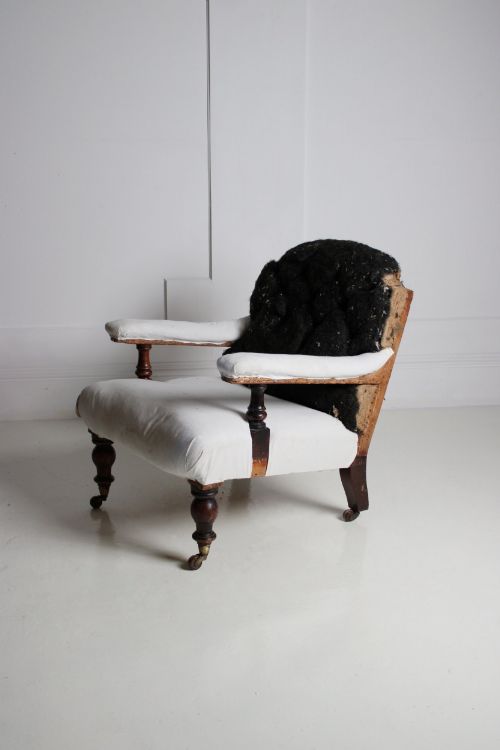
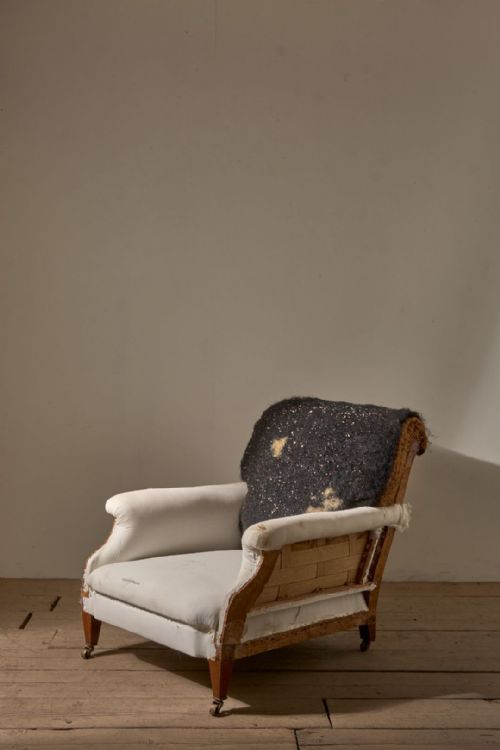
These substantial armchairs appear in traditional styles such as Howard, Grafton, and Bridgewater, often resting on timber legs with brass castors for easy movement across heavy carpets.
How they were made
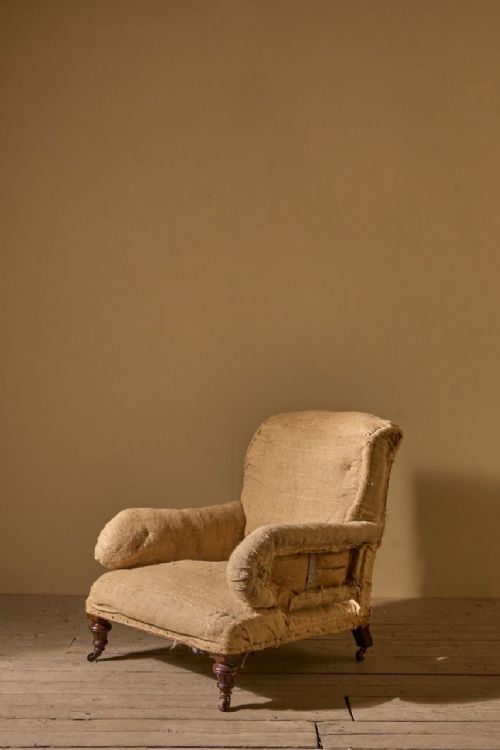
Makers built sturdy internal frames using timber such as mahogany, oak, and walnut to support the heavy, continuous use expected of a library or club seat.
Upholstery relied on traditional stuffing finished with leather, fabric, or calico, secured with deep buttoning where the design demanded extra resilience and shape.
The listings show armchairs spanning the Victorian, Edwardian, and Art Deco periods, alongside Revival styles in mahogany, walnut, and oak.
What varies in quality
The distinction between ordinary and exceptional pieces lies in the integrity of the frame and the depth of the seating springs, which dictate how well the chair retains its posture over decades of heavy use.
Quality also shows in the handling of the covering material, where thick leather develops a rich, even patina, or high-grade fabric tailors neatly around complex curves without sagging.
Whytock and Reid·Hamptons and Sons·Howard and Sons
The Large Club Armchair Glossary
- Buttoned back
- An upholstery technique where depressions are formed in the padding by stitching through to the frame. Deep buttoning provides structural tension and a distinctive padded texture.
- Castor
- A small wheel fitted to the base of the furniture legs to ease movement. Brass fittings are common on nineteenth century library chairs.
- Library chair
- A heavy, comfortable seat traditionally kept in studies or reading rooms. These pieces prioritize deep cushioning and durable leather upholstery.
- Wing back
- An armchair with side panels or wings attached to the back frame. This design originally protected sitters from draughts near open fires.
Large Club Armchair: Frequently Asked Questions
Where should a large club armchair go?
These generous seats require ample floor space to balance their deep proportions and substantial arm width.
They sit well beside a fireplace, within a spacious study, or paired opposite a sofa in a drawing room.
How do I identify a Howard style chair?
Howard style armchairs are recognised by their low, scrolled arms, generous depth, and tapered wooden legs fitted with brass castors.
They prioritize relaxed lounging without sacrificing formal English country house elegance.
Are these chairs suitable for daily use?
The robust timber frames and sturdy sprung interiors make these armchairs ideal for everyday sitting.
Their heavy construction handles regular use comfortably while maintaining structural support.
What is the difference between Victorian and Art Deco models?
Victorian examples tend to feature buttoned leather backs, turned wooden legs, and traditional Chesterfield influences.
Art Deco versions introduce streamlined silhouettes, oak frameworks, and smoother hide upholstery typical of the interwar period.