

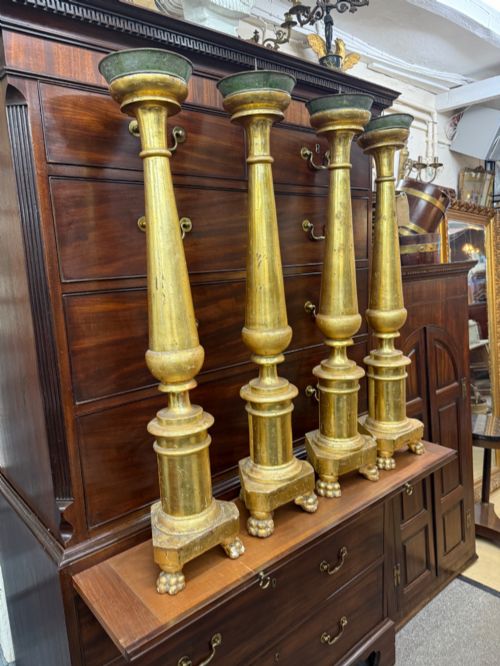
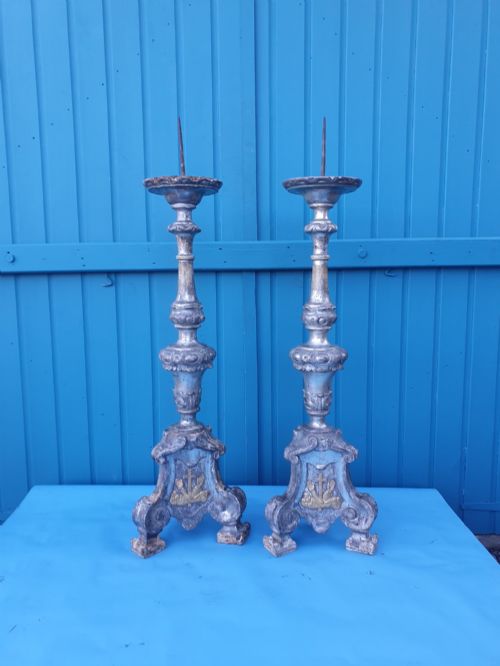
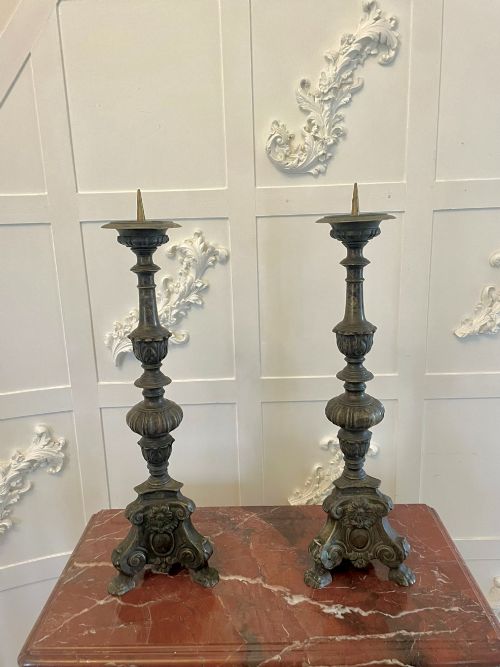
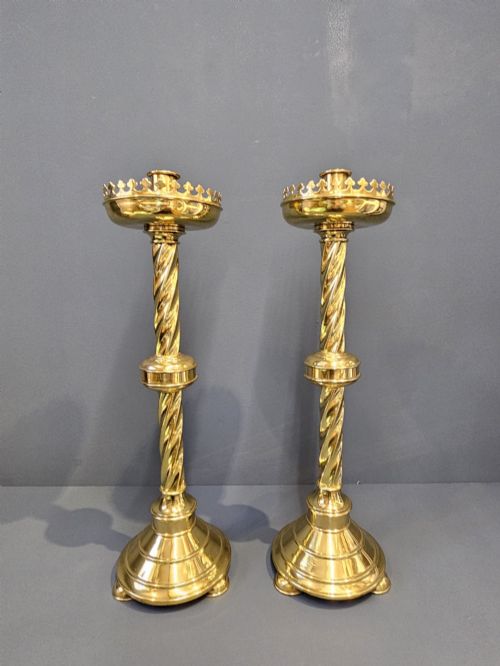


Large Church Altar Candlesticks
Large church altar candlesticks provide commanding vertical presence, combining heavy metal or carved timber with liturgical design to anchor a room.
Large Church Altar Candlesticks
Large church altar candlesticks are tall ecclesiastical fittings designed to hold candles upon religious altars or surfaces. When you search for large church altar candlesticks, you encounter substantial metal and timber pieces originating from various centuries.
Brass and carved wood dominate the selection, often taking the form of matching pairs or occasionally larger sets. Stylistic influences span across Baroque, Gothic Revival, and Amsterdam School aesthetics.
The most common versions met on this page are Victorian and nineteenth century brass examples, frequently featuring pricket tops designed to impale large wax candles.
How they were made
Metal versions rely on cast and turned brass, copper, or bronze, sometimes enhanced with iron structural components. Wood-based examples utilise carved timber substrates finished with gesso, silver leaf, or giltwood applications.
Surface decoration involves hand tooling, gilding, and polychrome paintwork applied over wooden cores. Brass and bronze elements achieve their form through traditional foundry casting and subsequent lathe turning.
Large Church Altar Candlesticks Retail Price Guide 2026
Typical asking prices for large church altar candlesticks among the pieces listed under this phrase on Sellingantiques today, from the lower quarter to the upper quarter. They describe what is for sale here now, not the wider market.
Several pieces double as table lamps, proving that even solemn liturgical hardware eventually enjoys a modern electrical retirement.
What varies in quality
Quality rests upon the crispness of the original casting or the depth and hand-carving skill evident in wooden examples. Heavier gauge metals and deeply articulated decorative motifs distinguish finer pieces from simpler utilitarian items.
The integrity of the original surface finish, whether aged giltwood, silver leaf, or patinated brass, dictates the visual authority of the object.
The Large Church Altar Candlesticks Glossary
- Pricket
- A sharp metal spike on top of a candlestick designed to secure a large candle. This spike prevents the candle from sliding off the platform.
- Giltwood
- Wood that has been coated with a thin layer of gold leaf or gold paint. This finish creates a luminous metallic appearance across carved surfaces.
- Gesso
- A plaster-like mixture applied to wood surfaces as a base for painting or gilding. It provides a smooth ground for intricate decorative carving.
- Corinthian column
- A classical architectural column style featuring ornate carved capitals decorated with acanthus leaves. This motif appears frequently on nineteenth-century columnar candlesticks.
- Baroque style
- An artistic style characterised by exaggerated motion and clear detail used to produce drama and grandeur. Pieces in this style often display exuberant scrollwork and organic forms.
Large Church Altar Candlesticks: Frequently Asked Questions
What is a pricket candlestick?
A pricket candlestick uses a sharp metal spike instead of a socket to hold the candle in place. The base of the wax candle is pressed directly onto this vertical point.
Historically, this design accommodated the very thick candles used in ecclesiastical settings before standard socket diameters became common.
How were church candlesticks used?
These tall fixtures stood upon or beside church altars to provide illumination and symbolic light during religious services. Their elevated height ensured the light carried across large liturgical spaces.
Over time, many of these ecclesiastical objects transitioned from active worship spaces into domestic and decorative interiors.
How do I style them at home?
Their considerable height makes them effective as floor-standing or heavy sideboard focal points. Pairing them with oversized pillar candles completes their visual scale.
Keep surrounding furniture and decor relatively simple to let the architectural presence of the candlesticks stand out.
How can I tell the period?
Dating relies on observing material choices, construction methods, and stylistic cues such as Gothic Revival or Baroque detailing. Nineteenth-century pieces often show distinct machine-assisted turning alongside hand finishing.
Earlier eighteenth-century examples tend to display heavier hand-carved timber elements or distinct casting irregularities unique to period foundry work.