

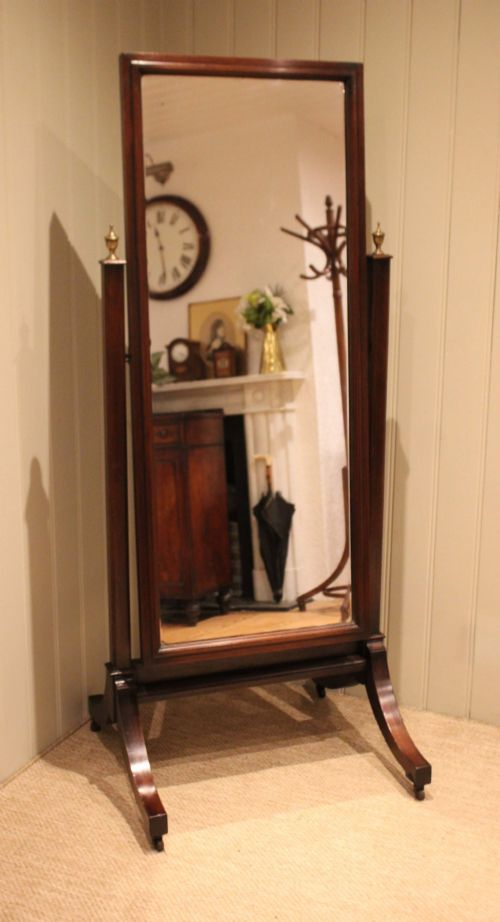
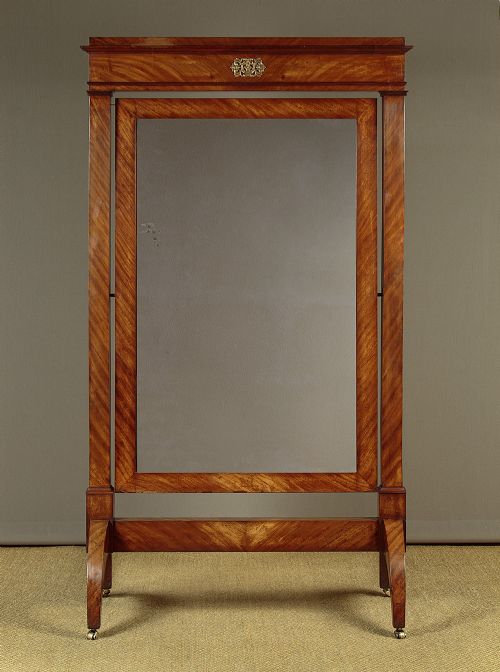
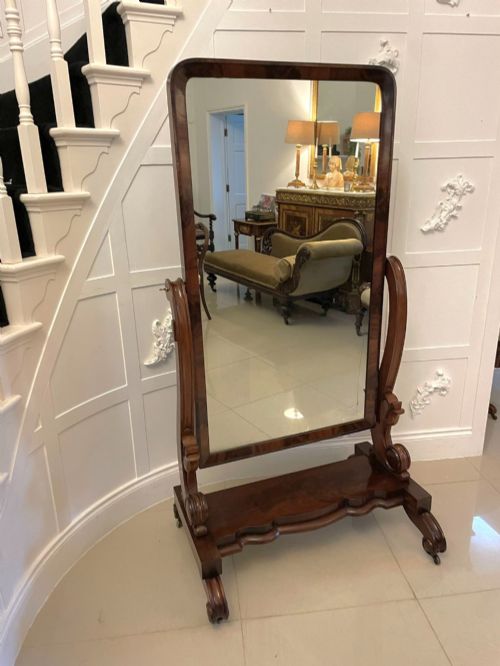
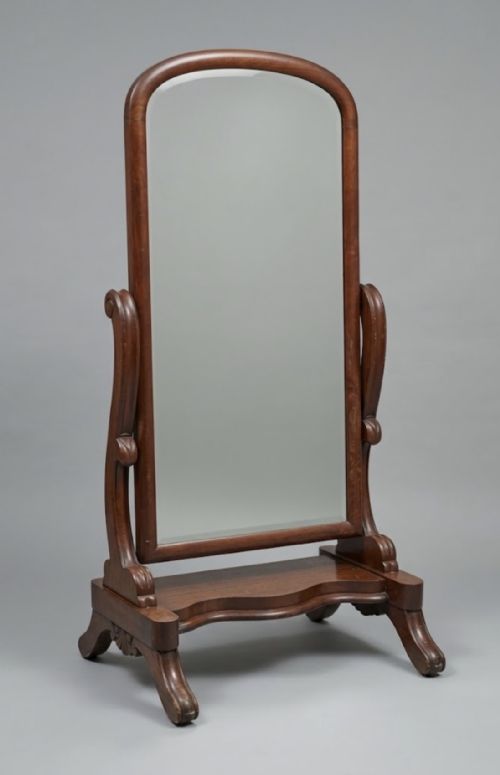


Large Cheval Mirror
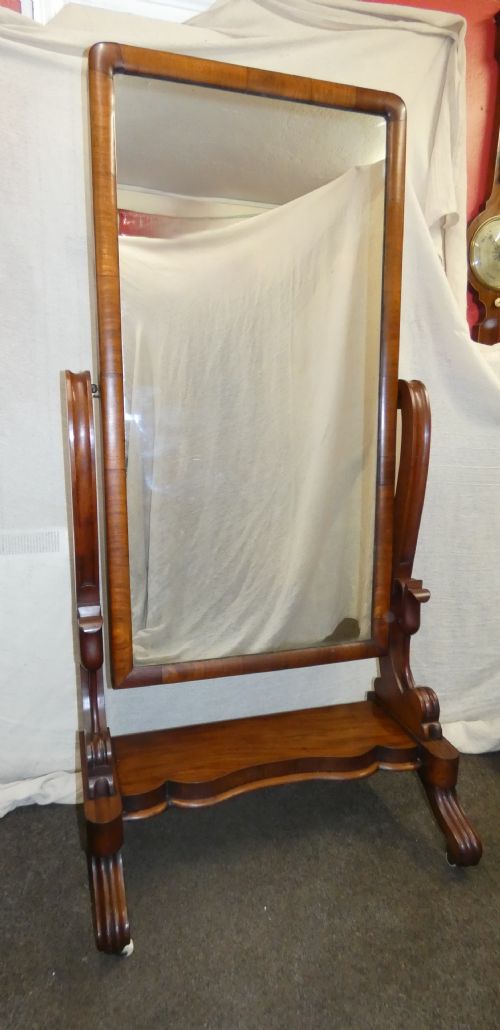
A large cheval mirror provides a full-length reflection in a freestanding frame, offering both utility and presence in a room.
Large Cheval Mirror
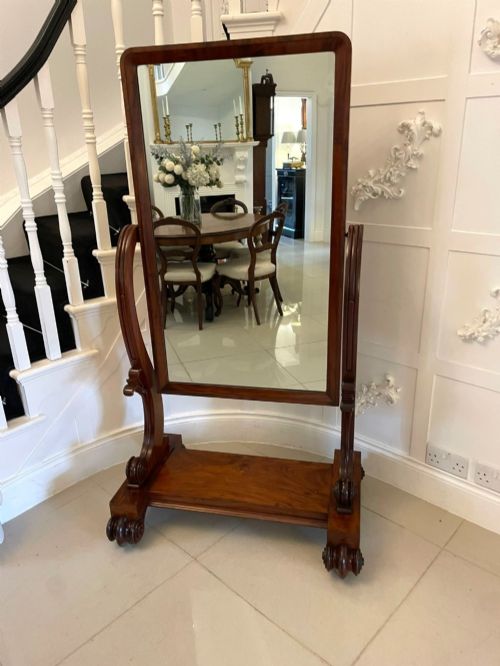
A large cheval mirror is a freestanding, full-height floor glass mounted on pivots within a sturdy frame. When you search for a large cheval mirror, you encounter pieces primarily from the nineteenth century, including Victorian and Regency periods, alongside later twentieth-century interpretations.
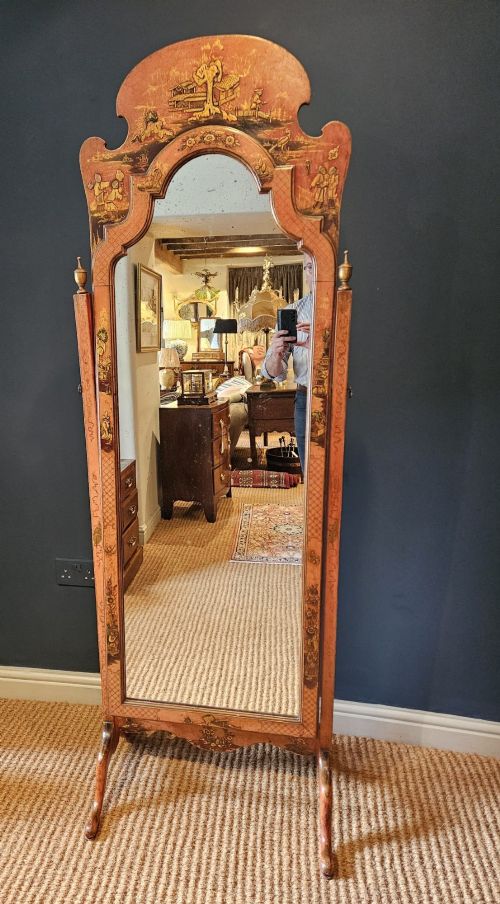
The most common examples on this page are constructed from mahogany, often designed as tall floor-standing swing mirrors for dressing rooms and bedrooms. These pieces range from restrained country house designs to ornate gilded and Chinoiserie examples.
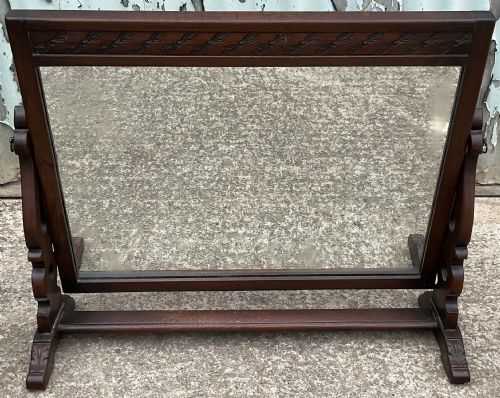
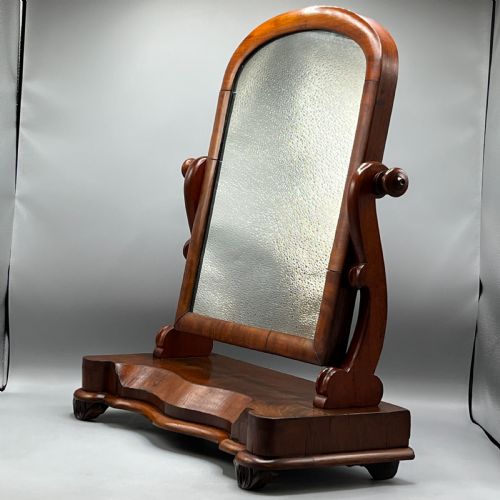
Alongside proper floor-standing cheval mirrors, the selection includes related larger dressing table and toilet mirrors designed to sit upon furniture. These share the characteristic pivoting glass mechanism mounted on upright supports.
Materials and Construction
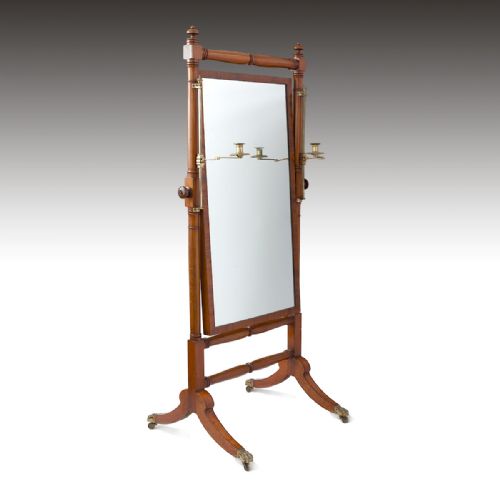
Frames are predominantly built from dense hardwoods such as mahogany, oak, walnut, and satinwood, frequently shaped with turned pillars and scroll feet. Artisans utilised brass for pivot pins, candle sconces, and adjustable hardware, allowing the glass frame to tilt smoothly.
Decorative surfaces employ gesso and giltwood for ornate relief ornamentation, particularly on Regency and later revival pieces. Mirror glass is set into rebated frames, sometimes backed with panelled wood to maintain structural rigidity.
Large Cheval Mirror Retail Price Guide 2026
Typical asking prices for large cheval mirror among the pieces listed under this phrase on Sellingantiques today, from the lower quarter to the upper quarter. They describe what is for sale here now, not the wider market.
Some nineteenth-century makers thoughtfully added small brass candle arms to the frame so you could check your attire long before electric lighting arrived.
Assessing Quality and Craftsmanship
The distinction between ordinary and superior pieces rests on the weight of the timber and the architectural proportion of the frame. Higher quality examples demonstrate refined joinery in the upright supports and crisp carving on the feet and crestings.
Hardware integration also marks the standard of manufacture, where heavy brass pivots and original screw fittings operate without straining the wood. The clarity of the mirror plate and the depth of the wood's grain finish further distinguish finer pieces.
The Large Cheval Mirror Glossary
- Cheval glass
- A large mirror hung in a frame that allows it to swing. This freestanding form takes its name from the French word for horse.
- Gesso
- A plaster-like material applied to wood surfaces and carved or moulded before gilding. It provides the raised detail seen on ornate frames.
- Giltwood
- Timber covered with a thin layer of gold leaf. It creates the brilliant metallic finish found on neoclassical and revival mirrors.
- Pivots
- The metal pins or screws set into the sides of the mirror frame. They connect the glass housing to the upright standards and allow tilting.
- Toilet mirror
- A smaller mirror designed to sit on a dressing table or chest. Many feature small drawers in the base plinth.
Large Cheval Mirror: Frequently Asked Questions
How do I date a large cheval mirror?
Dating relies on observing the timber species, joinery methods, and stylistic cues present in the frame. Regency and Georgian examples tend to show cleaner architectural lines, while Victorian pieces often incorporate heavier carved details and burr veneers.
Hardware also provides clues, as hand-turned screws and specific brass pivot designs align with particular manufacturing eras. Comparing the construction style to documented pieces helps narrow down the decade of production.
Are these mirrors heavy to move?
These large freestanding pieces possess substantial weight due to dense hardwoods like mahogany and oak combined with heavy glass plates. Moving them usually requires two people to prevent strain on the vertical pivot joints.
When repositioning, lifting the entire structure rather than pulling by the frame protects the structural integrity of the base and upright supports.
Where should I place a cheval mirror?
Placing the mirror where it captures natural light from a window enhances room brightness and provides a functional full-length view. Bedrooms and dressing rooms remain traditional locations, though larger hallways also accommodate them well.
Ensuring adequate clearance around the base allows the frame to tilt safely without hitting surrounding furniture or walls.
What is the difference between a cheval and dressing mirror?
A cheval mirror stands directly on the floor at full height to reflect the entire figure. Dressing mirrors and toilet mirrors are scaled down for placement on top of tables or chests of drawers.
While both use a similar pivoting swing mechanism, their primary function differs between full-body viewing and upper-body grooming.