





Large Ceramic Jug
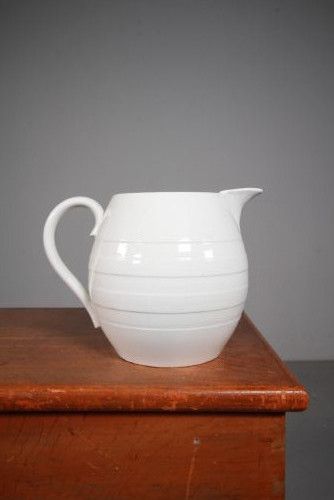
A large ceramic jug brings weight and character to a room, shifting from utilitarian kitchenware to decorative mantelpiece centrepiece.
Large Ceramic Jug
A large ceramic jug encompasses heavy utilitarian vessels, decorative ewers, and commemorative earthenware pieces spanning several centuries. Buyers searching for a large ceramic jug encounter sturdy stoneware flagons, creamware cream jugs, and porcelain water vessels originating from diverse European workshops.
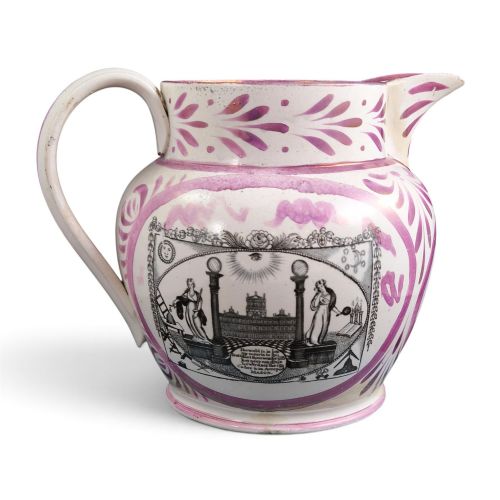
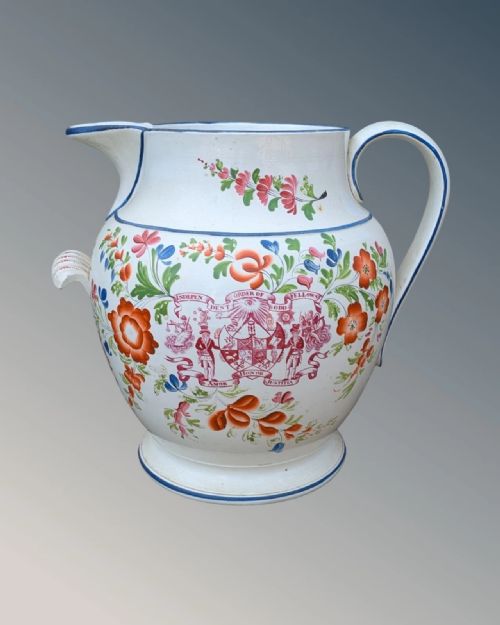
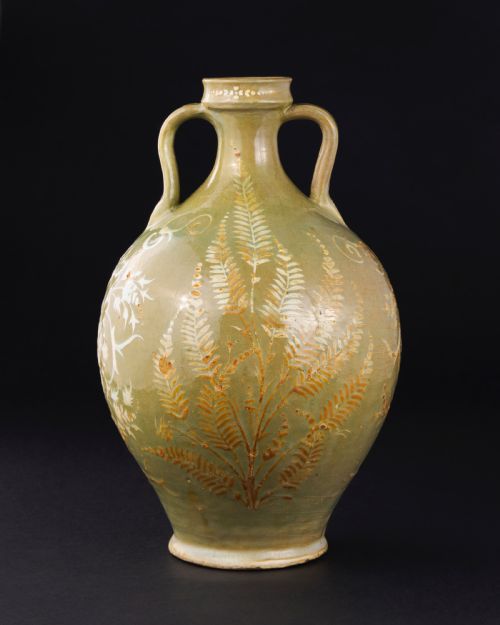
Victorian and Georgian examples dominate the selection, featuring transfer-printed maritime scenes, copper and pink lustre finishes, and relief-moulded dancing motifs. Earlier 17th-century pieces include Dutch slipware and salt-glaze flagons alongside Persian celadon pottery.
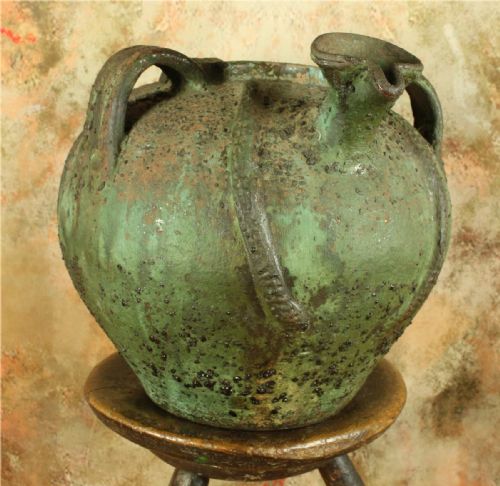
Functional pieces designed for milk, beer, or water sit alongside monumental French wine ewers and salesman's sample plaques. Mid-century European still life oil paintings also capture the enduring visual appeal of these vessels.
Materials and technique
Potters shaped these vessels using earthenware, ironstone, creamware, and porcelain bodies, often applying salt glaze, metallic lustre, or coloured enamel finishes. Stoneware pieces provided the robust durability required for large harvest cups and capacity vessels holding multiple gallons.
Moulding techniques enabled intricate relief designs, such as Bacchanalian dances and classical figures, while tin-glazed faience and slipware surfaces carried painted polychrome patterns. Silver rims were occasionally added to reinforce heavy stoneware and earthenware jugs.
Large Ceramic Jug Retail Price Guide 2026
Typical asking prices for large ceramic jug among the pieces listed under this phrase on Sellingantiques today, from the lower quarter to the upper quarter. They describe what is for sale here now, not the wider market.
Judging quality
The refinement of the modelling and the clarity of transfer-printed or hand-painted details separate standard utilitarian production from exceptional studio and factory pieces. Crispness in relief-moulded scenes indicates superior mould quality and careful finishing before firing.
Glaze consistency and the stability of metallic lustre applications determine the visual strength of the piece over time. Provenance to notable potteries or identifiable makers adds considerable historical weight to the ceramic body.
Doulton Lambeth Ware·Charles Meigh·Royal Worcester·Masons Ironstone·Ridgway and Sons·Choisy-le-Roi·Sarreguemines·Mountford
The Large Ceramic Jug Glossary
- Ewer
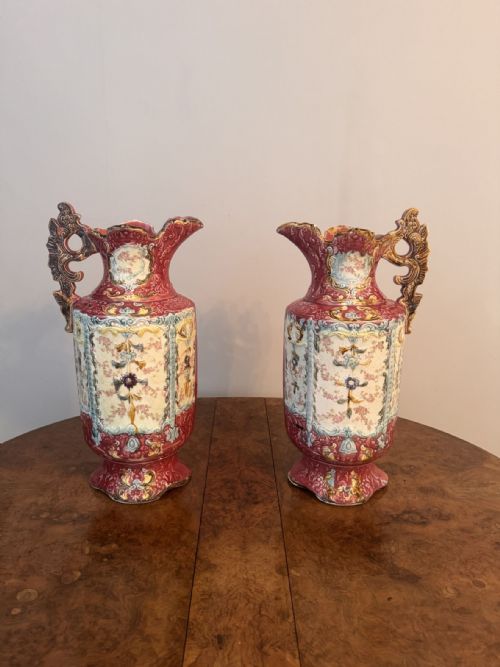
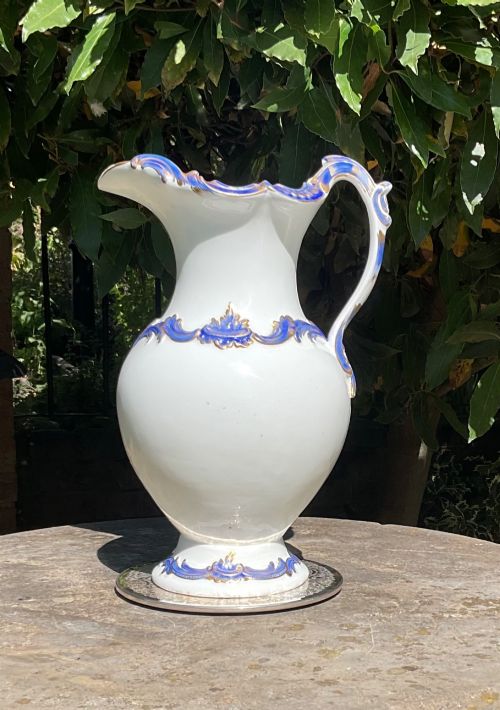
- A large jug with a wide spout and a curved handle, traditionally used for holding water or wine rather than dairy. These ornamental vessels often feature elaborate Victorian or Continental styling.
- Lustreware
- Earthenware or porcelain decorated with a metallic film that produces an iridescent, reflective sheen. Sunderland pink lustre and copper lustre are common variations found on 19th-century jugs.
- Slipware
- Pottery decorated with liquid clay, known as slip, applied to the unfurrowed body before firing. This technique creates tactile surface patterns typical of 17th-century Dutch and English pieces.
- Stoneware
- A dense, impermeable ceramic fired at high temperatures until vitrified. It resists liquids naturally without requiring a transparent glaze.
- Creamware
- A refined, pale yellow-cream earthenware developed in 18th-century Staffordshire. It gained popularity for its smooth surface and suitability for domestic service.
Large Ceramic Jug: Frequently Asked Questions
How were large ceramic jugs used originally?
Many of these vessels served practical domestic roles such as holding milk, beer, ale, or water for household washing and dining tables. Others functioned as commemorative harvest cups, marriage jugs, or decorative mantelpiece ewers.
Larger stoneware examples were built to hold specific liquid volumes, serving rural communities and taverns before transitioning into decorative display pieces.
How do I date an antique ceramic jug?
Dating relies on identifying the ceramic body type, glaze composition, and decorative motifs characteristic of specific eras. Georgian and Victorian pieces often display clear factory marks, registration diamonds, or transfer-printed historical themes.
Earlier 17th and 18th-century items show heavier potting techniques, hand-applied slip decoration, or salt-glazing textures distinct from later industrial production.
Can I use an antique jug for holding liquids?
While many historic jugs were manufactured for functional daily service, hairline cracks, old repairs, or porous earthenware bodies make modern liquid use risky. It is safer to treat older ceramic vessels primarily as decorative display items.
Stoneware and glazed ironstone tend to be more resilient, but inspecting the interior and base for structural weakness is essential.