
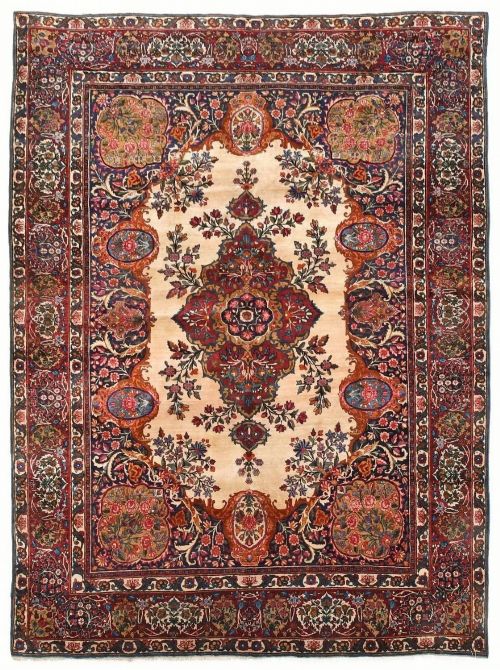


Large Central Medallion Carpet
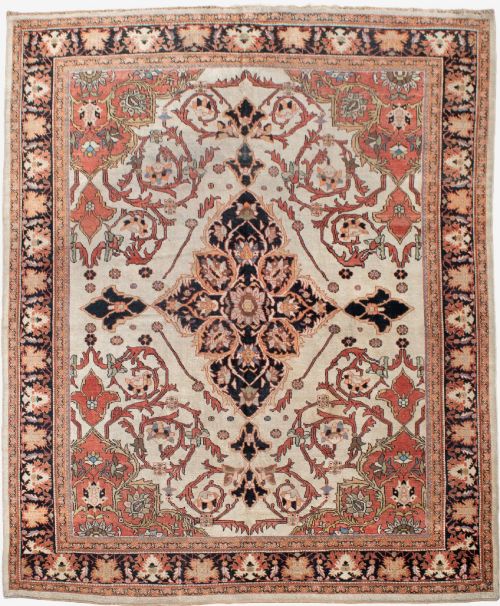
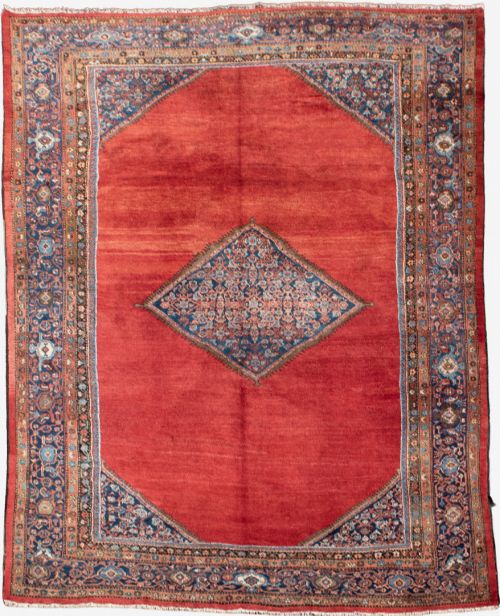
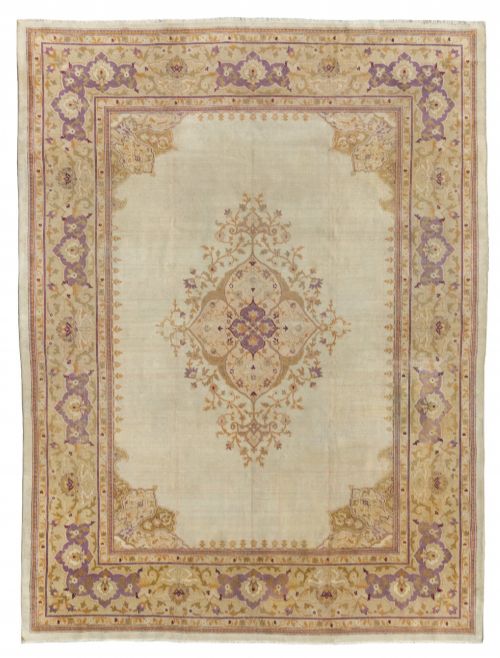
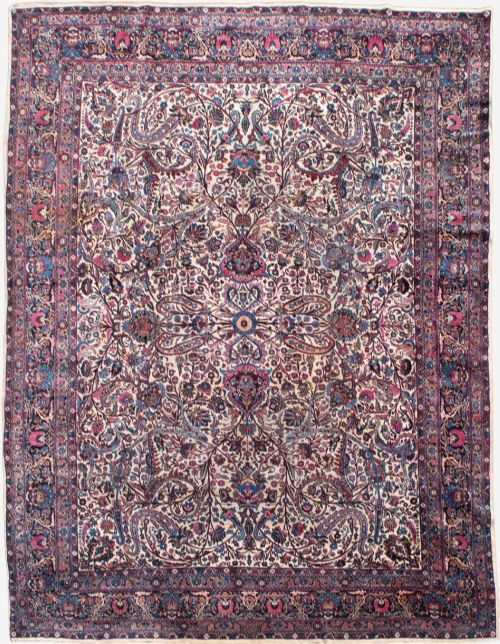
A large central medallion carpet anchors a room with a commanding central motif drawn from Persian and regional weaving traditions.
Large Central Medallion Carpet
A large central medallion carpet centres the eye on an intricate middle ornament, surrounded by elaborate field patterns and borders. These floor coverings arrive from traditions spanning Persian centres such as Kirman, Tabriz, Heriz, Mahal, Ferahan, Joshagan, Isfahan, Bidjar, Kashan, and Hamadan, alongside North Indian Amritsar production and Turkish Ushak and Oushak weaving.
Room size formats dominate the selection, often stretching to generous dimensions suitable for expansive floor spaces. You will encounter specimens originating from the late nineteenth century through to the mid-twentieth century, reflecting regional stylistic shifts.
The aesthetic relies on the interplay between the dominant central design and the surrounding field, creating a balanced focal point for traditional interiors. Each piece demonstrates the distinct regional geometry or curvilinear drawing characteristic of its provenance.
Materials and construction
Weavers constructed these carpets predominantly using wool pile knotted onto cotton foundations, occasionally incorporating silk to highlight specific details within the design. The quality of the wool determines the resilience and texture of the surface underfoot.
Natural and early aniline dyes provide the palette, creating rich variations in tone across the field and borders as the wool ages. Skilled artisans knotted the pile by hand, ensuring density and structural integrity across large room formats.
Some oversized room carpets require entire teams to roll them.
Distinctions in quality
Knot density and the precision of the drawing dictate the refinement of the central medallion and surrounding floral or geometric motifs. Higher quality examples maintain crisp outlines and proportional balance across expansive dimensions.
The condition of the wool pile and the uniformity of the dye retention across the field separate standard furnishing pieces from exceptional survivals. Patina and even wear indicate a well-maintained history, whereas heavy intervention alters the integrity of the original textile.
Maples Ushak
The Large Central Medallion Carpet Glossary
- Medallion
- The prominent central ornament positioned in the middle of the carpet field. It serves as the primary focal point of the composition.
- Field
- The background area of the carpet enclosed by the borders, surrounding the central medallion. This space carries the repeating motifs or vines.
- Warp
- The vertical threads stretched lengthwise on the loom before knotting begins. Cotton typically forms this structural foundation in these pieces.
- Weft
- The horizontal threads passed across the warp threads between rows of knots to secure the pile. It adds firmness to the carpet body.
- Pile
- The cut surface of knotted yarn that forms the soft upper layer of the carpet. Wool and silk make up this wearable surface.
Large Central Medallion Carpet: Frequently Asked Questions
How do I place a large central medallion carpet?
Position the carpet so that the central medallion sits visibly in the middle of the room, unblocked by heavy furniture. This allows the primary motif to command the floor space.
Ensure surrounding seating or tables leave the outer borders and corners partially exposed to frame the design effectively.
What defines a room size carpet?
Room size pieces typically measure well over three metres in length, designed to anchor substantial living spaces or dining rooms. They provide extensive coverage while leaving a margin of exposed floor.
These generous formats often feature expansive central medallions and wide multi-tiered border systems.
How do I distinguish Persian from Ushak carpets?
Persian examples usually feature precise curvilinear florals or geometric village patterns with dense knotting. Regional centres like Tabriz and Kirman demonstrate high detail.
Ushak pieces originating from Turkey tend to display larger scale motifs with softer wool and a more relaxed, open drawing style.
How do I care for antique wool carpets?
Vacuum gently with a suction-only attachment, avoiding beater bars that can pull at the wool pile. Rotate the carpet periodically to ensure even wear from foot traffic and sunlight.
Professional cleaning should occur only when necessary, using specialists experienced in antique textiles and natural dyes.