


Large Bronze Cachepot
A large bronze cachepot brings heft and texture to a room, functioning as an impressive vessel for large plants or as a standalone decorative bowl.
Large Bronze Cachepot
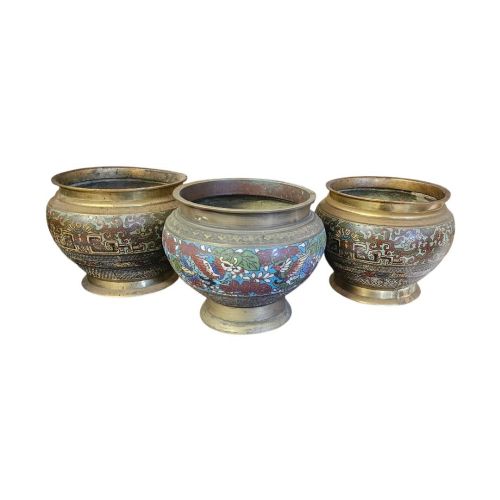
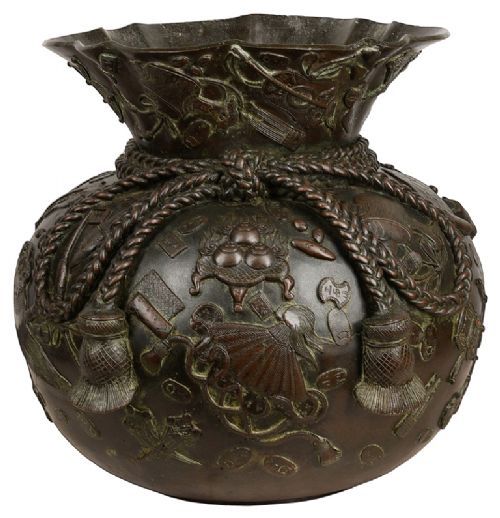
When you search for a large bronze cachepot, you encounter substantial metal vessels primarily originating from the nineteenth century, including pieces from the Meiji and Late Qing periods. These items frequently take the form of jardinières and decorative planters designed to house substantial flora.
The selections available on this page lean heavily towards Oriental aesthetics, featuring Japanese and Chinese examples alongside pieces executed in the Victorian taste for Japonisme. Forms range from heavy bowls weighing several kilograms to paired jardinières intended for balanced placement.
How they were made
Makers utilised cast bronze as the primary structural body, often incorporating brass or porcelain elements depending on the workshop and region. Surface decoration frequently involved intricate champlevé and cloisonné enamel work to create patterned detailing across the metal.
Casting methods produced heavy, durable walls capable of withstanding moisture and heavy use as planters. Artisans finished these vessels with patination or gilding to enhance the visual depth of the bronze surfaces.
Some bronze bowls carry enough weight to double as impromptu household kettlebells while you admire the champlevé enamel.
What varies in quality
The standard of a piece rests upon the crispness of the casting and the precision of any applied enamel work. Heavier vessels often demonstrate superior metal density and more robust construction.
Artistic execution in the surface ornamentation distinguishes standard production from finer work, particularly in Japanese Meiji period examples and Chinese champlevé pieces where detail defines the overall visual impact.
The Large Bronze Cachepot Glossary
- Cachepot
- An ornamental container used to hold a flowerpot and conceal it. These vessels lack drainage holes in the base, requiring an inner pot for live plants.
- Jardinière
- A large ornamental pot or stand for plants, typically ceramic or metal. These form the primary object type found within this category.
- Champlevé
- An enamelling technique where artists carve troughs into the metal surface to hold coloured enamel pastes before firing. This method creates bold, defined patterns across bronze bodies.
- Cloisonné
- A decorative metalwork technique using thin metal wires to form compartments that are filled with enamel. It results in intricate, compartmentalised colour patterns.
- Meiji Period
- A Japanese historical era spanning from eighteen sixty-eight to nineteen twelve characterised by a surge in decorative metalwork exports. Pieces from this time frequently display accomplished bronze casting.
Large Bronze Cachepot: Frequently Asked Questions
How do I use a cachepot?
Place a potted plant inside the vessel, ensuring you use a saucer or inner pot to catch drainage water since cachepots do not have holes at the bottom.
They also function well empty as decorative bowls on large tables or floor stands.
How do I date a bronze vessel?
Examine the casting method, surface wear, and stylistic indicators such as Meiji period motifs or Victorian aesthetic movement influences.
Material combinations like bronze paired with champlevé enamel also point towards specific late nineteenth-century manufacturing traditions.
Are these pieces waterproof?
Most antique bronze and enamel vessels hold water, but older soldered joints and enamel linings can develop minor seepage over extended periods.
Using a plastic liner protects the interior metal and prevents moisture damage to the antique surface.
What is the difference between a jardinière and a vase?
Jardinières possess a wider, bowl-like opening specifically proportioned to accommodate plant pots rather than cut floral arrangements.
Vases feature narrower necks designed to support upright stems.