


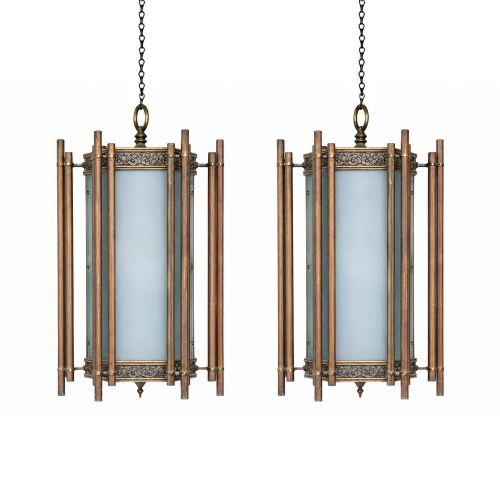


Large Brass Lantern
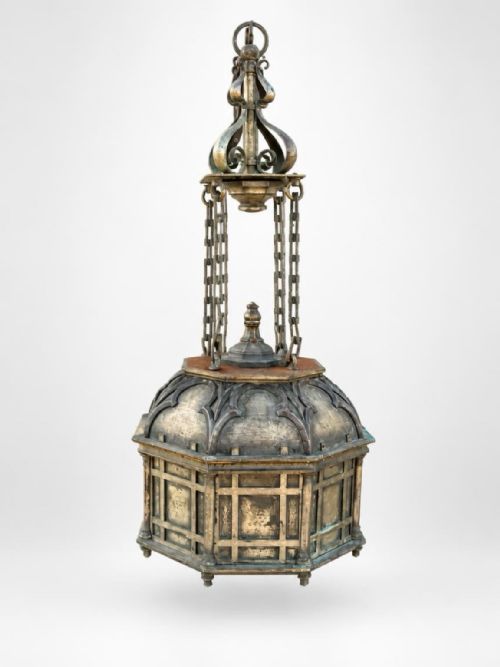
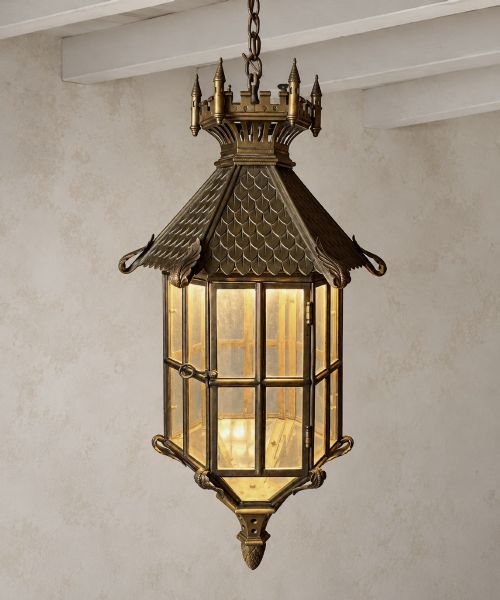
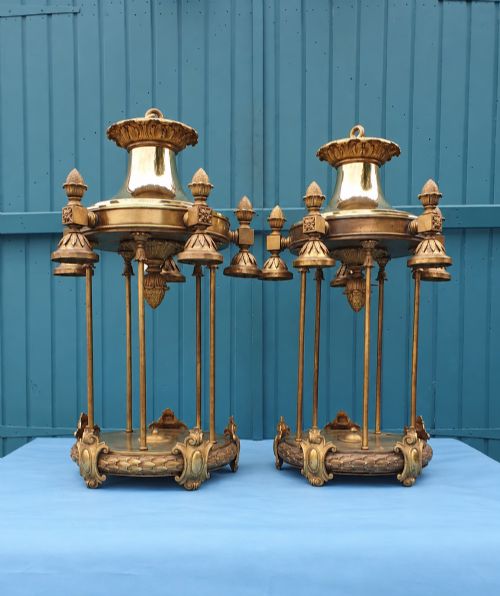
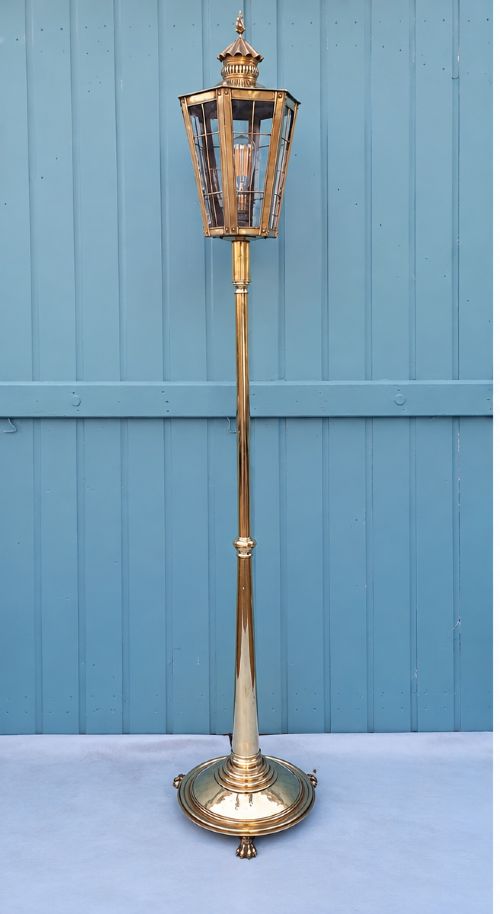
A large brass lantern brings commanding scale and warm illumination to high-ceilinged hallways and entrance halls.
Large Brass Lantern
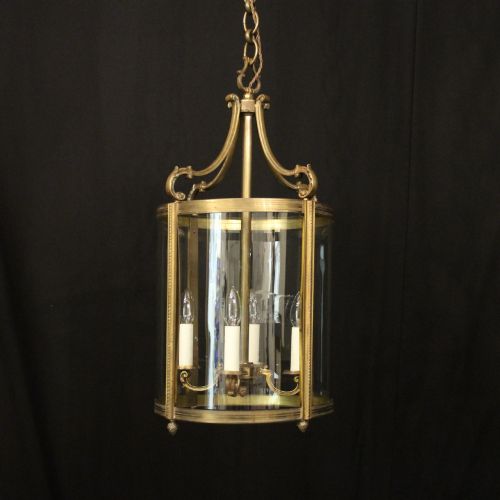
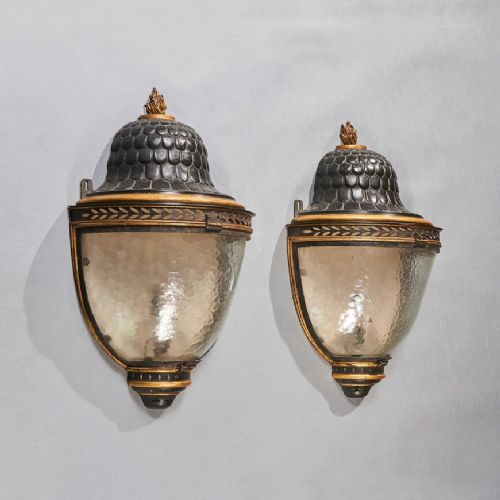
A large brass lantern acts as a principal overhead or wall-mounted light source designed for spacious interiors, vestibules, and stairwells. The pieces catalogued here span pendant lights, ceiling fixtures, and wall-mounted lanterns originating from British, French, and American workshops.
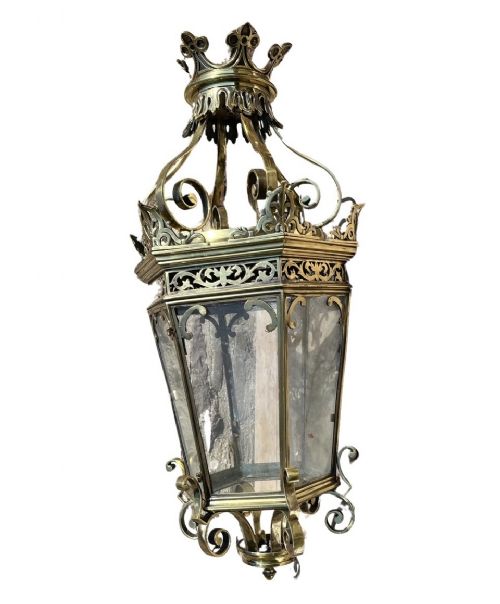
The selection frequently encounters French hall lanterns and English carriage lamps alongside Art Deco and Victorian Gothic Revival iterations. These lighting fixtures serve to fill generous architectural volumes while providing functional illumination through transparent, bevelled, or convex glass panes.
Buyers select these substantial fixtures to anchor period entranceways or add industrial and classical character to modern spaces. The forms range from simple hexagonal and octagonal shapes to elaborate multi-light constructions featuring cast brass frameworks.
How they were made
The structural framework relies heavily on cast or spun brass, often paired with secondary metals such as steel, copper, or bronze to achieve rigidity. Gilded bronze and tole peinte surface treatments appear alongside polished and aged brass finishes.
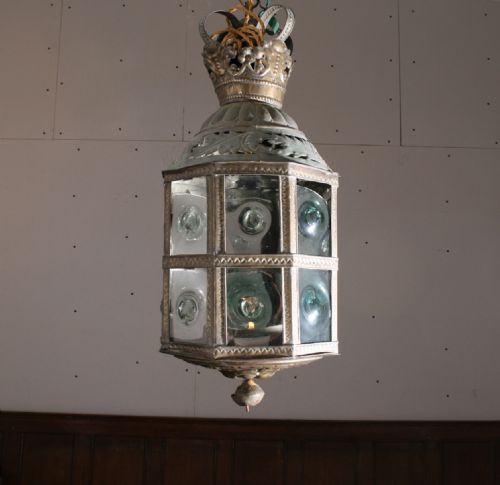
Glazing techniques utilise hand-blown bullseye glass, bevelled panels, frosted glass, and stained glass secured directly into the metal armature. Multi-light internal clusters and wiring configurations accommodate several bulbs to distribute light evenly through the protective glass housing.
Large Brass Lantern Retail Price Guide 2026
Typical asking prices for large brass lantern among the pieces listed under this phrase on Sellingantiques today, from the lower quarter to the upper quarter. They describe what is for sale here now, not the wider market.
Some coaching lanterns carry the gentle scars of horse-drawn journeys on rain-slicked roads.
What varies in quality
The standard of execution depends on the weight and crispness of the cast brass frame, where heavier castings with deep relief ornament demonstrate superior craftsmanship. Finishes applied to the metalwork, from fire-gilding to patinated bronze, determine the depth of visual character across the surface.
Glass selection significantly influences the overall merit of the piece, with hand-blown, bevelled, or convex panels representing more skilled production than standard flat panes. The integrity of the original joints, solder work, and structural mounts dictates how successfully the lantern holds its shape under its own considerable weight.
The Large Brass Lantern Glossary
- Convex glass
- Curved glass panels that project outward to refract light across a wider angle. This technique appears frequently on French hall lanterns.
- Bevelled glass
- Glass panes featuring an angled edge ground down to catch and disperse light. It adds a decorative border effect to the lantern walls.
- Tole peinte
- Painted sheet metal used in conjunction with brass elements to introduce colour and pattern. This material often appears on 19th-century wall fixtures.
- Bullseye glass
- Circular hand-blown glass containing a central knot or thickening point where the blowpipe was detached. These panes create distorted, characterful light patterns.
- Gilt bronze
- Bronze treated with a layer of gold through fire gilding or electroplating. This finish yields a rich, enduring metallic lustre on high-status frames.
Large Brass Lantern: Frequently Asked Questions
Where should a large brass lantern be hung?
These fixtures suit high-ceilinged entrance halls, stairwells, and expansive vestibules where their physical scale remains in proportion to the room. Ceiling heights must accommodate both the body of the lantern and any suspension chain or ceiling rose.
Outdoor porch installations require sheltered placement to protect antique metal finishes and electrical components from direct exposure to severe weather.
How do I date a large brass lantern?
Dating relies on identifying stylistic markers such as Art Deco geometric lines, Victorian Gothic Revival motifs, or the heavier cast brass construction typical of the 19th century. Fastener types, glass cutting techniques, and wiring access points also provide reliable clues regarding the period of manufacture.
Comparative analysis with documented pieces from French and English workshops helps narrow down the decade of production.
Can these antique lanterns be rewired for modern use?
Many examples feature updated wiring or can be fitted with modern electrical components to meet current safety standards without altering the external antique frame. Professional rewiring ensures the internal lamp holders safely support contemporary bulb wattages.
Retaining the original chain and canopy while updating the internal flex preserves the historical appearance during installation.
What is the difference between a hall lantern and a carriage lantern?
Hall lanterns typically feature symmetrical designs intended for interior suspension from ceilings using chains or fixed rods. They distribute light equally in all directions through multiple glass panels.
Carriage lamps and wall lanterns are engineered for lateral mounting against exterior or interior walls, often featuring a solid backplate and directional projection.