


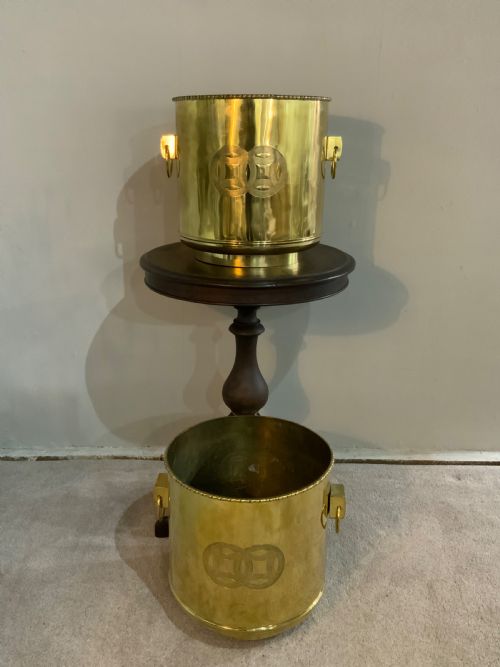


Large Brass Handle Pot
A large brass handle pot brings solid historic weight and domestic utility into a room, spanning centuries of metalworking skill.
Large Brass Handle Pot
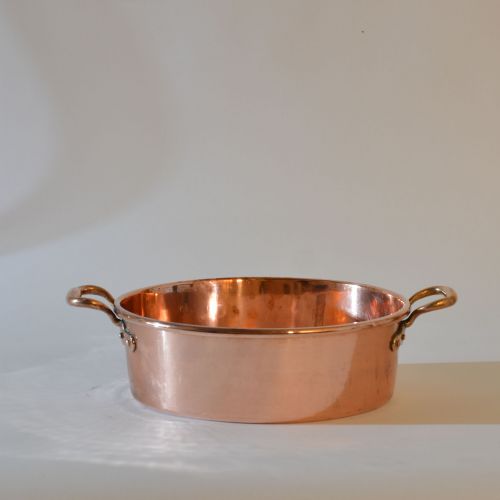
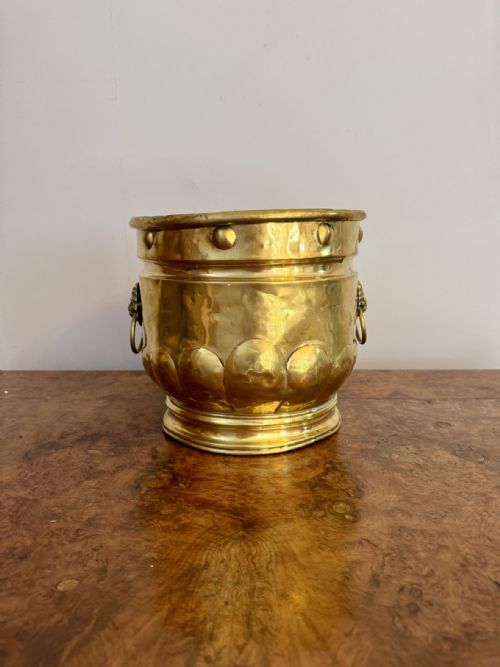
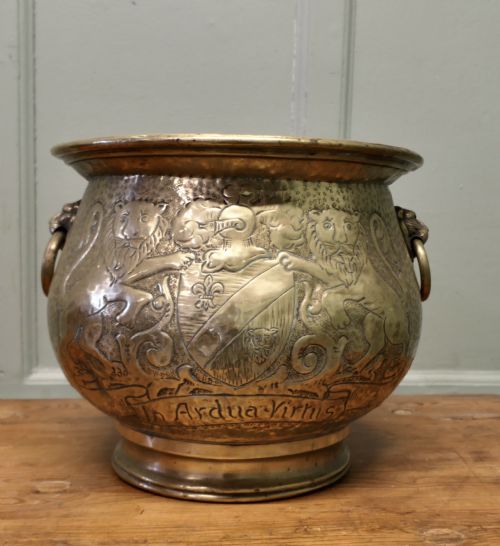
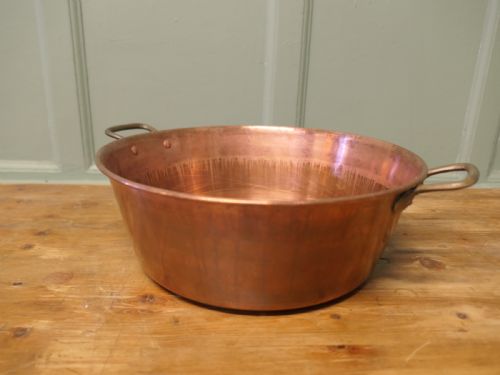
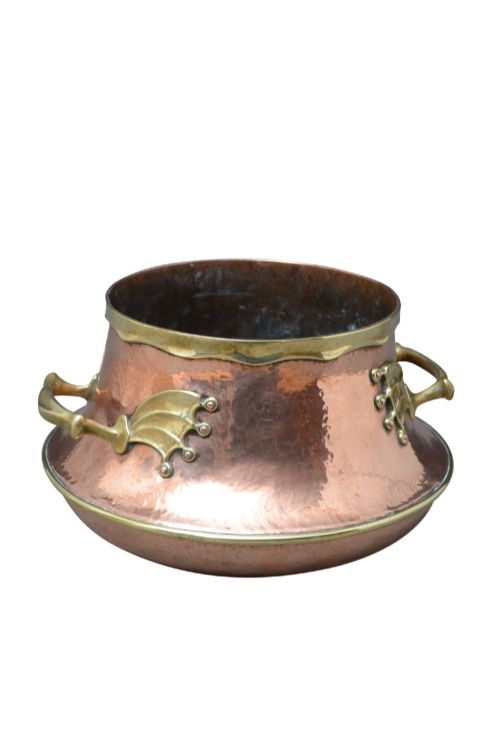
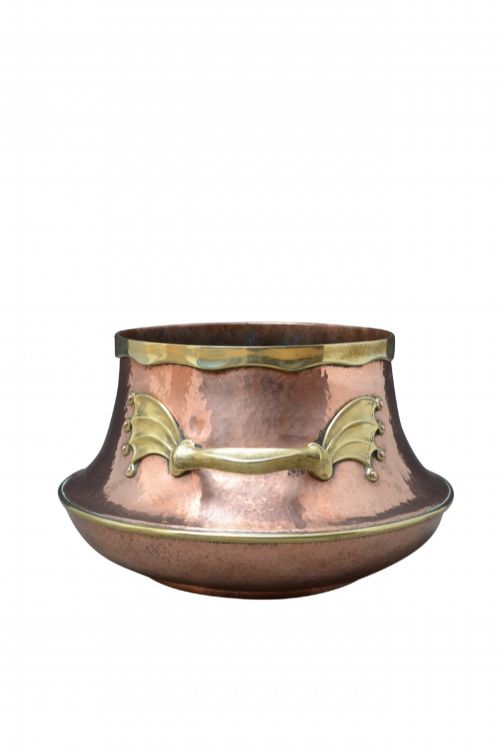
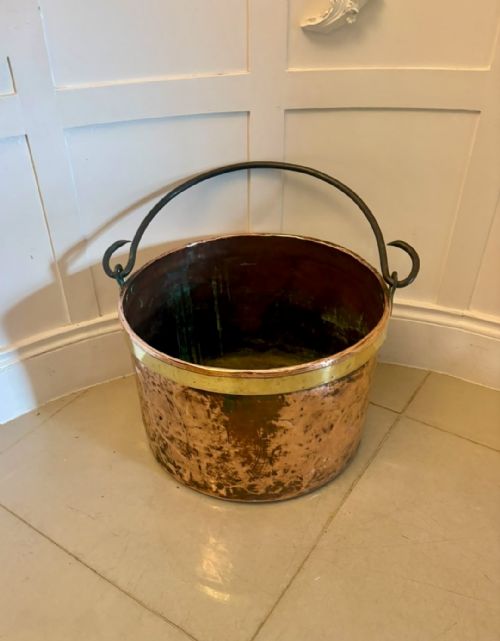
When you search for a large brass handle pot, you encounter heavy utilitarian vessels and decorative containers originally built for cooking, preserving, or fireside duties. These objects range from copper preserve pans fitted with brass grips to heavy brass jardinieres, coal buckets, and cauldrons.
The pieces on this page lean heavily towards nineteenth-century Victorian examples, alongside Georgian kitchenware and seventeenth-century continental bronze vessels. You will frequently find copper pans mounted with brass handles, or solid brass and bronze vessels adorned with lions mask handles, shields, or hand-engraved details.
Function shifts across these items from active kitchen use in jam pans and kettles to domestic display in planters and fireside buckets. The presence of sturdy handles defines the group, whether forged in iron or cast in brass to bear significant weight.
How they were made
Makers constructed these vessels using heavy sheet copper or cast brass, often hammering the metal by hand to achieve durable, seamless walls. Hammered finishes show the direct impact of the craftsman's mallet, creating subtle textures across the body of the pan or planter.
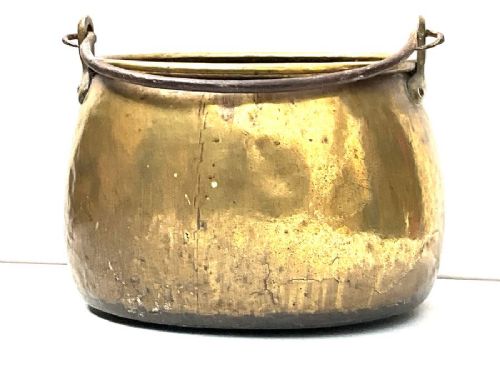
Handles were securely attached using rivets or cast directly as part of the vessel, frequently utilising contrasting metals like iron handles on mottled brass pans. Craftsmen also applied embossing, hand-engraving, and applied shields to decorative jardinieres during the Victorian and Arts and Crafts periods.
Large Brass Handle Pot Retail Price Guide 2026
Typical asking prices for large brass handle pot among the pieces listed under this phrase on Sellingantiques today, from the lower quarter to the upper quarter. They describe what is for sale here now, not the wider market.
Listings span from the 17th Century to the 1930s, featuring brass, copper, iron, wrought iron, and bronze materials.
What varies in quality
Quality rests upon the thickness of the metal plate and the integrity of the construction, where heavier vessels demonstrate superior domestic or display utility. George III and Victorian examples show differing levels of hand-finishing, from simple utilitarian preserve pans to deeply embossed artistic planters.
The refinement of the handles and decorative motifs separates standard kitchenware from exceptional decorative pieces. Fine craftsmanship appears in the crispness of lion mask mounts, hand-engraved surface patterns, and the balanced proportion of the brass handles to the main body.
The Large Brass Handle Pot Glossary
- Jardiniere
- An ornamental pot or stand for holding plants or flowers. These items often feature embossed decoration or cast handles suited for interior display.
- Preserve pan
- A wide, shallow cooking vessel designed for boiling fruit and sugar. They typically combine a copper body with sturdy brass handles for lifting.
- Dinanderie
- A term for various objects of medieval or later brass and copper alloy work. It encompasses decorative cauldrons, vessels, and planters.
- George III
- A historical period spanning from seventeen sixty to eighteen twenty. Pieces from this era display specific Georgian proportions and quality craftsmanship.
- Cauldron
- A large metal pot with a large handle used over an open fire. Early continental examples are frequently cast in bronze.
Large Brass Handle Pot: Frequently Asked Questions
What were large brass handle pots used for?
These vessels served demanding domestic roles, from boiling large quantities of fruit in copper jam pans to heating water in heavy kettles. They also functioned around the hearth as coal buckets and log bins.
Over time, many utilitarian pans transitioned into decorative jardinieres and planters for domestic interiors. Their robust construction allowed them to handle heavy loads of fuel, water, or soil.
How do I date a brass handled pot?
Dating relies on observing manufacturing marks, the method of handle attachment, and stylistic indicators such as Gothic Revival or Arts and Crafts motifs. Georgian and seventeenth-century pieces often show distinct casting techniques and heavier bronze or copper construction.
Victorian items frequently incorporate machine rolling alongside hand-hammering and decorative embossing. Comparing the vessel type against known periods helps narrow down its decade of origin.
Are these pots made of solid brass?
Many items feature a combination of metals, most commonly copper bodies fitted with solid brass handles. Other listings include solid cast brass or bronze vessels, alongside mottled brass pans with iron handles.
Examining the interior and rim reveals the base material beneath any patination or polish. The mix of copper and brass was standard practice for kitchen and fireside items.
How should I clean a antique brass pot?
Maintenance depends on whether you prefer a bright polished shine or the dark, undisturbed patination accumulated over centuries. Gentle dusting and occasional wiping with a soft cloth preserve the surface without stripping historical character.
Avoid harsh chemical abrasives that can damage hand-hammered textures or remove desirable age-related marks. Many collectors choose to leave the natural oxidation untouched.