
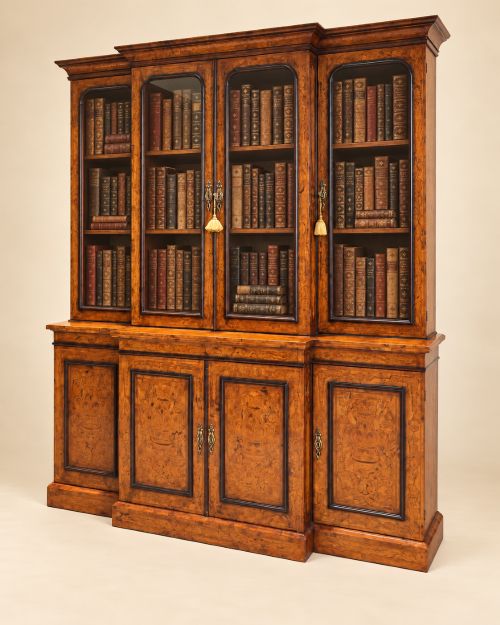

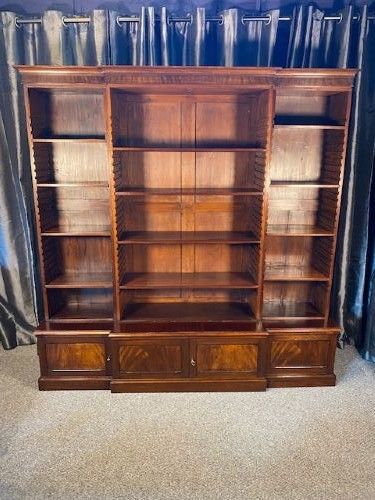
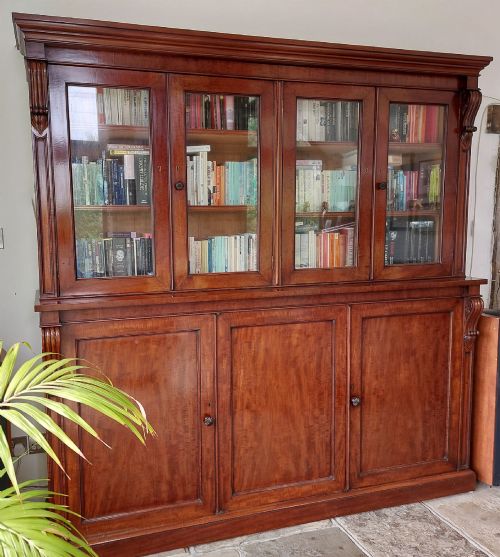
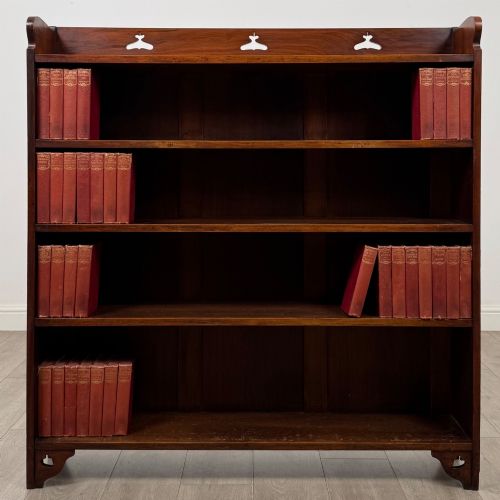
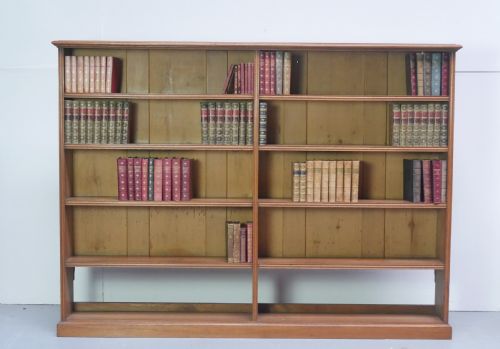

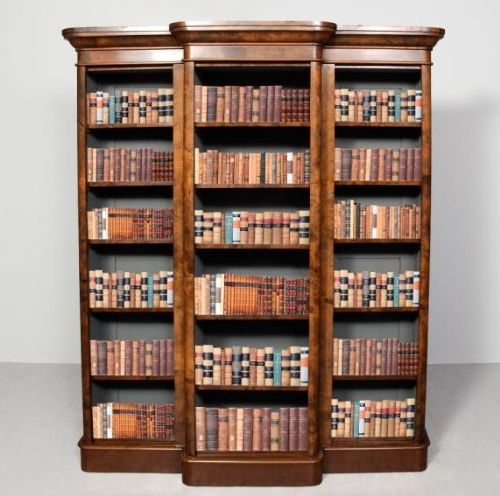
Large Book Display
A large book display provides generous architectural presence and substantial shelf space for serious libraries, anchoring a room with period gravitas.
Large Book Display
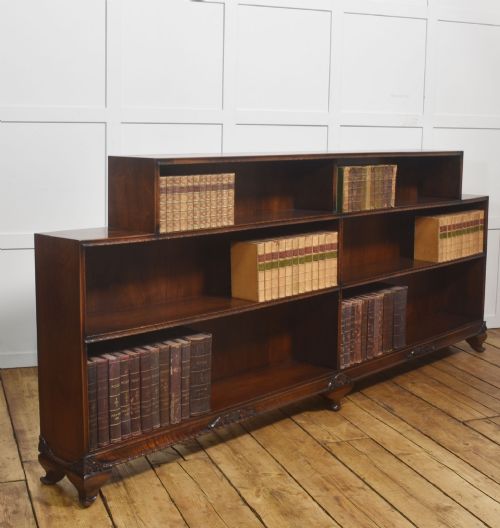
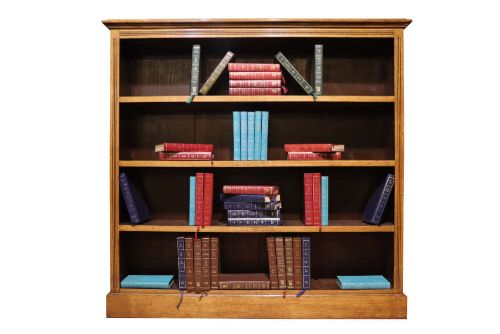
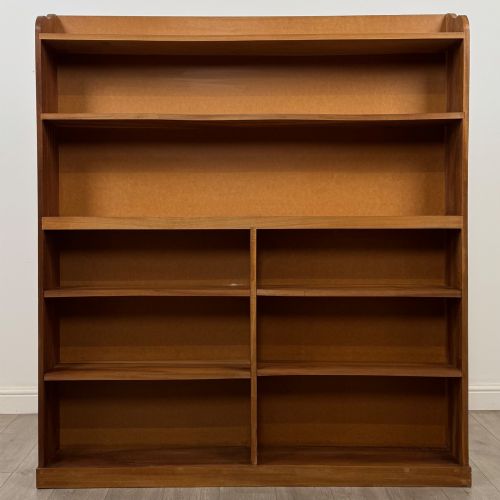
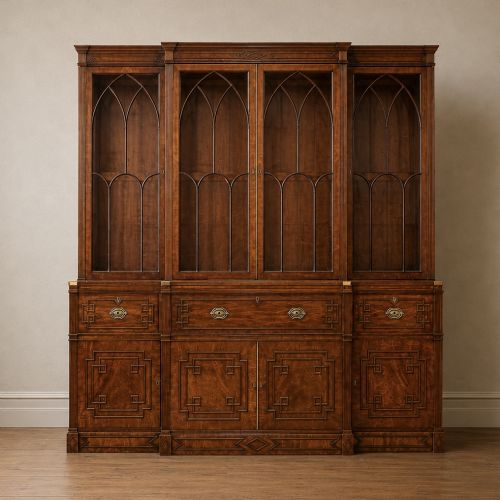
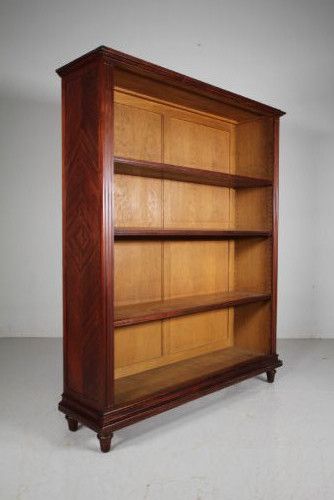
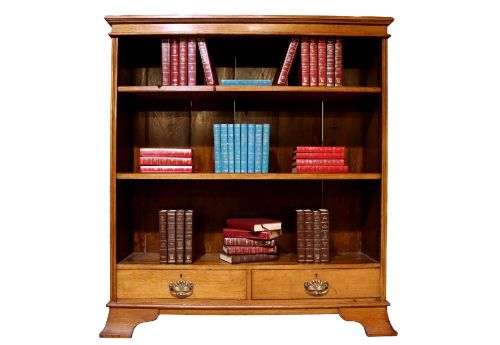
A large book display encompasses substantial bookcases and library cabinets designed to house extensive collections. When searching for a large book display, buyers encounter open shelving units alongside glazed breakfront cabinets intended for formal rooms.
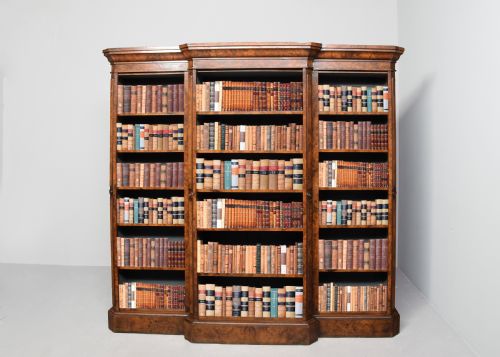
The pieces appearing here span the nineteenth century through the Edwardian era, featuring prominent Victorian and Regency iterations. Grand library bookcases dominate the selection, often configured in multiple sections with adjustable shelving.
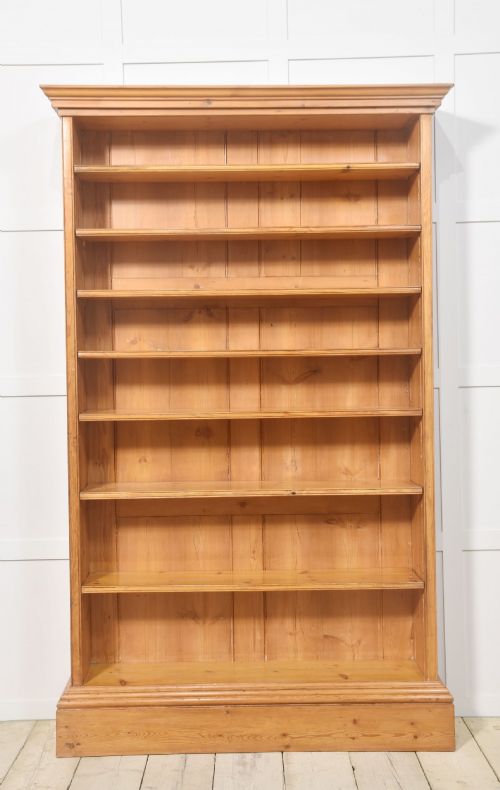
Makers and workshops construct these large formats in both mahogany and walnut, frequently incorporating breakfront profiles. Simpler rustic pine and oak variants also appear alongside elaborate architectural library pieces.
Materials and construction
Cabinet makers utilised dense hardwoods including mahogany, walnut, and oak, often applying flame veneers or burr walnut to prominent surfaces. Secondary timbers like pine support internal carcases and shelving.
Glass panels feature heavily in glazed display doors, while brass fittings such as hinges and shelf supports provide functional hardware details. Ebonised finishes and inlaid details appear across Victorian and Edwardian examples.
Listings feature woods like flame mahogany, burr walnut, and pollard oak across Victorian and Edwardian periods.
Judging quality in large book displays
Quality rests upon the selection of timbers, where figured veneers and matching grains on breakfront doors distinguish finer cabinet work from utilitarian storage. The integration of adjustable shelving mechanisms demonstrates high standards of period workshop design.
Architectural proportions and carved details dictate the standing of a piece within its period. Refined mouldings, panelled lower cupboards, and balanced multi-section configurations separate standard library shelving from exhibition pieces.
Gillows·Waring and Gillow·Holland and Sons·Maison Jansen·Wedgwood
The Large Book Display Glossary
- Breakfront
- A cabinet design where the central section projects forward from the flanking wings. This architectural layout creates depth and visual rhythm across large library bookcases.
- Open bookcase
- A shelving unit without doors, allowing direct access to volumes. These pieces rely on finished timber sides and adjustable internal supports.
- Glazed cabinet
- A storage piece fitted with glass-panelled doors to protect volumes from dust while maintaining visibility. Astragal bars often divide the glass into smaller panes.
- Burr walnut
- Timber harvested from walnut tree growths that produces intricate, swirling grain patterns. Cabinet makers prized this veneer for front-facing panels on high-status furniture.
- Library bookcase
- A heavy, robust bookcase designed for institutional or domestic study use. These items frequently incorporate lower cupboard storage beneath upper display tiers.
Large Book Display: Frequently Asked Questions
Are the shelves adjustable?
Many large period bookcases feature adjustable shelves supported by wooden pegs, brass tracks, or sawtooth ratchets. This adaptability allowed owners to accommodate folio volumes of varying heights.
Not all antique bookcases possess this feature, so checking the specific internal mechanism remains important for functional libraries.
How do I date a Victorian bookcase?
Dating relies on timber selection, structural proportions, and decorative motifs such as Gothic revival carving or ebonised surfaces. Mid-Victorian pieces often favour burr walnut veneers and breakfront configurations.
Later Victorian and Edwardian iterations frequently incorporate golden oak or simpler open pine construction suited to domestic studies.
Where were these bookcases used?
These large display pieces originated in the libraries, studies, and drawing rooms of substantial nineteenth-century houses. They served both to display fine bindings and to protect valuable collections.
Today, they fulfil similar architectural roles in high-ceilinged modern rooms requiring substantial book storage and display.