


Large Book Cabinet
A large book cabinet organises a substantial library with architectural presence, spanning Regency elegance through to solid Edwardian utility.
Large Book Cabinet
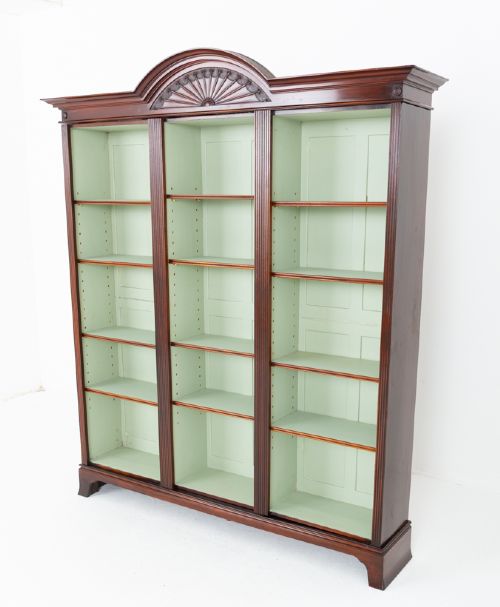
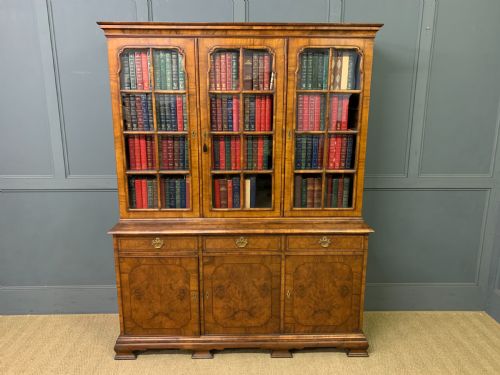
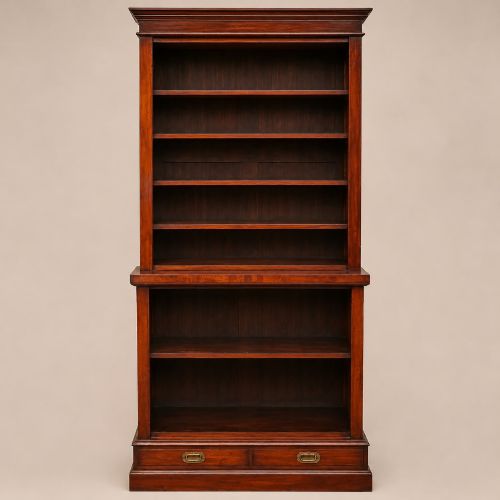
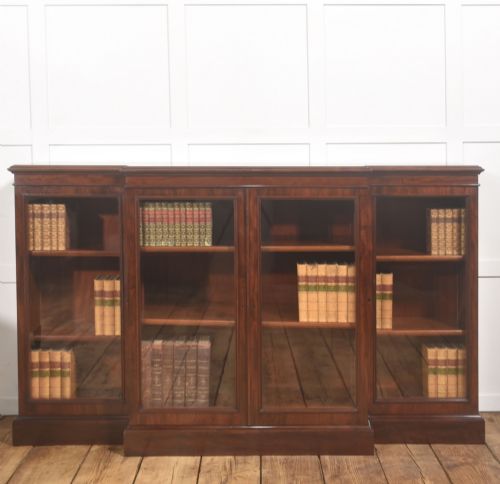
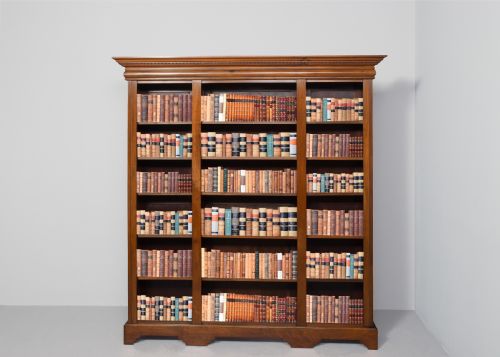
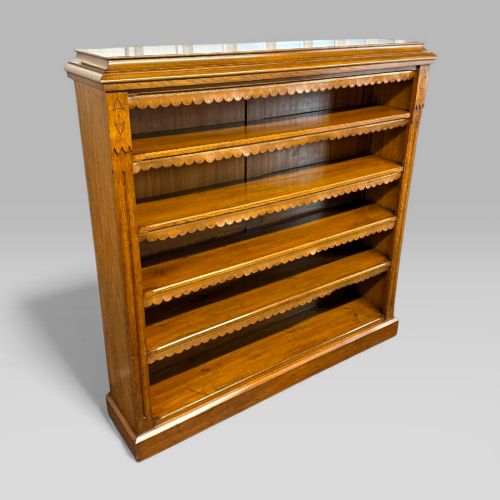
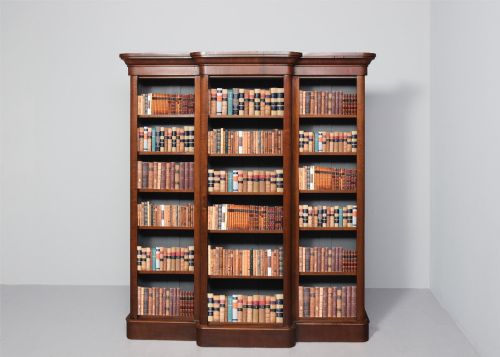
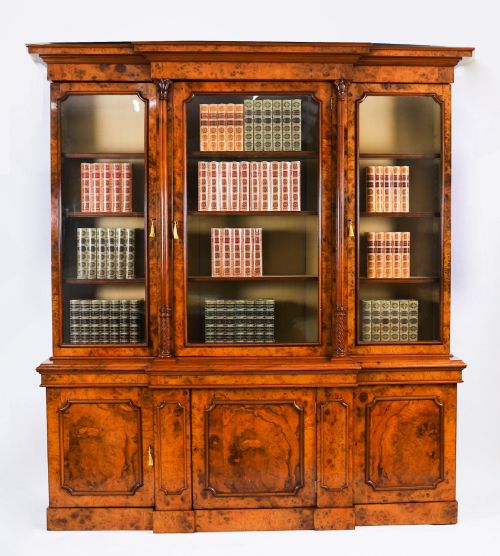
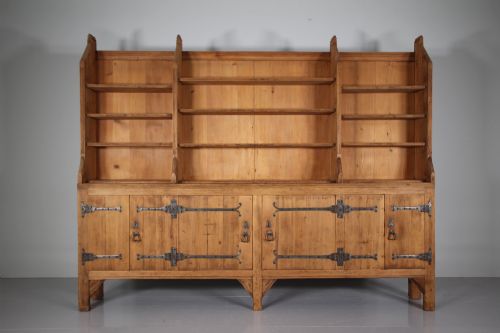
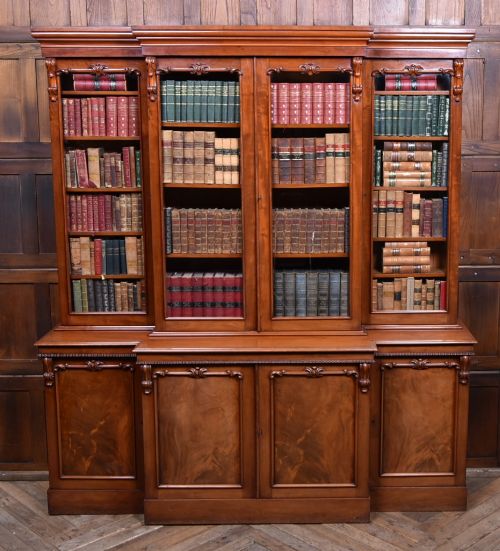
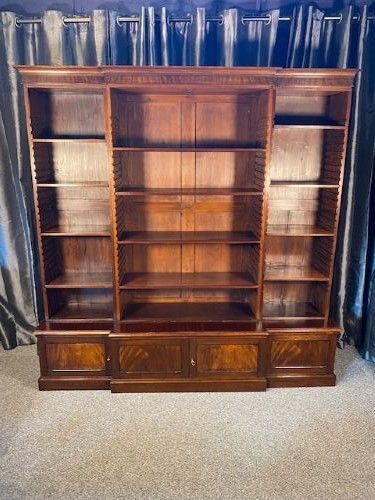
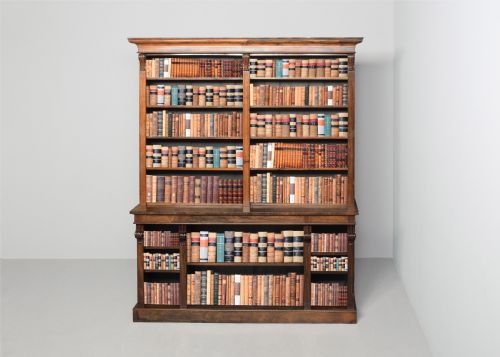
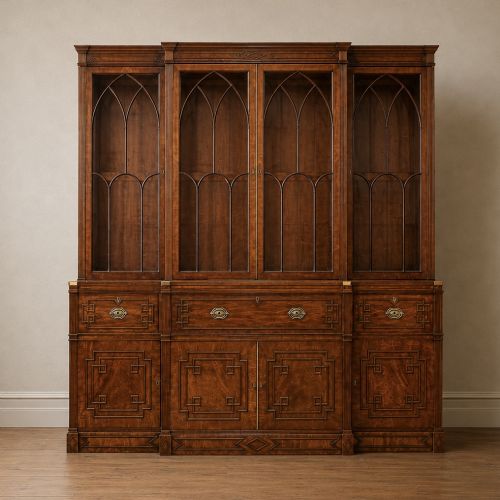
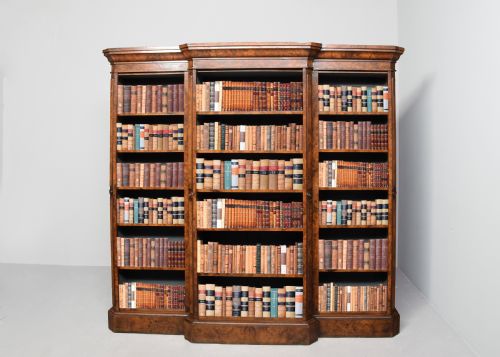
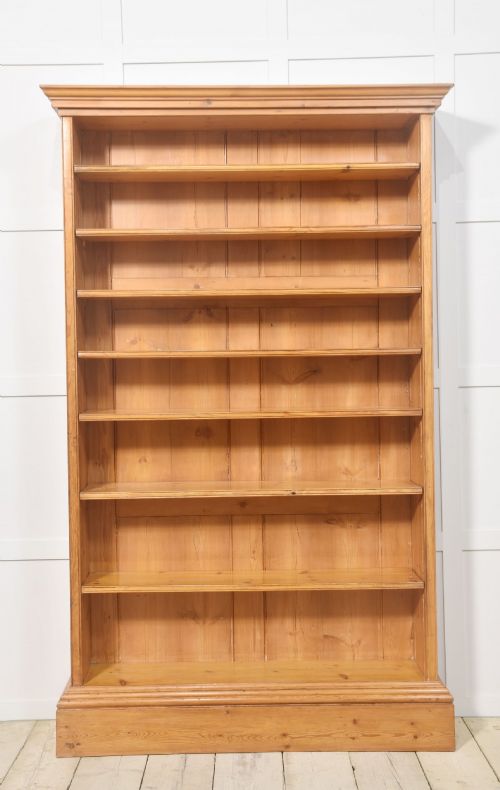
A large book cabinet provides significant storage for extensive collections, appearing frequently as breakfront three-section libraries or tall open front formats. These substantial pieces emerge across the nineteenth century and into the Edwardian period, built to anchor grand rooms.
Makers utilised resilient timbers such as mahogany, oak, walnut, and pine, often finished with glass doors, brass mounts, or adjustable shelving. Examples range from formal Regency and William IV designs to rustic country pine and Gothic Revival interpretations.
How they were made
Cabinet makers built these large structures primarily from solid hardwoods like mahogany and oak, frequently applying flame mahogany or burr walnut veneers to primary surfaces. Brass hardware secures doors and mounts, whilst glass panels protect delicate volumes in enclosed cabinets.
Internal construction relies on heavy timber framing to support weight, incorporating adjustable shelving systems cut into pine or oak carcases. Backboards are typically panelled in deal or pine, securing the rigidity of multi-section breakfront forms.
Large Book Cabinet Retail Price Guide 2026
Typical asking prices for large book cabinet among the pieces listed under this phrase on Sellingantiques today, from the lower quarter to the upper quarter. They describe what is for sale here now, not the wider market.
Some captains took their libraries to sea, storing heavy volumes securely inside fitted floating cabinets.
What varies in quality
The distinction between standard utility pieces and exhibition standard work rests on timber selection and decorative ambition. Finer cabinets employ figured burr walnut, pollard oak, or matched flame mahogany veneers arranged with precise grain continuity across breakfront facades.
Mastery shows in secondary details such as hand-carved mouldings, integrated brass fittings, and sophisticated inlay work. Robust internal joinery with cleanly fitted adjustable shelving separates ordinary workshop production from commissioned library furniture.
Gillows·Waring & Gillow·Holland & Sons
The Large Book Cabinet Glossary
- Breakfront
- A piece of furniture where the central section projects forward from the flanking wings. This architectural arrangement creates depth and shadow across large cabinet facades.
- Burr walnut
- Timber taken from the growth excrescences of a walnut tree, yielding highly figured swirling patterns. It is sliced into veneers for high status cabinet fronts.
- Open bookcase
- A shelving unit without doors, providing direct access to volumes. Many examples feature adjustable shelves supported by wooden ratchets or brass studs.
- Ebonised
- Timber treated with a dark chemical stain or finish to imitate ebony. This technique was favoured in nineteenth-century aesthetic and revival furniture.
- Pollard oak
- Timber derived from trees that have been repeatedly cut back at height, producing dense clusters of branches with knotted grain patterns. It provides a heavily decorative surface figure.
Large Book Cabinet: Frequently Asked Questions
How do I style a large book cabinet?
Balance heavy folios on lower shelves with smaller octavos and decorative objects higher up to keep the visual weight grounded.
Allow breathing room between books rather than packing every shelf edge to edge, letting the timber and backing show through.
Are shelves usually adjustable?
Many nineteenth and early twentieth-century examples incorporate adjustable shelving systems using wooden support strips or brass peg channels.
This adaptability allows the internal configuration to accommodate varying book heights from standard novels down to oversized art volumes.
What is the difference between open and enclosed cabinets?
Open formats provide immediate access and display books directly to the room, whilst glazed or panelled doors protect fragile bindings from dust and light.
Enclosed cabinets frequently utilise brass-mounted glass doors that maintain visibility while sealing the interior environment.