

Large Bedroom Mirror
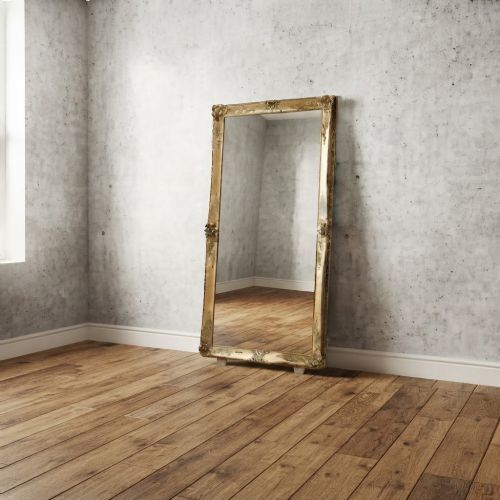
A large bedroom mirror delivers scale and light to a room, appearing in forms from cheval glasses to full-length leaner panels.
Large Bedroom Mirror
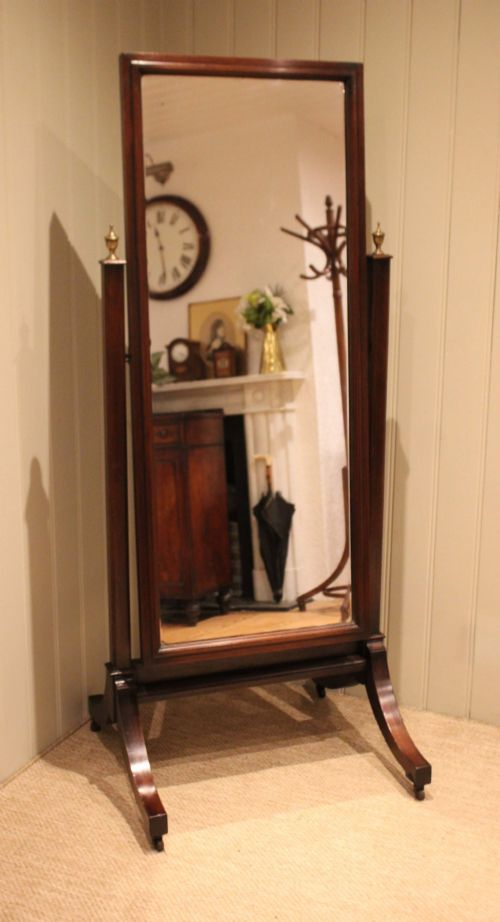
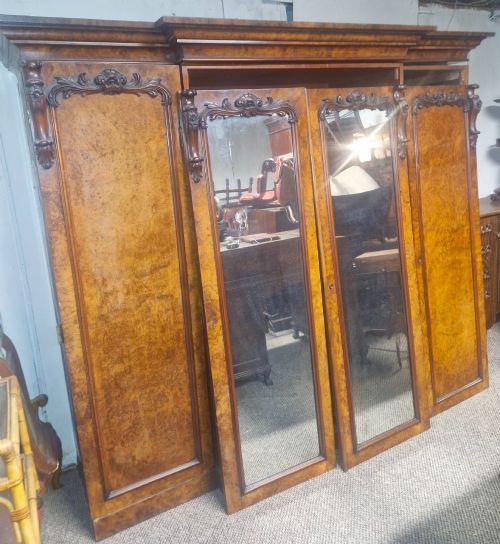
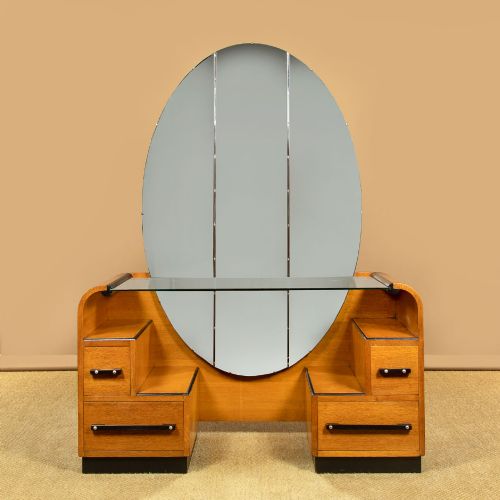
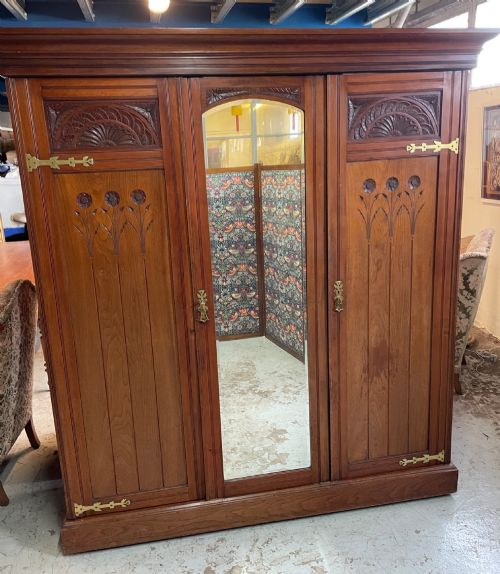
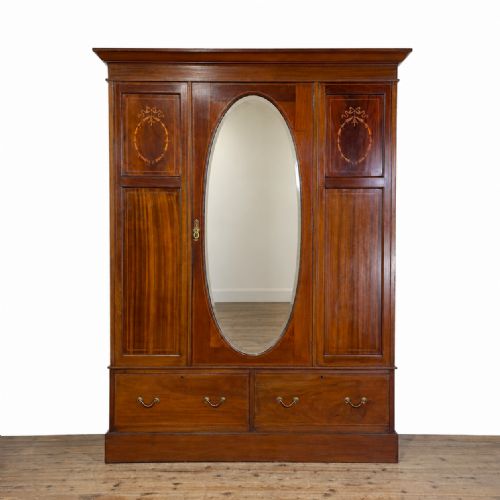
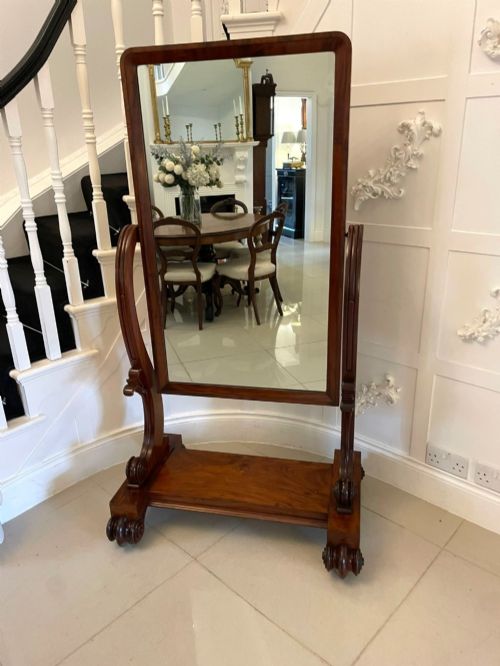
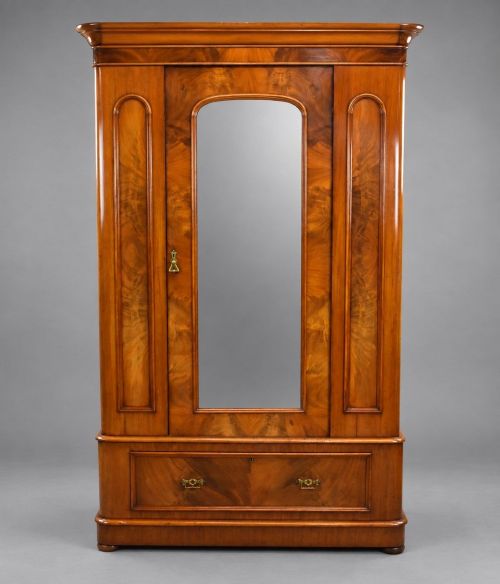
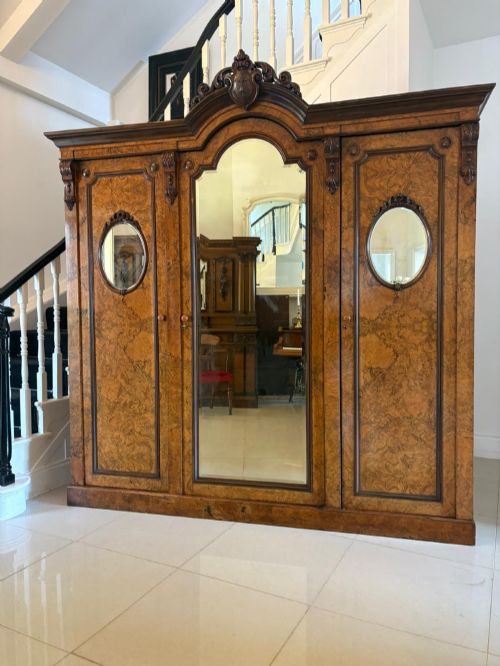
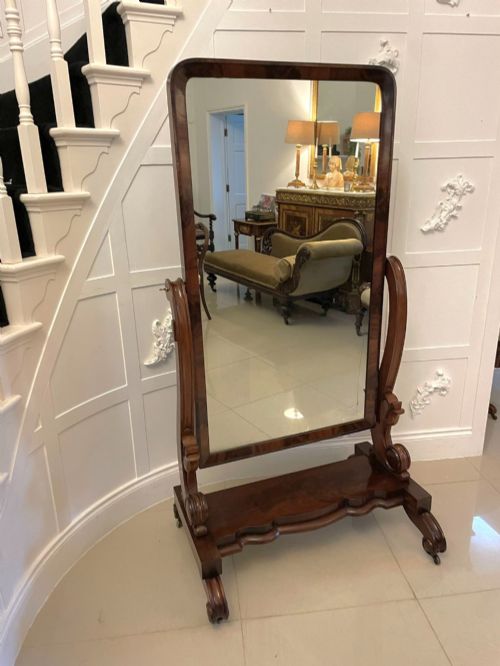
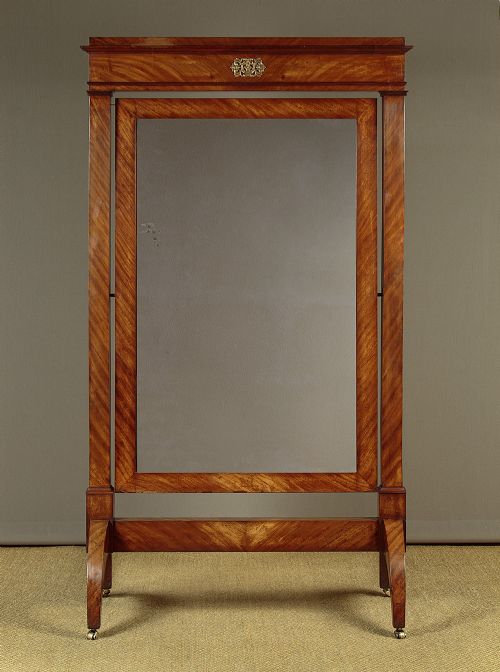
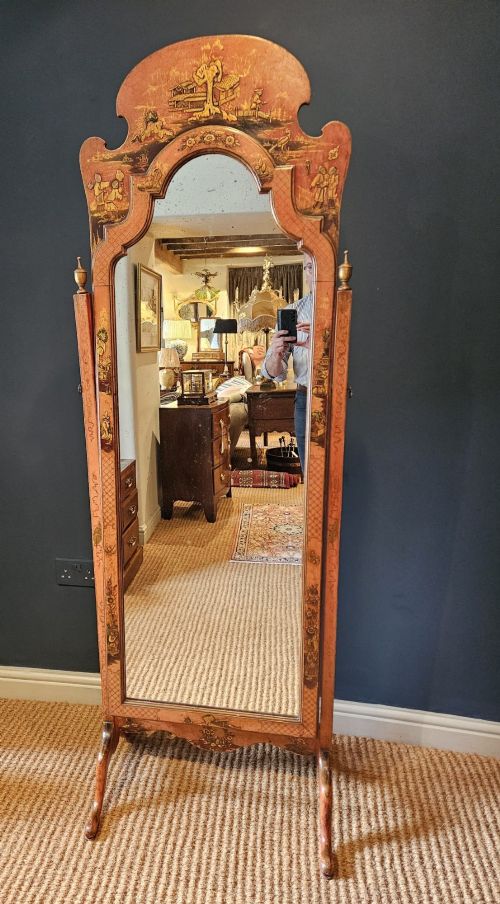
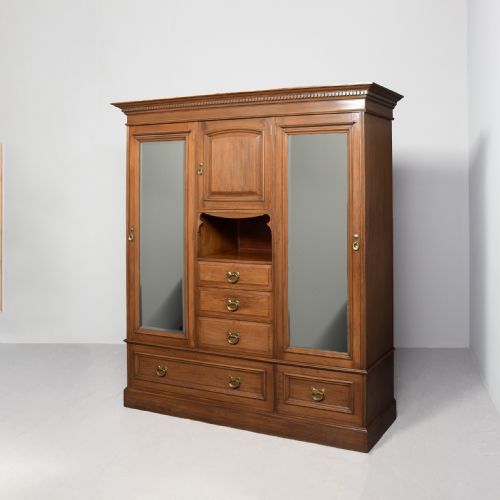
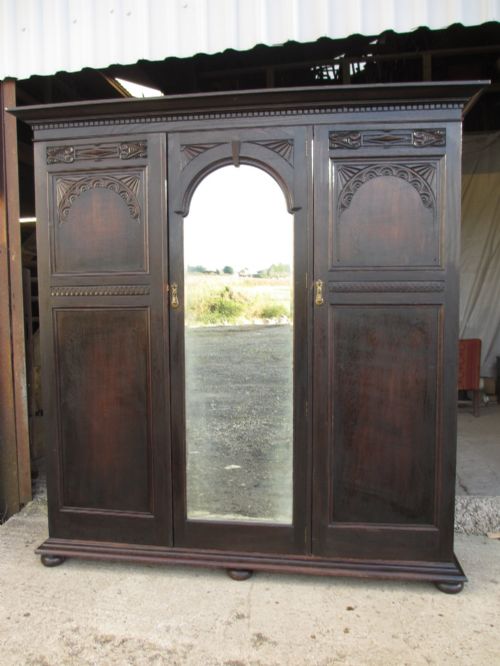
A large bedroom mirror encompasses freestanding cheval glasses and towering mirrored wardrobe doors originating from the Victorian, Edwardian, and nineteenth-century periods. These substantial pieces provide functional reflection while anchoring a room with architectural presence.
The versions most frequently met on this page combine mirrored glass with substantial wooden cabinetry such as mahogany, walnut, and pine. Wardrobes with integrated mirror doors and adjustable cheval mirrors dominate the available selection.
Materials and construction methods
Makers utilised dense timbers including mahogany, walnut, burr walnut, and satinwood, often constructing large wardrobes and compactums designed to dismantle for transport. Pine and oak appear in provincial pieces and later twentieth-century examples.
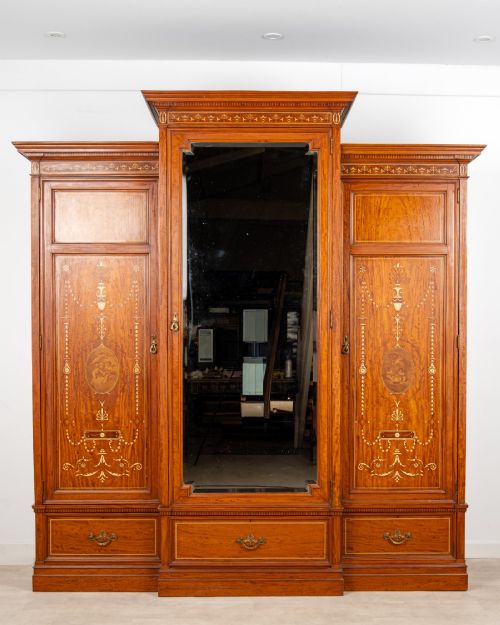
Glass plates were housed in sturdy frames supported by brass pivots on cheval mirrors or mounted securely into heavy panelled doors. Inlaid veneers, carved details, and gilt bronze ormolu mounts finished the finer examples.
Large Bedroom Mirror Retail Price Guide 2026
Typical asking prices for large bedroom mirror among the pieces listed under this phrase on Sellingantiques today, from the lower quarter to the upper quarter. They describe what is for sale here now, not the wider market.
Distinctions in craftsmanship
The depth of timber selection and the complexity of the cabinetry separate standard utility furniture from pieces bearing refined burr walnut veneers, figured birch, or intricate inlaid satinwood. Superior execution shows in the precision of the door alignment and the weight of the timber used in the carcase.
Carved ornamentations and specialised forms such as combination compactums or pivoting cheval frames demonstrate higher workshop ambition than plain triple wardrobes.
Holland and Sons
The Large Bedroom Mirror Glossary
- Cheval mirror
- A freestanding full-length mirror suspended on a frame with vertical pivots allowing it to tilt. These often feature substantial mahogany or walnut supporting legs.
- Compactum
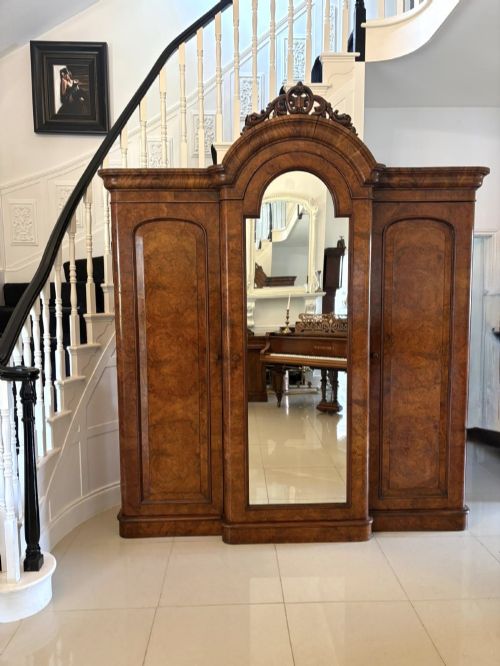
- A multi-section wardrobe combining hanging space, drawers, and linen shelves in a single large unit. They frequently incorporate central mirror doors.
- Armoire
- A large wardrobe or cupboard, often of French origin, utilised for hanging clothes and storing linens. These pieces regularly feature mirrored doors and decorative mounts.
- Burr walnut
- A highly figured wood grain obtained from the wart-like growths on walnut trees. It provides decorative patterns used on Victorian and nineteenth-century wardrobe doors.
Large Bedroom Mirror: Frequently Asked Questions
What is a compactum wardrobe?
A compactum is a large multi-compartment wardrobe designed to maximise bedroom storage by combining hanging space, drawers, and linen shelves within one unified piece of furniture.
Many examples feature a central mirrored door flanked by substantial wooden wardrobes, offering both dressing utility and garment organisation.
How do cheval mirrors operate?
Cheval mirrors are freestanding full-length glasses suspended on vertical side posts using adjustable metal pivots. This mechanism allows the user to tilt the glass angle to suit their height.
They stand independently on sturdy bases or feet, making them versatile for bedroom placement without requiring wall attachment.
Can large wardrobes be dismantled?
Many large nineteenth-century and Victorian wardrobes were constructed to dismantle into modular sections including a cornice, base, and side carcases. This engineering allowed bulky furniture to be transported through narrow doorways.
Buyers should check whether a specific piece uses bolt-together construction or fixed joints before attempting relocation.
What wood types are common?
Mahogany and walnut predominate among nineteenth-century pieces, often enhanced by decorative burr walnut veneers or satinwood inlay. Pine and oak appear frequently in regional and later Edwardian furniture.
Finer cabinets sometimes utilise figured birch or rosewood to create distinct visual patterns across large triple doors.