




Large Watercolour
A large antique watercolour brings the depth of traditional brushwork and paper to a room, offering commanding scenes from British and Chinese traditions.
Large Watercolour
A large antique watercolour is a substantial work on paper, canvas, or pith paper created across the eighteenth, nineteenth, and early twentieth centuries. These pieces span coastal seascapes, architectural studies, rural landscapes, and intimate domestic interiors.
Victorian works dominate the selection, often presenting detailed British scenery, Scottish coastal views, and marine subjects framed behind glass. Pieces range from topographical views to narrative paintings bearing the signatures of established regional artists.
How large antique watercolour works were made
Artists worked watercolour pigment and occasionally gouache onto paper or pith paper, supported by wood frames and glass for protection. Some items combine watercolour wash with fine embroidery or ink work on paper.
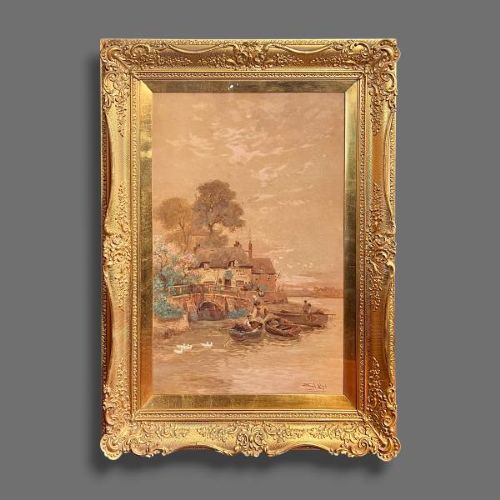
Gilt wood frames are common among the surviving pieces, housing the delicate works on paper alongside early mounts and protective glass coverings.
Large Watercolour Retail Price Guide 2026
Typical asking prices for large watercolour among the pieces listed under this phrase on Sellingantiques today, from the lower quarter to the upper quarter. They describe what is for sale here now, not the wider market.
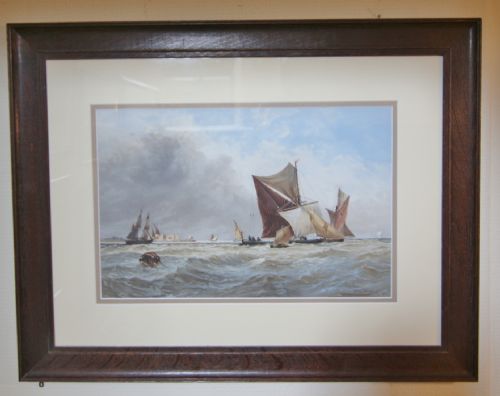
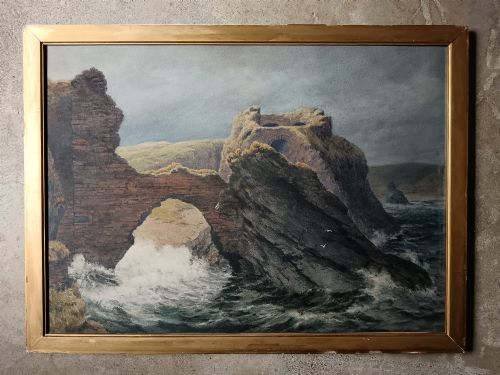
Several artists preferred painting stormy coastal waters while winds battered British harbours.
What varies in quality
Quality rests in the firmness of the brushwork, the preservation of pigment vibrancy against fading, and the integrity of the paper or pith ground. Strong tonal contrast and confident handling of light distinguish superior compositions from simpler topographical records.
The sophistication of the secondary materials - such as period gilt wood framing and original wash-line mounts - complements the visual strength of the painting itself.
TB Hardy·James Haylla·John Moxon·Stuart Lloyd·David Cox Jnr·Martinetti·Stephen John Batchelder·Frederick Williamson·Arturo Orselli·Willie Stephenson·Frederick Tucker·Jane Utley·Harry Wanless·George Cattermole·George De Paris·Herbert John Finn·Hirst Walker·Matthew Jarvis·Olive Higginbottom·WH Romaine-Walker·Stephen Frank Wasley·Joseph Josiah Dodd·Walter Stuart Lloyd·John Atkinson Grimshaw·Ward Heys
The Large Watercolour Glossary
- Watercolour pigment
- Finely ground colour suspended in a water-soluble binder, applied to paper to create translucent washes.
- Gouache
- An opaque water-based paint often used alongside watercolour pigment to build solid highlights and dense colour areas.
- Pith paper
- A delicate material cut from the pith of the Tetrapanax papyrifer plant, utilised for fine nineteenth-century botanical and figurative painting.
- Topographical watercolour
- A detailed drawing or painting recording a specific real-world location, building, or landscape feature with factual accuracy.
- Gilt wood
- Carved timber finished with a thin layer of gold leaf, commonly utilised for period picture frames.
Large Watercolour: Frequently Asked Questions
How should I hang a large antique watercolour?
Keep works on paper away from direct sunlight to prevent the watercolour pigments from fading over time. Ensure the room maintains stable humidity to protect both the paper and the original gilt wood frame.
Use sturdy wall fixings suited to the weight of large framed glass pieces. Professional framing with conservation-grade backing provides added longevity.
What subjects appear in these antique paintings?
Maritime scenes and coastal shipping views form a large portion of the works, alongside tranquil rivers and Scottish landscapes. Architectural studies and interior musical recitals also feature prominently across the Victorian period.
Chinese export pieces introduce traditional coastal and figurative studies on pith paper from the same eras. Each subject reflects the prevailing tastes of nineteenth-century collectors.
How can I date a nineteenth-century watercolour?
Look for artist signatures, dates inscribed within the composition, and framing details that match Victorian or Edwardian standards. Many pieces retain provenance or biographical details regarding the painter's active years.
Paper characteristics, mount styles, and old gallery labels on the reverse provide further clues to the precise era of production.
Are these works painted on paper?
Most pieces utilise traditional paper supports, though some Asian export examples employ delicate pith paper. Winsor and Newton artist boxes from the period indicate the high grade of materials available to creators.
Protective glass fronts are standard, guarding the water-soluble pigments from atmospheric dust and moisture.