


Large Chimneypiece
A large antique chimneypiece anchors a room with monumental proportion, bringing historic architectural presence and light through grand mirrors and carved surrounds.
Large Chimneypiece
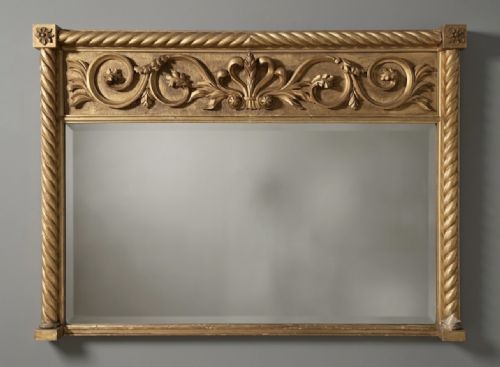
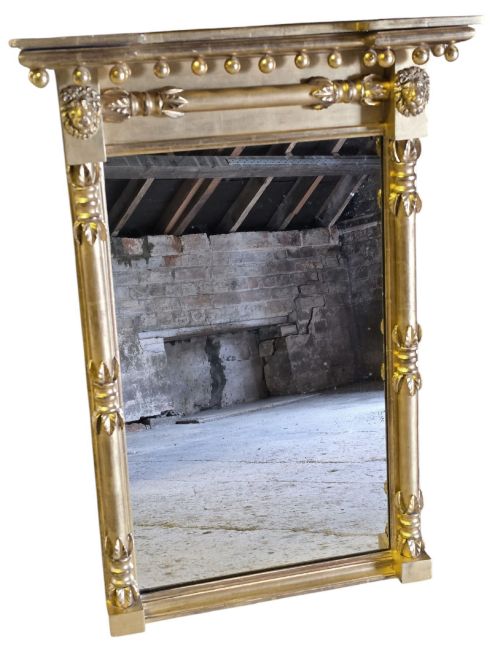
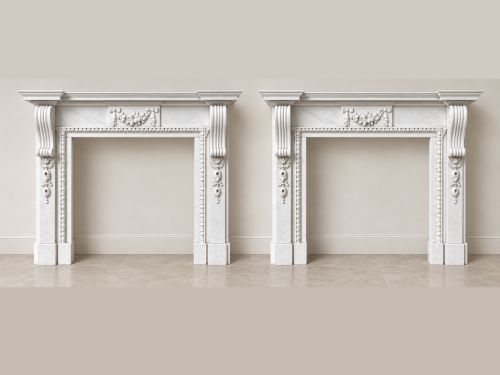
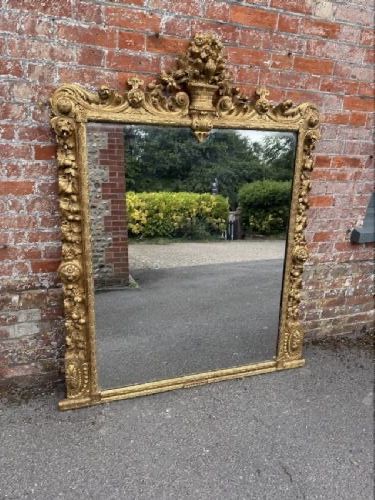
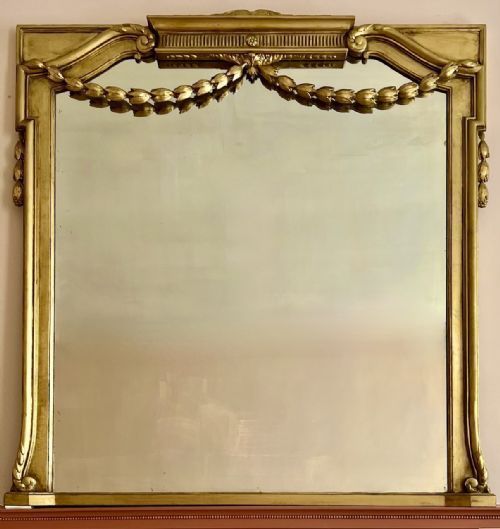
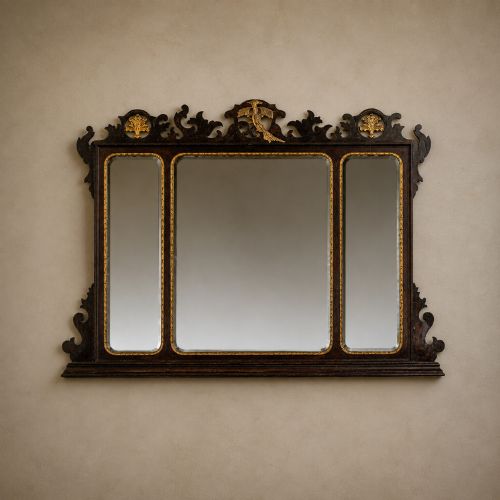
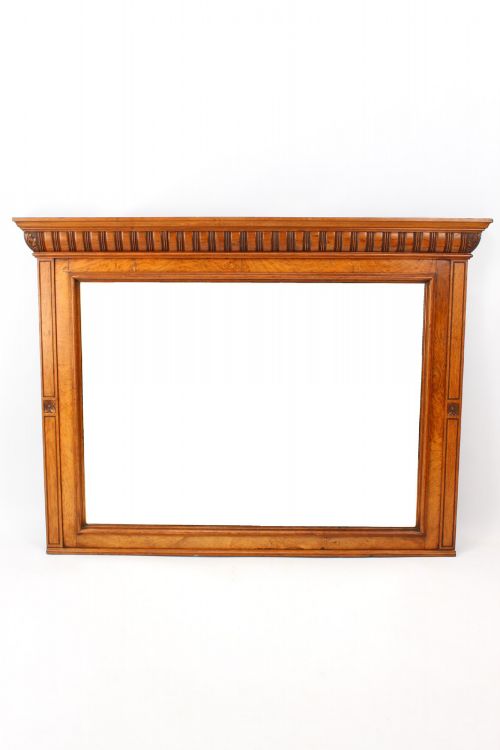
A large antique chimneypiece on this page typically manifests as a grand overmantel mirror designed to sit directly above a fireplace, alongside substantial architectural fireplace surrounds in marble or carved wood. These pieces span the nineteenth century, the Edwardian era, and the late eighteenth century, drawing on Regency, Victorian, and Neoclassical design vocabularies.
Originating largely from English workshops of the nineteenth century, these objects reflect period domestic interiors designed for high-ceilinged reception rooms. The forms incorporate classical motifs such as rope twists and Ho-Ho bird crestings to create a commanding focal point above the hearth.
Materials and technique
Makers constructed the wooden structures of these large antique chimneypiece items primarily from pine, oak, mahogany, and carved wood, applying gesso and composition mouldings to build up intricate relief ornamentation before finishing them in gold leaf or paint.
Glass plates, including original mirror glass and silvered surfaces, sit within frames secured by traditional joinery methods. Marble fireplaces utilise carved natural stone, while gilded pieces employ applied gold leaf over gesso grounds on wooden carcases.
Some Victorian overmantel mirrors incorporate whimsical Ho-Ho birds keeping perpetual guard over the hearth.
Proportions and surface execution
Quality in a large antique chimneypiece rests upon the crispness of the hand-carved wood and gesso enrichment, where deeply undercut moulding and well-defined classical motifs separate superior artisan work from massed composition ornaments.
The integrity of the original mercury or plate glass, the depth of the gilding, and the harmony of proportions across triptych or archtop mirror frames dictate the standing of individual examples within the period range.
Sir Edwin Lutyens
The Large Chimneypiece Glossary
- Overmantel mirror
- A large mirror specifically proportioned to hang on the wall directly above a mantelpiece or fireplace surround. They frequently incorporate landscape orientations or tall arched tops to reflect room light.
- Gesso
- A plaster-like mixture applied to wood frames and carved to create relief ornamentation before gilding. It allows for intricate surface detail.
- Parcel-gilt
- A decorative finish where only specific carved elements or raised details of an object receive gold leaf, contrasting with painted or exposed wood grounds.
- Triptych
- A tripartite division of a mirror plate into three distinct sections, often separated by slender pilasters or moulded wooden divisions.
- Ho-Ho bird
- A mythical Chinese phoenix motif frequently utilised in Chippendale Revival and rococo woodwork crestings.
- Ormolu
- Gilded bronze ornamentation applied to decorative objects and clock cases during the eighteenth and nineteenth centuries.
Large Chimneypiece: Frequently Asked Questions
How do I measure for a large antique chimneypiece?
Measure the width of your mantelpiece ledge and the vertical clearance between the mantel and the ceiling cornice. Ensure the frame width does not exceed the mantel footprint unless intended as a wall-anchored focal point.
Take into account the weight of substantial wood and gesso frames, confirming that your wall construction can support heavy mirror hangings.
Where should an overmantel mirror be placed?
Position the mirror directly above the fireplace opening, resting on the mantel shelf or secured to the wall at a balanced height. This placement reflects ambient light and replicates historic interior layouts.
Keep the lower edge close to the mantel surface to maintain visual connection between the hearth and the architectural surround.
How do I clean antique giltwood frames?
Dust surfaces gently with a dry, soft-bristled brush or an ostrich feather duster to remove particulate matter without disturbing fragile gesso or gold leaf. Avoid liquid cleaners, polishes, or damp cloths entirely.
Moisture can dissolve historic water gilding and water-soluble gesso grounds, causing permanent loss to the decorative surface.
Are these mirrors fitted with original glass?
Many period examples retain their original mirror plates, which often display characteristic foxing, minor silvering losses, and slight distortion. These age marks confirm nineteenth-century production.
Replacement glass occurs when original plates suffered breakage, though surviving historical glass remains preferred by collectors.