


Lap Desk Brass Inlay
These lap desk brass inlay pieces are portable writing cabinets designed for travel, offering secret drawers and polished timbers for the desk.
Lap Desk Brass Inlay
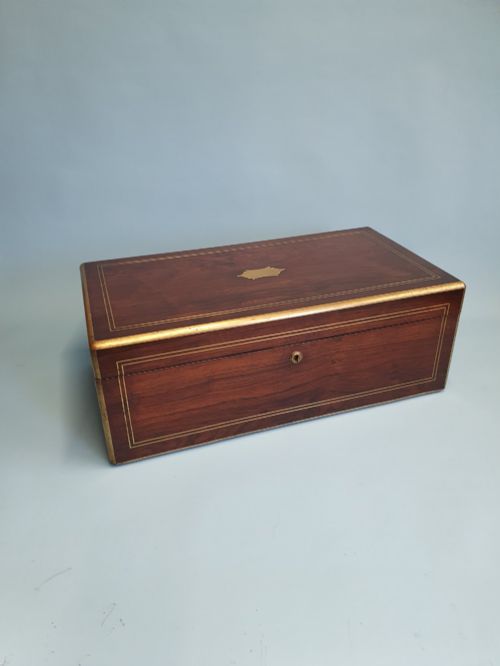
A lap desk brass inlay is a portable writing box designed for correspondence during travel, featuring a folding writing surface and internal compartments for stationery. The versions most commonly encountered on this page date from the Georgian, Regency, and Victorian periods.
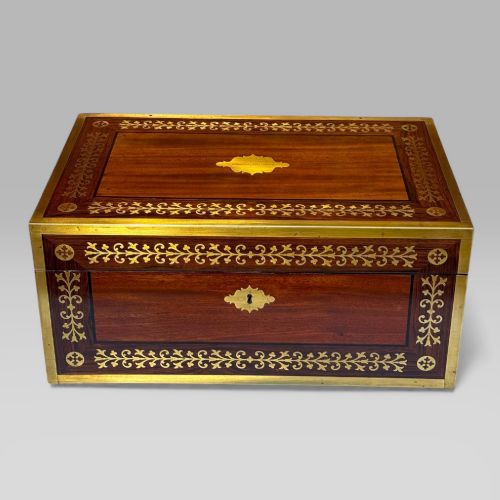
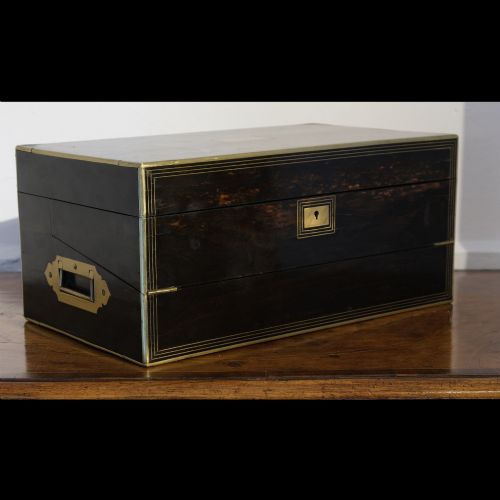
Makers constructed these writing slopes and boxes in forms that range from simple campaign cases with brass corner mounts to larger documents boxes with intricate brass stringing. Many examples incorporate secret drawers concealed behind dummy partitions or stationery compartments.
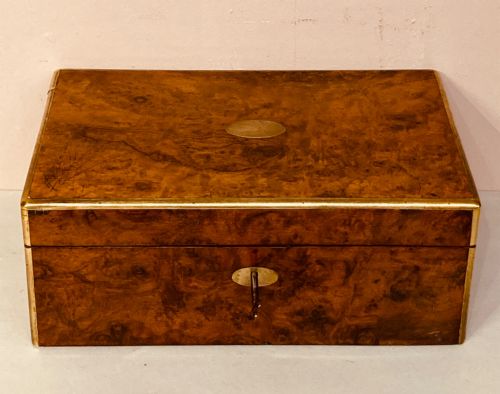
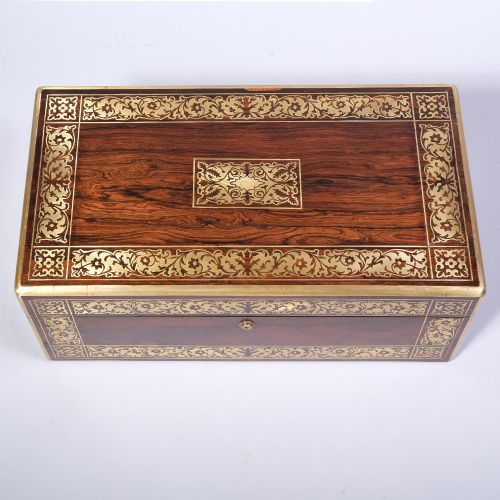
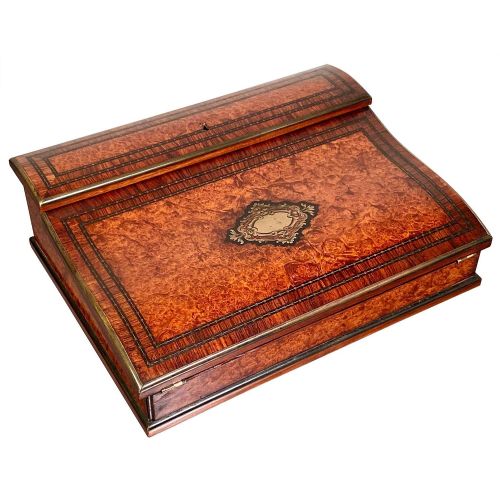
The materials used for the exterior carcass typically include rosewood, walnut, burr walnut, mahogany, and coromandel. These timbers provide a dark, figured background that contrasts with the bright metal inlay.
How they were made
Cabinet makers formed the main body of each box from dense hardwoods such as mahogany or rosewood, often veneered with highly figured burr walnut or coromandel. They set brass escutcheons, corner brackets, and banding flush into the timber surface.
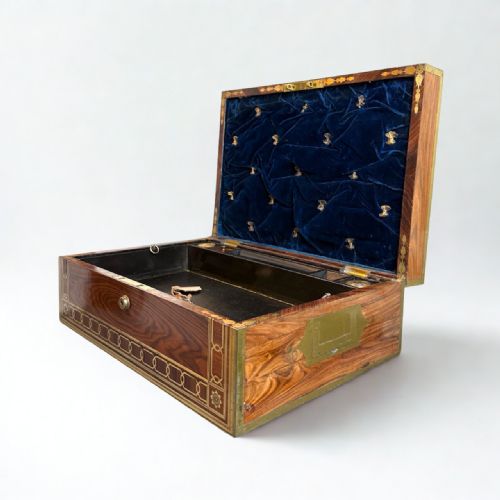
The decorative brass inlay consists of fine lines and geometric motifs channelled directly into the wood grain. Inside the box, a sloped writing surface lined with leather or velvet folds open to reveal inkwell recesses and hidden compartments.
The documented examples span the Georgian, Regency, and Victorian periods.
What varies in quality
The refinement of the brass inlay work sets apart the finer examples, where intricate cut brass scrollwork or precise stringing remains entirely flush with the polished timber. Simpler boxes rely on plain brass corner mounts and heavy edge binding for structural protection during transport.
Internal fittings also distinguish the standard writing slope from more elaborate boxes. The inclusion of secret drawers, Bramah locks, or specialised compartments for sovereign storage and candle sconces indicates a higher tier of original manufacture.
George Austin of Dublin
The Lap Desk Brass Inlay Glossary
- Lap desk
- A portable box designed for writing while travelling, featuring a sloping lid that opens to form a desk surface. These boxes were essential for correspondence before the widespread availability of fitted hotel desks.
- Campaign box
- A sturdy wooden box fitted with brass corners and recessed handles for military transport. These pieces were built to withstand the rigours of travel.
- Secret drawers
- Concealed compartments hidden behind removable panels or false bottoms within a writing box. Owners used these spaces to store valuables and private papers.
- Bramah lock
- A high-security cylindrical lock patented in the late eighteenth century, commonly found on better quality Victorian boxes. They required a specialised barrel key to operate.
- Stringing
- Thin lines of contrasting wood or brass inlaid into the surface of a box to create decorative borders. This technique highlights the geometric form of the piece.
Lap Desk Brass Inlay: Frequently Asked Questions
What is a lap desk brass inlay?
A lap desk brass inlay is a portable wooden box designed for writing, featuring decorative brass work set into the lid and edges. These items served travellers who needed a stable writing surface away from home.
The interior holds paper, pens, and ink, folding down to create a slanted writing plane lined with leather or velvet.
How were these boxes used?
Owners used these boxes to write letters, store documents, and keep personal valuables secure while travelling. They sat upon the lap or a table during use.
The internal compartments organised stationery supplies, while secret drawers provided a hidden space for money and private notes.
How do I tell Regency from Victorian boxes?
Regency boxes often feature delicate brass inlay work, geometric escutcheons, and dark rosewood or kingwood timbers. They emphasise clean architectural lines.
Victorian boxes frequently utilise burr walnut with heavier brass edging and corner mounts, sometimes including specialised locking mechanisms and candle sconces.
Are these boxes suitable for daily use?
These boxes function well for modern correspondence and desk organisation, providing secure storage for papers and pens. Their solid timber construction handles regular opening and closing.
Care should be taken to protect the polished wood surfaces and original brass inlay from moisture and heavy impacts.