



Landscape Watercolor Art
These landscape watercolor art pieces capture rivers, harbours and hills through delicate pigment washes on paper.
Landscape Watercolor Art
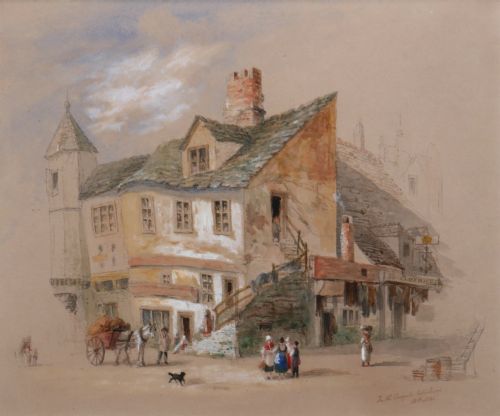
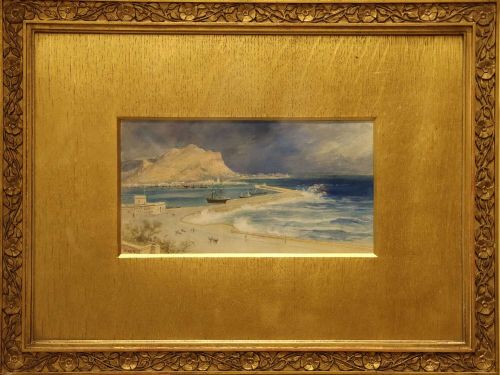
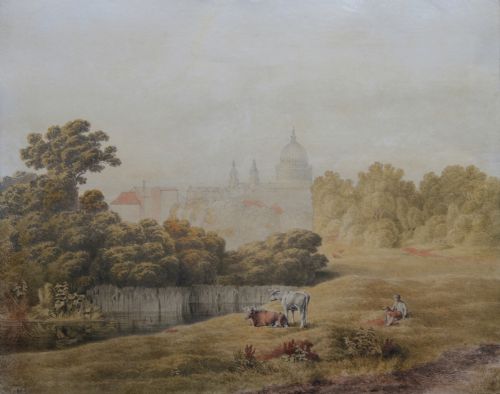
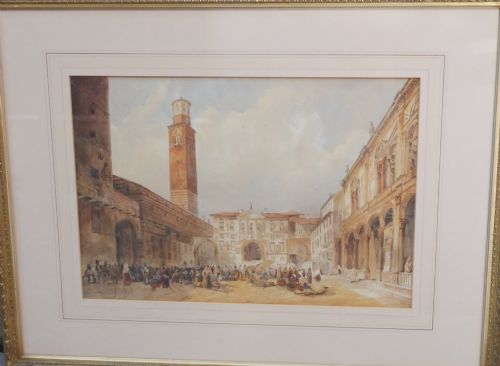
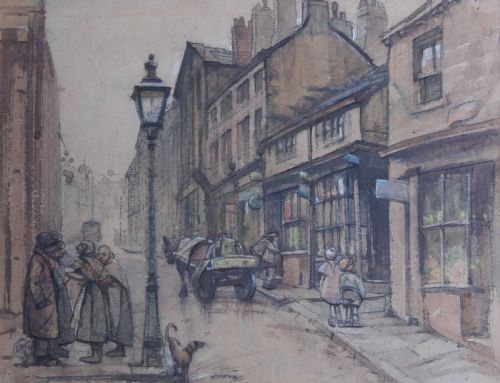
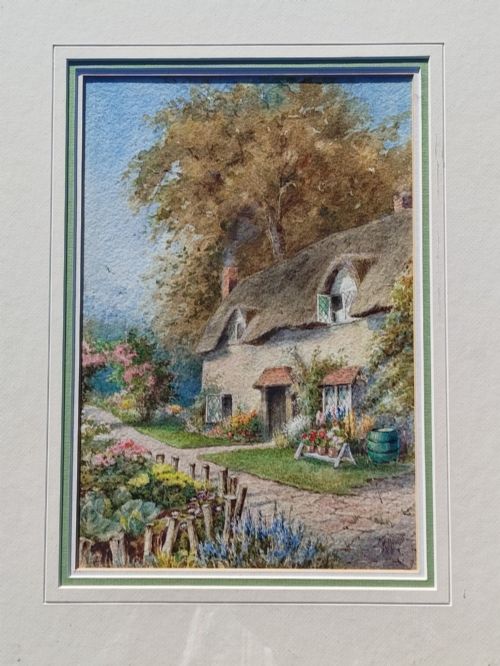
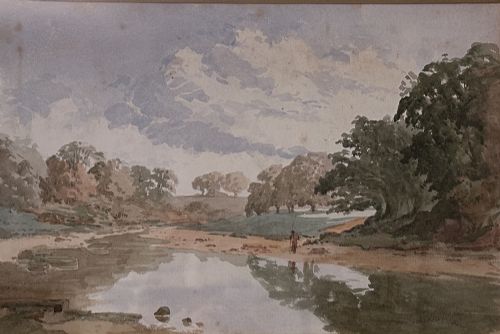
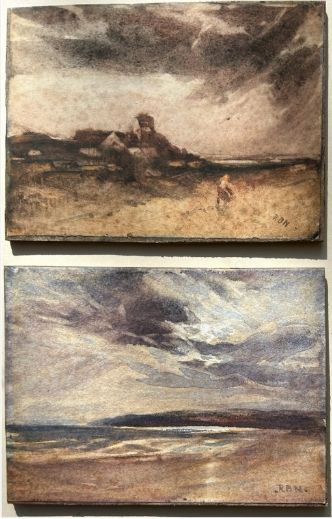
When you examine landscape watercolor art on this page, you encounter works executed on paper spanning the eighteenth century to the mid-twentieth century. The selection ranges from topographical townscapes and coastal scenes to serene pastoral views set beside rivers and lakes.
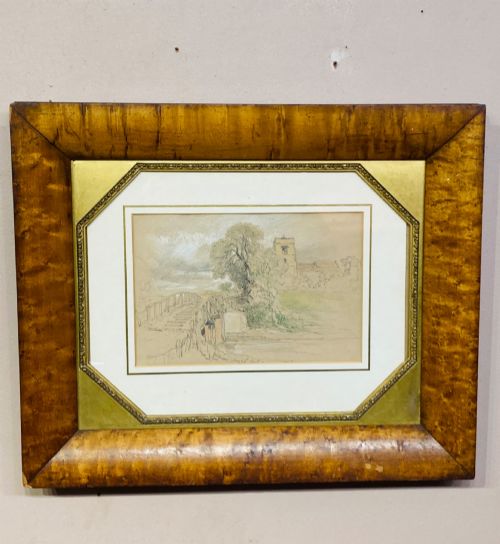
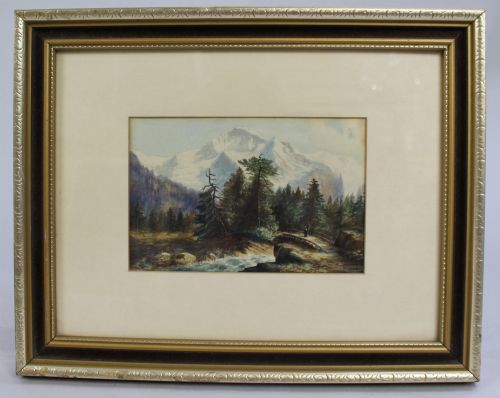
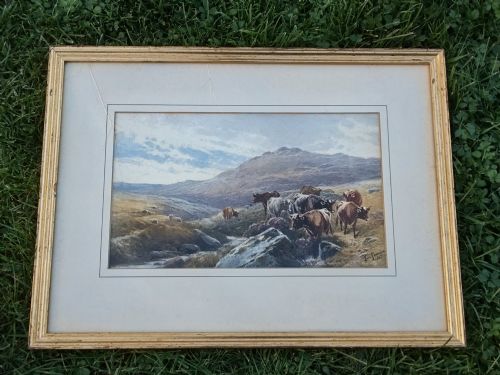
Victorian and Edwardian examples predominate, often framed behind glass within wood or gilt wood surrounds. Subjects stretch from English and Scottish countryside vistas to continental scenes in Italy and Sicily.
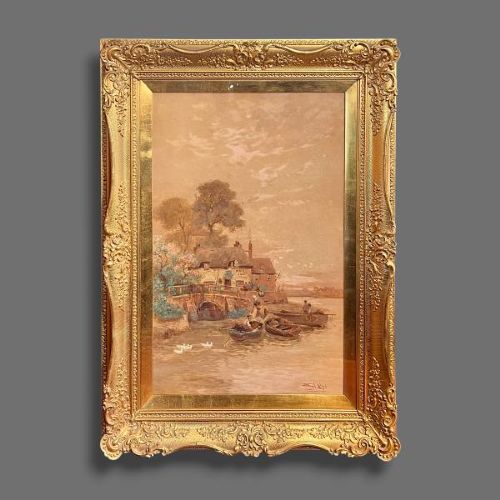
The assortment includes individual paintings, framed artwork and pairs of works showing harbours, churches, cattle and rural communities.
Materials and technique
Artists painted these works using watercolour pigment and ink on paper, occasionally combining pen work with washes to define architectural details and landscape contours. The application relies on transparent layers of colour that allow the reflective quality of the paper ground to illuminate the composition.
Makers housed finished watercolours behind glass for protection, mounting them within wood frames that frequently feature gold leaf or gilt wood finishes. This traditional framing protects the delicate pigment and paper from atmospheric moisture and handling.
Landscape Watercolor Art Retail Price Guide 2026
Typical asking prices for landscape watercolor art among the pieces listed under this phrase on Sellingantiques today, from the lower quarter to the upper quarter. They describe what is for sale here now, not the wider market.
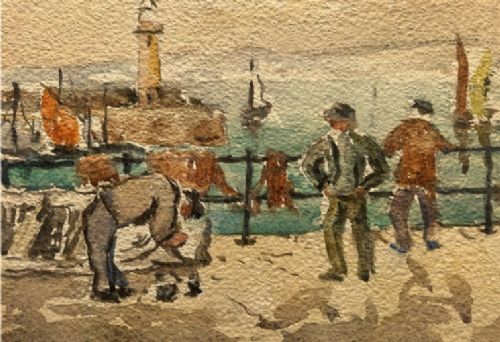
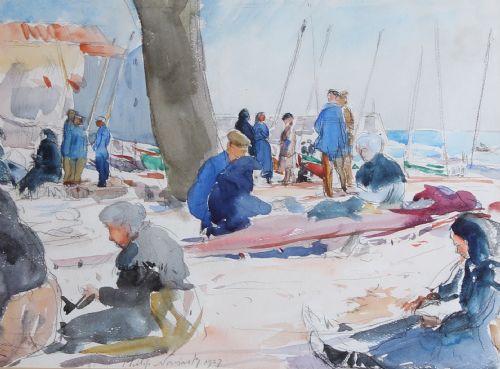
Several artists recorded the bustle of fish markets and nets drying by the shore, preserving salty coastal air in delicate washes.
Standards of execution
Quality rests in the handling of the pigment and the precision of the brushwork, where confident washes and subtle tonal gradations distinguish superior compositions from rigid sketches. The best examples capture atmospheric light and atmospheric depth with economy and control.
The integrity of the paper support and the condition of the pigments influence the standing of a piece. Strong colour retention without excessive fading or toning elevates the visual impact of the work.
Henry Lines·W.L. Guest·George F Pennington·Philip Naviasky·Robert Buchan Nisbet·Thomas Rowden·Cuthbert Crossley·Stuart Lloyd·Herbert Menzies Marshall·Robert George Talbot Kelly·William Taylor Longmire·David Law·H. Medlycott·George Fotherly Hargitt·Thomas Miles Richardson Jnr·James Orrock·William Henry Earp·Richard Principal Leitch·John R Prentice·Thomas Ellison·Alfred Young Nutt·Percy Lancaster·A. Mitchell·A. Marie Parsons·John McDougal
The Landscape Watercolor Art Glossary
- Watercolour pigment
- Finely ground colour particles suspended in a water-soluble binder. This medium permits fluid blending and luminous washes across a paper surface.
- Gilt wood
- Timber frames coated with a thin layer of gold leaf or metallic gilt. Such surrounds provide a traditional decorative border for works on paper.
- Wash
- A thin, transparent layer of diluted watercolour pigment spread across paper. Artists use this technique to create expansive skies, water surfaces and atmospheric haze.
- Topographical art
- Depictions of specific real-world locations and buildings. These works record historical townscapes, rivers and rural landmarks with descriptive accuracy.
Landscape Watercolor Art: Frequently Asked Questions
How do I hang landscape watercolor art?
Position these framed works away from direct sunlight to prevent the watercolour pigments from fading over time. Maintain stable indoor humidity levels to protect both the paper support and the wood frame.
Use picture hooks rated for the weight of the glass and wood frame. Hang the art at eye level to appreciate the fine brushwork and detail.
What subjects appear in these watercolours?
The selections depict rural fields, rivers, mountain ranges and coastal harbours across Britain and continental Europe. Urban views featuring cathedrals and bridges also feature prominently.
Artists recorded these scenes during travels or within their local regions, capturing changing weather and daily rural life.
How are these paintings framed?
Most works retain their period wood frames, often enhanced with gold leaf or gilt wood finishes. Glass covers the paper surface to shield the delicate pigments from dust and moisture.
Some pieces preserve original backing boards and labels that record the history of the artwork.
How can I identify the age of a watercolour?
Look for artist signatures, dates inscribed on the front or back, and framing materials characteristic of periods like the Victorian era or Edwardian years. Paper types and handwritten titles often offer additional clues.
Subject matter and costume details within figurative or townscape scenes also point towards specific decades.