





Landscape Porcelain Vases
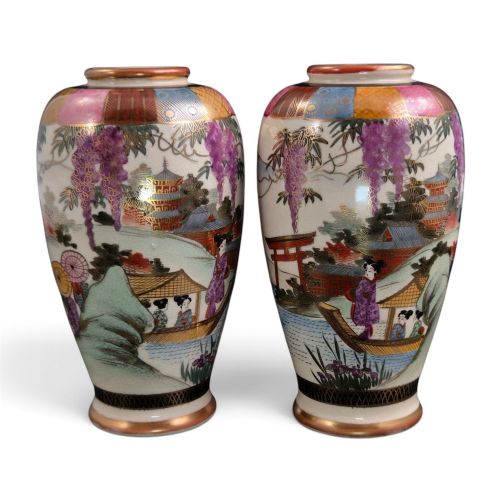
These landscape porcelain vases range from English topographical works to Japanese Satsuma and Chinese blue and white creations.
Landscape Porcelain Vases
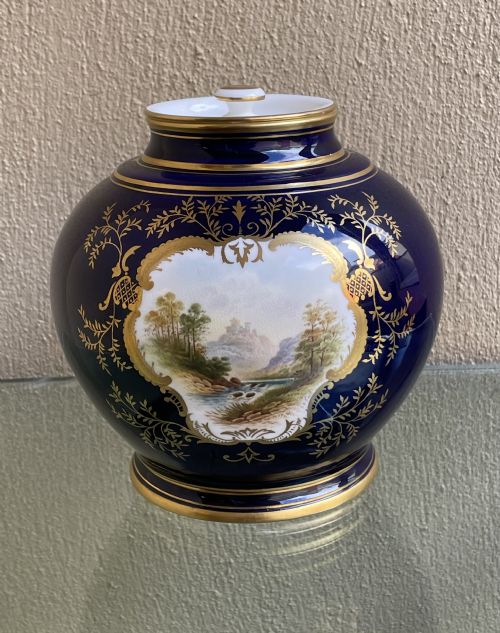
Landscape porcelain vases encompass decorated vessels, jars, urns, and bough pots featuring hand-painted vistas, lakes, and pastoral scenes. Buyers exploring landscape porcelain vases encounter pieces originating from English factories like Royal Worcester, Coalport, and Derby, alongside Japanese Satsuma and Chinese kilns.
The forms span centuries, moving from Georgian and Regency neoclassical vessels to Edwardian cabinet pieces and Meiji period Japanese ceramics. These items served as decorative garnitures, mantelpiece adornments, and functional vessels for displaying blooms or holding potpourri.
English works frequently depict specific castles, cattle, and rural English scenery, while Asian pieces showcase intricate lake landscapes, wisteria, and traditional motifs. Collectors select them for the fidelity of the miniature painting and the historical character of the ceramic body.
How they were made
The creation of these pieces combines high-fired ceramic paste, often earthenware or porcelain, with detailed enamel painting and metallic detailing. Makers applied gold leaf, gilding, and gold gilt to accent handles, rims, and borders, framing the central hand-painted landscapes.
English manufactories utilised skilled artists who brushed topographical and pastoral scenes onto the glaze before secondary firing, while Japanese workshops employed delicate slip and enamel layering. Some forms incorporated brass mounts, wooden bases, or matching covers to complete the vessel's silhouette.
Landscape Porcelain Vases Retail Price Guide 2026
Typical asking prices for landscape porcelain vases among the pieces listed under this phrase on Sellingantiques today, from the lower quarter to the upper quarter. They describe what is for sale here now, not the wider market.
Highland cattle stare out placidly from several English porcelain surfaces, bringing a touch of misty Scottish weather directly to the mantelpiece.
What varies in quality
The standard of painting separates ordinary production pieces from masterworks signed by notable decorators. Purity of the porcelain body, crispness of the gilding, and precision in the miniature landscape brushwork dictate the standing of each vessel.
The fidelity of the kiln firing and the preservation of the enamel colours over time distinguish superior examples. Pieces retaining intact gold leaf and crisp signatures command greater attention from serious collectors.
Coalport·Derby Porcelain·Flight Barr and Barr·Makuzu Kozan·Royal Doulton·Royal Worcester·Zachariah Boreman·Harry Stinton
The Landscape Porcelain Vases Glossary
- Bough pot
- A ceramic vessel designed to hold cut branches or flowers, often featuring a pierced cover. These containers frequently display topographical landscape scenes.
- Gilding
- The application of gold leaf or gold paint to ceramic surfaces. This technique highlights handles, rims, and borders on fine porcelain.
- Garniture
- A set of three or more matching vases or decorative urns designed to be displayed together on a mantelpiece or sideboard.
- Enamel
- Opaque glass-like paint fused to the porcelain surface during firing. It provides the vibrant colours seen in landscape and floral motifs.
- Ironstone
- A heavy, durable type of earthenware developed in England. It serves as a robust alternative to softer porcelain bodies.
Landscape Porcelain Vases: Frequently Asked Questions
How do I display landscape porcelain vases?
Place them on mantelpieces, sideboards, or dedicated cabinets where natural light illuminates the hand-painted details. Ensure they sit safely away from heavy foot traffic to protect delicate handles and rims.
Pair matching garnitures symmetrically or let single cabinet vases stand alone as focal points in a room.
How do I identify the period of a vase?
Examine the base for factory marks, cyphers, or handwritten artist signatures that correspond to known operational dates. The style of the painted landscape, from Georgian neoclassical scenes to Edwardian cattle studies, also points to a specific era.
Compare the ceramic paste and weight against documented examples from English or Asian kilns.
What is a bough pot used for?
A bough pot was traditionally used to hold leafy tree branches and fresh floral arrangements in domestic interiors. The perforated or pierced lid kept stems upright and spaced evenly across the vessel.
Many examples feature flat backs designed to sit flush against a wall or fireplace mantel.