
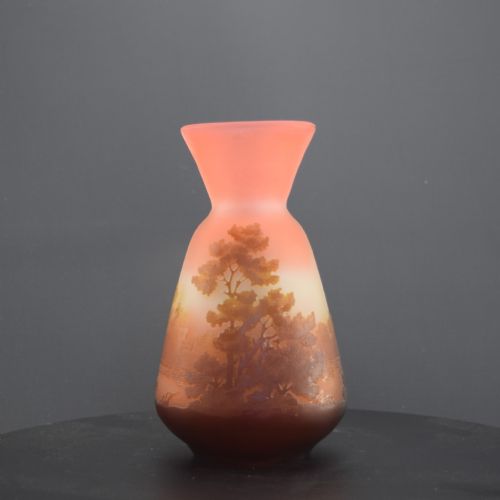


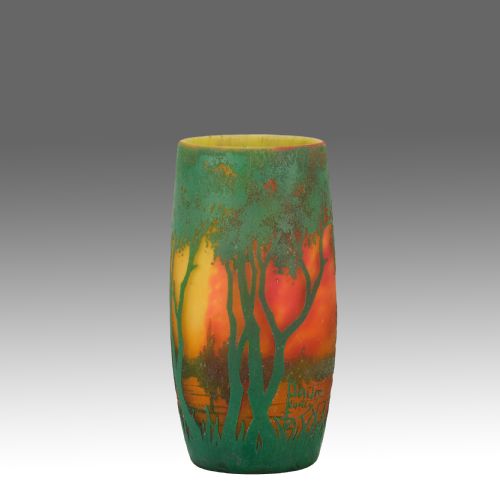


Landscape Cameo Vase
A landscape cameo vase brings the quiet depth of nature indoors, carved through layers of coloured glass to reveal scenic horizons.
Landscape Cameo Vase
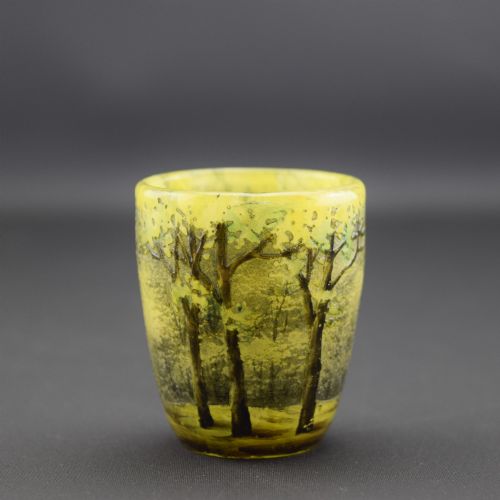
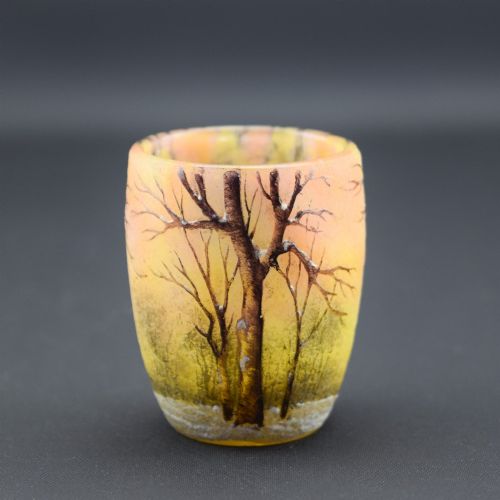
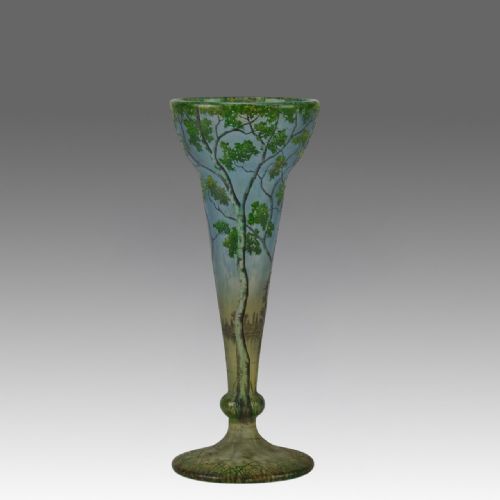
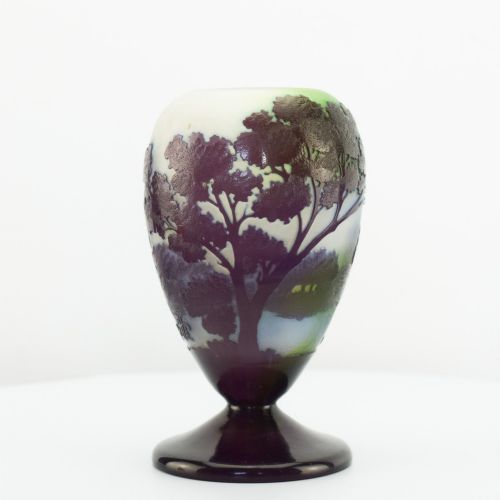
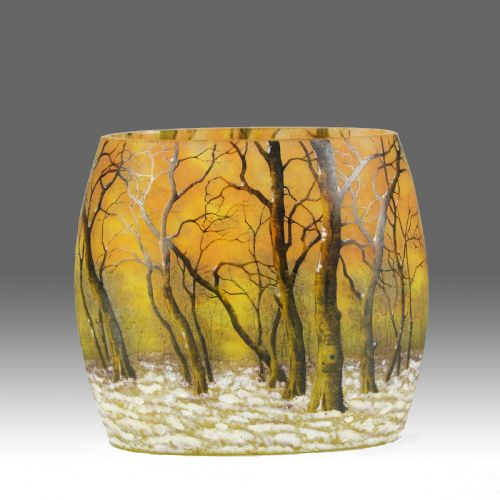
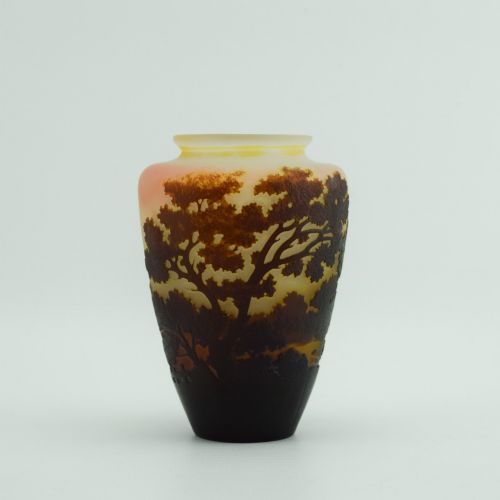
A landscape cameo vase displays natural scenery, from quiet winter forests to lakes with sailing boats, captured across the surface of the vessel. These pieces emerge predominantly from the early twentieth century, spanning the nineteen hundreds to the nineteen twenties in various forms.
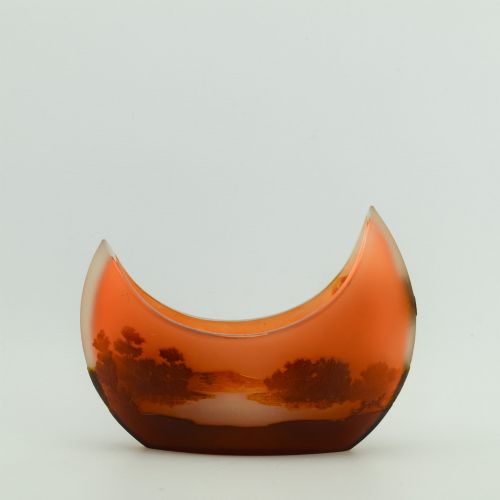
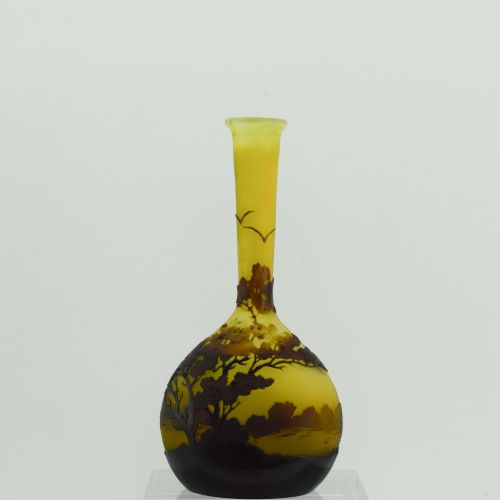
Collectors encounter distinctive shapes including crescent profiles, banjo silhouettes, oviform bodies, and footed vessels. The artistry reflects the prevailing Art Nouveau aesthetic of the period, tying natural forms directly to the contours of the glass.
Origins trace directly to notable French glassworks and master makers operating around nineteen hundred and the subsequent decades. Each vase translates a distinct time of day or seasonal view, utilising layered glass reduction to construct depth.
How they were made
Makers construct these vessels using multiple layers of coloured glass fused together while molten to build contrast. Acid-etching then eats away at the outer strata down to the background, revealing the intended horizon, trees, or water.
Enamel is sometimes applied by hand over the etched surface to add nuanced colour variations like brown, peach, or red sunset tones. Artisans refine the contours manually, ensuring each landscape cameo vase achieves distinct atmospheric perspective.
The documented periods span from nineteen hundred through nineteen twenty within the Art Nouveau style.
What varies in quality
Quality rests in the precision of the acid-etching and the subtlety of the layered glass tones. Deeper carving creates greater sculptural relief, separating standard production pieces from masterworks with intricate detail.
The harmony of the colour palette dictates visual success, where contrasting shades like brown, peach, or winter whites define the landscape clearly. The balance of the vessel shape further distinguishes finer examples from simpler forms.
Galle·Daum Freres·Legras
The Landscape Cameo Vase Glossary
- Cameo Glass
- Glass vessels created with multiple fused layers of contrasting colours, then carved or acid-etched to produce raised designs. This technique gives the landscape scenes their characteristic relief.
- Acid-Etched Glass
- A process utilising hydrofluoric acid to eat away exposed portions of glass. It forms the background and contours of the landscape design without requiring manual cutting.
- Art Nouveau
- An international style of art and architecture prevalent around nineteen hundred, characterised by intricate linear designs and flowing natural motifs. It heavily influences the organic forms seen on these vases.
- Banjo Vase
- A specific vessel silhouette featuring a slender neck expanding into a rounded, flattened body. This form provides an elongated canvas well suited for vertical landscape scenes.
- Enamel
- A decorative melted glass powder fused onto the surface of the vase through firing. It introduces additional washes of colour to enhance the naturalistic landscape.
Landscape Cameo Vase: Frequently Asked Questions
What periods do these pieces date to?
The listings show production spanning the early twentieth century, primarily originating around nineteen hundred, nineteen ten, and nineteen twenty. These dates correspond with the height of the Art Nouveau movement in France.
Changes in glass formulation and scenic subject matter evolved subtly across these decades, shifting from detailed woodland scenes to broader atmospheric horizons.
How were these landscape designs created?
Artisans fused multiple layers of coloured glass together before applying acid to eat away the unwanted exterior strata. This subtractive method leaves the raised landscape design standing in sharp relief against the background.
Additional details were occasionally painted on using enamel pigments to heighten seasonal effects like winter snow or autumn sunsets.
What shapes do these vases take?
Makers utilised various vessel forms including crescent shaped bodies, tall banjo silhouettes, large oviform shapes, and footed designs. Each silhouette offers a different spatial arrangement for the horizon.
Rounder vessels suit expansive water views, while slender banjo shapes accommodate upright trees and vertical framing.
Where were these pieces made?
Production is centred in France, with major works originating from renowned workshops and glassmakers active during the early twentieth century. These regional houses established distinct signatures in glass layering and chemical etching.
The Vosges landscape served as a prominent local inspiration for the woodland and winter scenes depicted on the glass.