

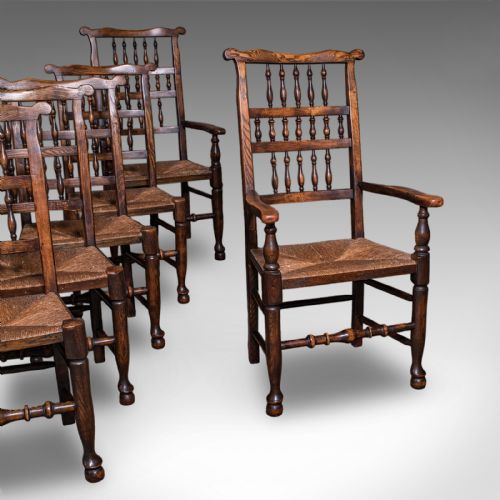


Lancashire Dining Chairs
These robust lancashire dining chairs bring honest vernacular craft to the table, offering sturdy country seating built to last generations.
Lancashire Dining Chairs
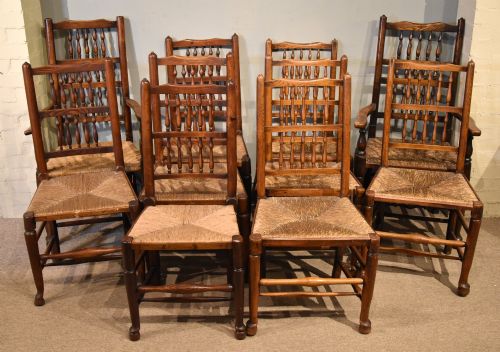
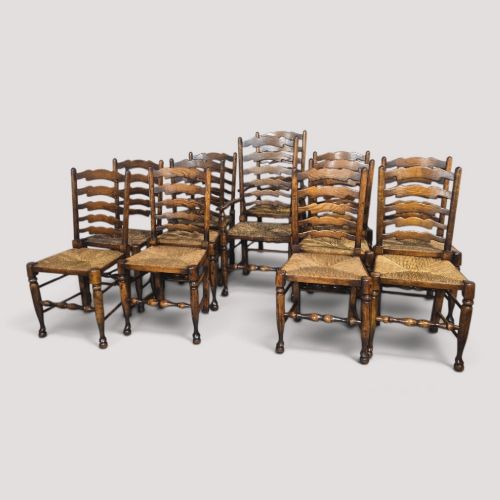
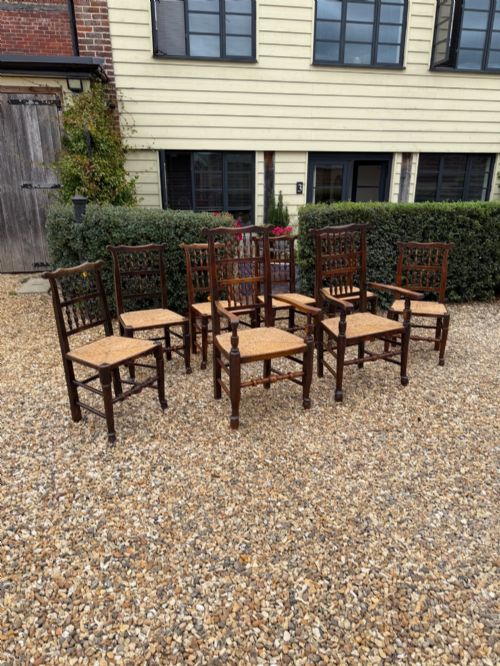
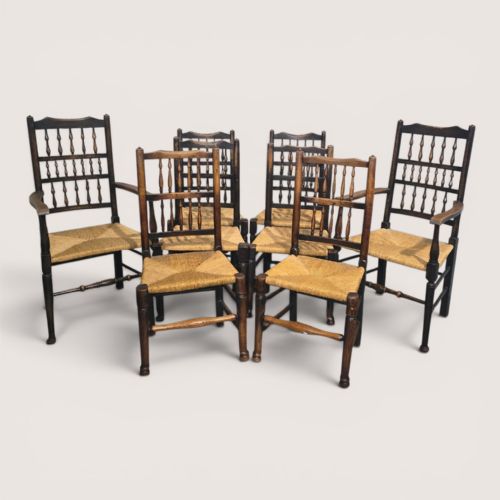
When you search for lancashire dining chairs, you encounter sturdy vernacular seating built primarily across the seventeenth, eighteenth, and nineteenth centuries. These country pieces range from simple side chairs to generous carvers with characteristic regional forms.
The selections here lean heavily toward ladder back and spindle back designs, often paired with traditional rush seats. Elm, oak, and ash dominate the construction, reflecting the domestic woods available to regional makers in periods spanning from the 1600s to the Edwardian era.
How they were made
Makers utilised native timbers such as oak for heavy frames, elm for durable seats, and ash or beech for turned spindles and uprights. These woods were often combined within a single chair to balance structural strength with the workability required for regional turning techniques.
Traditional rush was tightly woven around seat rails to create a resilient, flexible platform for daily dining use. Component parts were shaped using lathes and drawknives, relying on traditional joinery rather than metal fasteners to hold the frame together.
Lancashire Dining Chairs Retail Price Guide 2026
Typical asking prices for lancashire dining chairs among the pieces listed under this phrase on Sellingantiques today, from the lower quarter to the upper quarter. They describe what is for sale here now, not the wider market.
Some ladder back chairs double nicely as improvised laundry racks when the dining is finished.
What varies in quality
The balance of proportion and the integrity of the turned woodwork separate fine vernacular examples from utilitarian output. Superior pieces retain crisp profiles on their spindles and uprights, showing careful selection of grain in woods like elm and oak.
Consistency across a set dictates value, particularly when matching harlequin groups or larger gatherings of chairs. The tightness of the rush weaving and the original patination of the timber surface further distinguish exceptional regional survivals.
The Lancashire Dining Chairs Glossary
- Ladder back
- A chair back constructed with horizontal arched slats resembling the rungs of a ladder. This form remains common in regional English country seating.
- Spindle back
- A chair back featuring a series of thin, turned vertical wooden rods. These components provide lightweight structural support.
- Rush seat
- A seating surface woven from dried marshland rushes twisted into cords. It offers a flexible and durable texture.
- Carver
- An armchair designed with armrests, traditionally positioned at the head of a dining table. These pieces match the style of the smaller side chairs in a set.
Lancashire Dining Chairs: Frequently Asked Questions
Are these chairs suitable for daily dining?
Most of these vernacular chairs were built for heavy domestic use and handle modern seating well.
Their sturdy wood frames and resilient rush seats provide lasting comfort for everyday meals.
How do I care for rush seats?
Keep rush seating away from excessive moisture and direct heat sources to prevent the natural fibres from becoming brittle.
Occasional gentle dusting keeps the woven surface clean without damaging the material.
Can I mix different chairs together?
Harlequin sets of country chairs offer a traditional way to seat guests around a farmhouse table.
Matching heights and shared regional characteristics help unify groups assembled from different periods.
How do I identify seventeenth century pieces?
Early examples in oak often display heavier framing, simpler turnings, and pegged joinery methods.
Comparing back post profiles and timber patination helps distinguish these older survivals from later nineteenth-century revivals.