




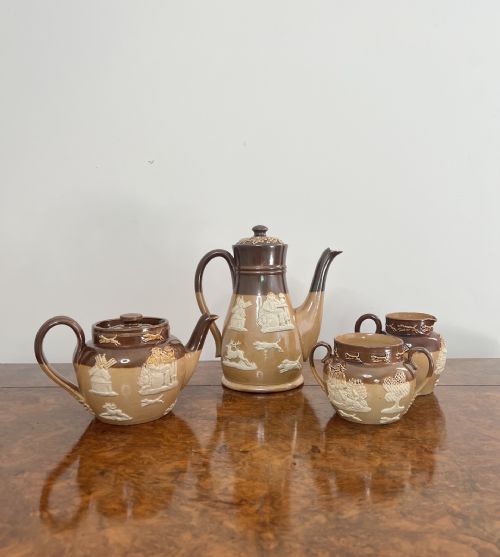

Lambeth Pottery Jug
A lambeth pottery jug brings substantial nineteenth-century weight and rich decorative surface work into a room.
Lambeth Pottery Jug
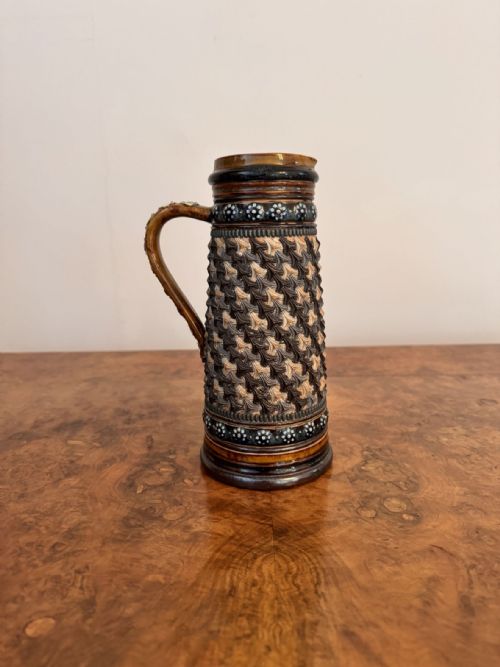
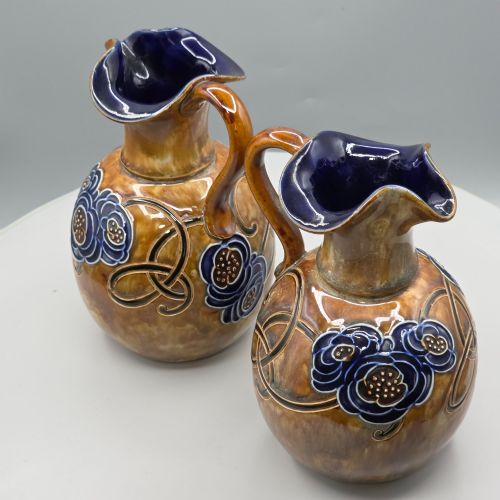
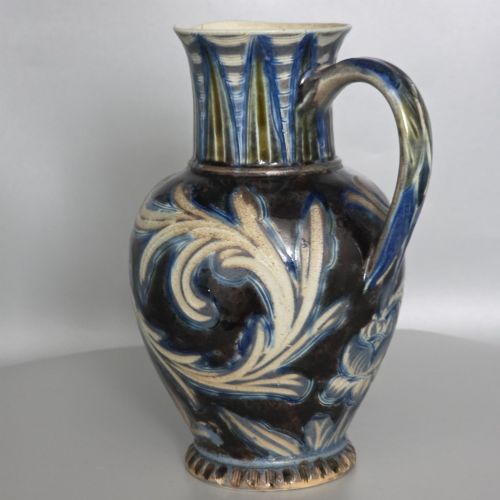
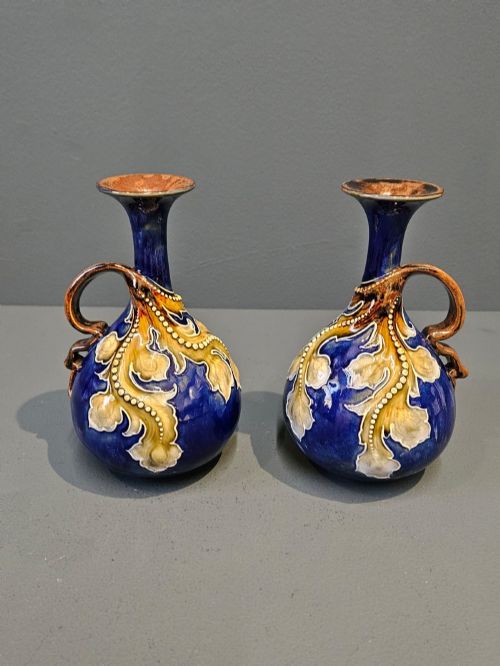
A lambeth pottery jug is a heavy utilitarian vessel transformed into an artistic statement through elaborate surface decoration. These pieces originate predominantly from the Victorian period and extend into the early twentieth century, spanning decades of intense ceramic creativity. You encounter water jugs, harvest jugs, and decorative ewers shaped with distinct regional character.
The objects on this page showcase forms ranging from straightforward pouring vessels to elaborate art pottery pieces and matched toilet sets. Many examples reflect the dominant aesthetic movements of their day, carrying motifs from Arts and Crafts, Art Nouveau, and Aesthetic styles. Makers utilised the dependable medium of stoneware to build sturdy bodies capable of holding complex incised patterns and relief work.
Materials and methods
Potters relied on dense stoneware and earthenware bodies fired at high temperatures to achieve durability. These clay foundations received salt glaze treatments that produced textured, orange-peel surfaces or smooth coloured finishes. Artisans applied enamel highlights and moulded details directly onto the raw clay before the final kiln run.
Decoration relied heavily on incised carving, slip trailing, and applied sprigged ornaments rather than simple painted designs. Specialised techniques such as Slater's patent utilised lace pressed into wet clay to create textured background patterns. Metal components like silver rims occasionally appeared on select harvest jugs to finish the top edge.
Lambeth Pottery Jug Retail Price Guide 2026
Typical asking prices for lambeth pottery jug among the pieces listed under this phrase on Sellingantiques today, from the lower quarter to the upper quarter. They describe what is for sale here now, not the wider market.
Listings feature stoneware and earthenware materials decorated with salt glaze and enamel finishes across the Victorian and Edwardian eras.
Judging the work
Quality rests on the crispness of the incised ornament and the precision of the hand-applied decorative motifs. Superior examples display deep, clean carving lines and balanced proportions that separate mass production from careful studio execution. The integration of glaze colours across complex relief patterns further dictates the visual success of a piece.
Signed works by recognised decorators or specific workshop ciphers elevate the standing of an object significantly. The inclusion of matching elements, such as basins or fitted metal rims, points to higher original commissions. Pieces that maintain sharp surface details without firing distortions represent the upper echelon of the potter's output.
Doulton Lambeth·Royal Doulton·Emma Shute
The Lambeth Pottery Jug Glossary
- Stoneware
- A robust ceramic body fired at high temperatures until vitrified and rendered completely impermeable to liquids. This dense material forms the durable foundation for nearly all the pieces catalogued here.
- Salt glaze
- A glossy, slightly textured finish achieved by throwing common salt into the kiln during high-temperature firing. This reaction creates a distinctive pitted surface resembling an orange peel.
- Incised
- A decorative technique where patterns and motifs are cut directly into the damp clay body before firing. This method allows for fine, sharp lines that hold enamel colour effectively.
- Puzzle jug
- An interactive vessel featuring a pierced neck or hidden channels that prevents normal pouring without spilling liquid. Users must discover the secret passages to drink successfully from the spout.
- Harvest jug
- A traditional bulging vessel, often decorated with hunting scenes or agricultural motifs in relief. These jugs were frequently fitted with silver rims and used during rural festivities.
Lambeth Pottery Jug: Frequently Asked Questions
What is a lambeth pottery jug?
A lambeth pottery jug is a nineteenth-century ceramic vessel produced in south London, known for its durable stoneware body and rich decorative surface. These items range from simple utilitarian pitchers to highly ornamented art pottery.
Craftsmen employed techniques like incising and salt glazing to turn functional containers into decorative centerpieces that reflect Victorian artistic movements.
How do I date a lambeth pottery jug?
Dating relies on stamped factory marks, impressed cyphers, and stylistic indicators such as Art Nouveau curves or Victorian aesthetic patterns. Earlier pieces from the mid-to-late nineteenth century often feature specific studio stamps and hand-incised decorator initials.
Examining the glaze type and the presence of patent numbers also helps narrow down the production decade between eighteen-seventy and nineteen-ten.
Were these jugs used for water?
Many examples served practical purposes as water jugs, wash set pitchers, or harvest containers holding ale at large gatherings. Their sturdy stoneware construction made them entirely functional for daily household use.
Over time, many of these utilitarian items transitioned into decorative cabinet pieces valued primarily for their artistic exterior relief work.
How should I clean my jug?
Maintenance requires gentle dusting with a soft, dry cloth to protect the textured stoneware and delicate enamel highlights from unnecessary wear. Avoid harsh chemical cleaners or submerging pieces with applied metal rims for extended periods.
Displaying the vessel away from direct sunlight ensures the rich surface colours remain stable and bright over the years.