
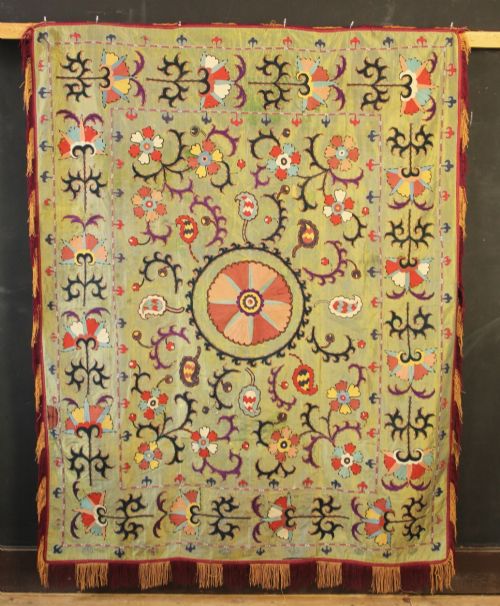


Lakai Suzani Embroidery
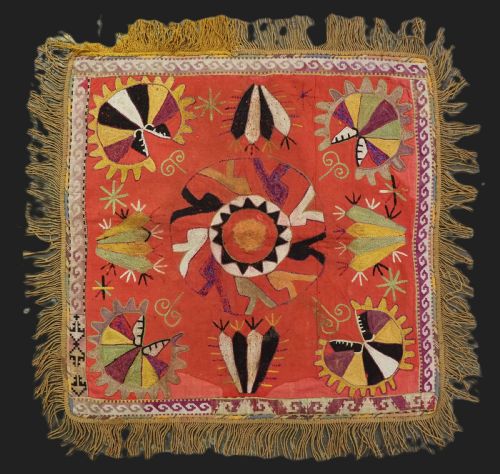
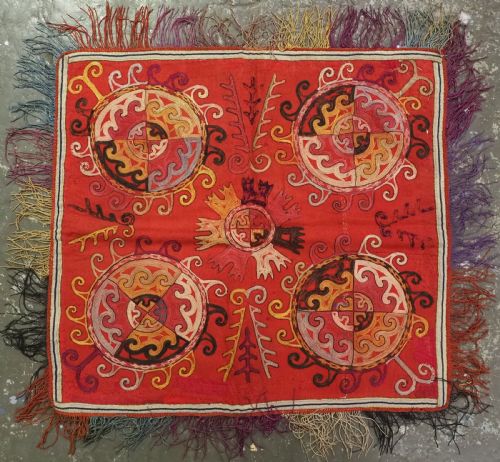
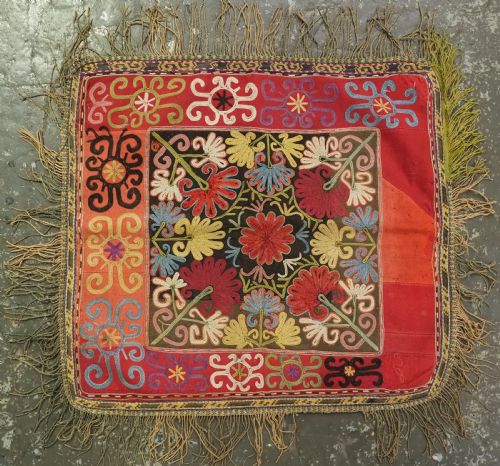
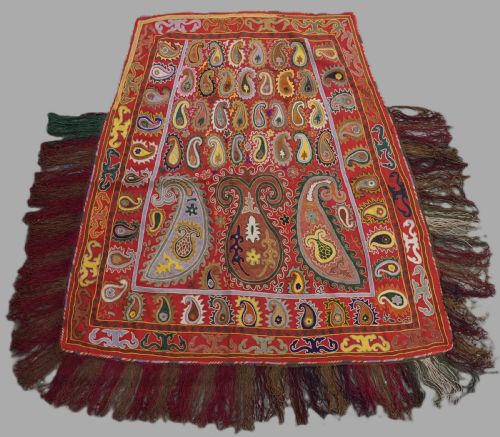
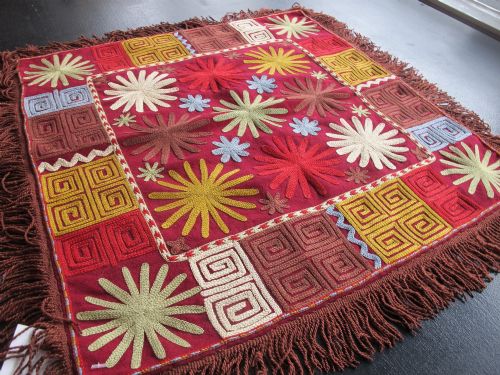
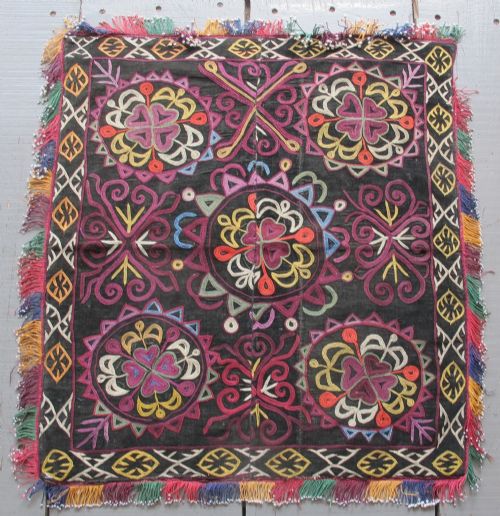
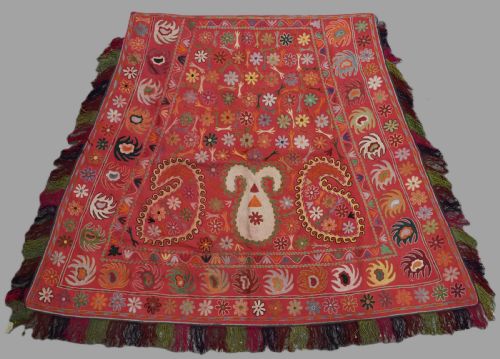
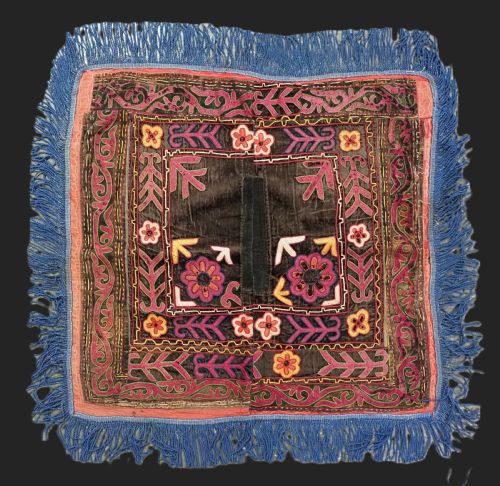
These lakai suzani embroidery pieces are Central Asian tribal works crafted for domestic or ceremonial use.
Lakai Suzani Embroidery
When you search for lakai suzani embroidery, you encounter textile panels, wall hangings, and ceremonial covers originating from Central Asia and Uzbekistan. These items encompass dowry embroideries, horse covers, mirror covers, and bed decorations made by the Lakai tribe.
The pieces on this page span from the late nineteenth century through to the early twentieth century, incorporating styles such as Central Asian Tribal, Uzbek Tribal, and Central Asian Folk Art. You will frequently meet the ilgich form, which functions as a wall hanging or dowry piece.
How they were made
These textiles rely on silk thread worked onto grounds of cotton, wool, or velvet, sometimes enhanced with glass beads or wool fringe. Artisans stitch dense patterns that define the traditional aesthetic of the region.
The construction involves specific functional forms like saddle covers, amulet bags, and wall panels. Each item demonstrates the application of needlework techniques native to Uzbek and Lakai makers.
Several ceremonial horse covers in the collection ensure that nomadic steeds were better dressed than most Victorian gentlemen.
What varies in quality
Quality rests upon the density and precision of the silk thread embroidery across the ground fabric. Works with finer stitch execution and complex geometric or figurative layouts command greater attention.
Condition and completeness of materials, such as intact wool fringe or well-preserved velvet and cotton backings, distinguish standard examples from more accomplished tribal pieces.
The Lakai Suzani Embroidery Glossary
- Ilgich
- A traditional embroidered wall hanging or dowry piece originating from Central Asian tribes. These textiles were typically created by women for domestic decoration or family ceremonies.
- Suzani
- An embroidered textile panel from Central Asia, usually worked in silk thread on a cotton or wool ground. The term covers various formats including smaller nim suzani pieces.
- Torba
- A small hanging bag or storage sack produced by tribal groups in Central Asia. They often feature intricate needlework and served practical or decorative roles within the dwelling.
- Nim suzani
- A half-size suzani embroidery format utilised for smaller wall spaces or specific domestic furnishings. These pieces share the materials and motifs of full-scale examples.
- Saye gosha
- A decorative bed hanging or textile panel associated with Central Asian domestic interiors. These items display traditional regional embroidery patterns.
Lakai Suzani Embroidery: Frequently Asked Questions
What is lakai suzani embroidery?
Lakai suzani embroidery consists of textile works produced by the Lakai tribe in Uzbekistan. These pieces include wall hangings, dowry items, and ceremonial covers.
They utilise silk thread on grounds of cotton, wool, or velvet, displaying Central Asian tribal designs.
How were these embroideries used?
Tribal groups utilised these textiles as wall hangings, dowry displays, and saddle covers for horses. Items like mirror covers and amulet bags served both protective and decorative functions in daily life.
Larger pieces decorated domestic interiors as bed furnishings or hanging panels during ceremonies.
How do I date these textiles?
Dating relies on stylistic analysis, material composition, and traditional construction methods observed in late nineteenth and early twentieth-century examples. Pieces from this era typically show natural dye palettes and hand-spun wool or cotton foundations.
Comparing motif arrangements with documented tribal types helps narrow the period of origin.
How do I care for a textile wall hanging?
Protect antique textiles from direct sunlight to prevent silk thread fading and fibre degradation. Mount the piece securely without placing undue tension on the fabric ground.
Keep the environment dry and stable to preserve wool, cotton, and velvet components.