




Ladies Timepiece
A ladies timepiece sits on the wrist or mantel as both instrument and jewel, moving through Edwardian precision to mid-century cocktail elegance.
Ladies Timepiece
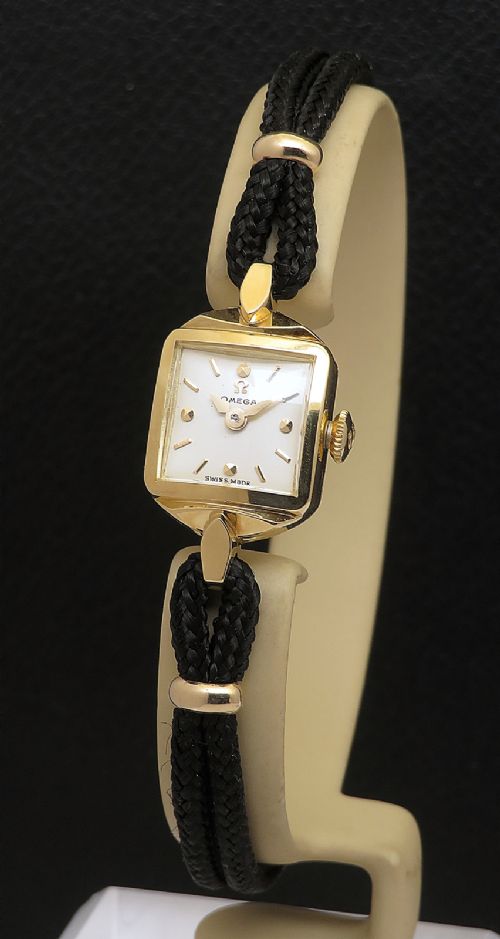
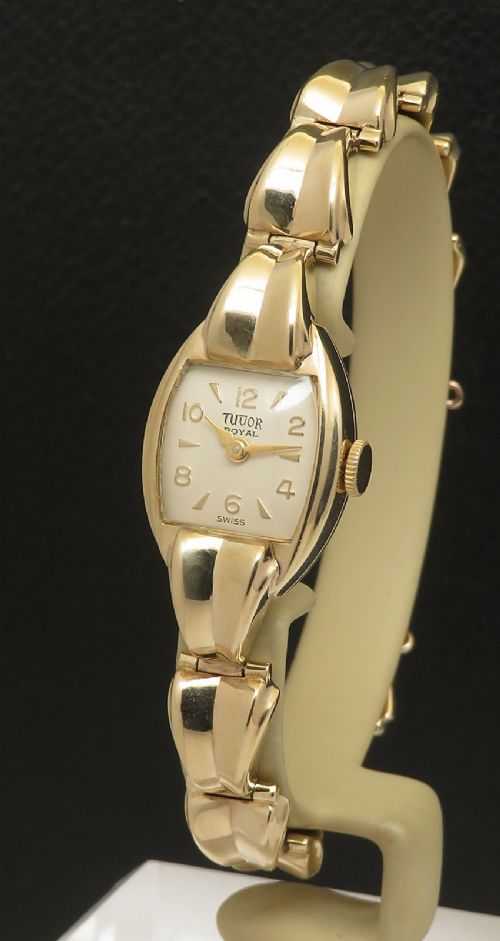
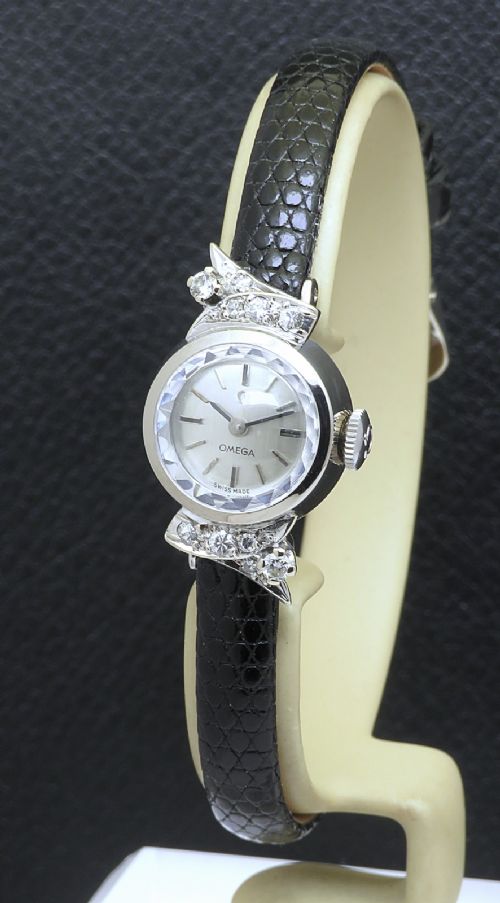
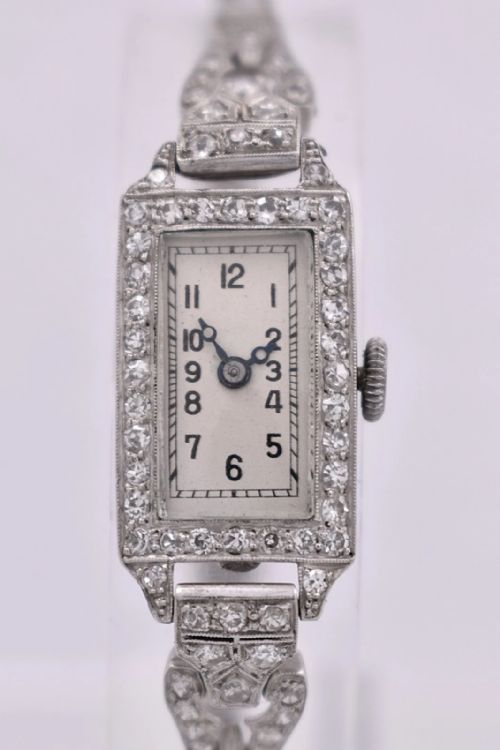
A ladies timepiece encompasses wristwatches, cocktail watches, pocket watches, fob watches, mantel clocks and figural clocks. The selection on this page leans toward wristwatches and diamond-set cocktail designs spanning the Edwardian era, the Art Deco period, and mid-century modernism.
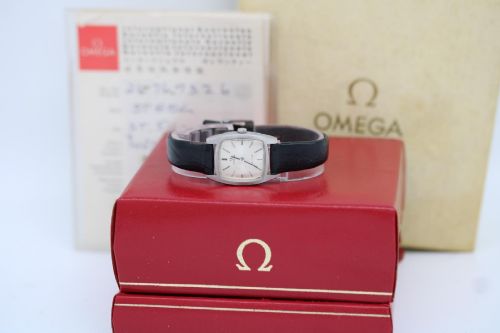
Buyers encounter solid gold and platinum cases housing mechanical or quartz movements. Some pieces include original boxes, papers, mesh bracelets, leather straps, or sculptural figural elements.
The objects originate from notable makers and span decades from nineteen-ten through to the later twentieth century. Each version reflects the prevailing dress codes and horological standards of its specific decade.
Materials and Construction
Craftsmen built these watch cases from platinum, eighteen-carat gold, eighteen-carat white gold, nine-carat gold, and fourteen-carat gold. Many cocktail variants integrate pavé or set diamonds alongside black onyx, glass crystals, and fabric straps.
Movements rely on Swiss jewelled lever mechanisms housed within precious metal chassis. Cases feature integrated mesh bracelets, leather straps, or figural sculptural surrounds cast in metal and glass.
Ladies Timepiece Retail Price Guide 2026
Typical asking prices for ladies timepiece among the pieces listed under this phrase on Sellingantiques today, from the lower quarter to the upper quarter. They describe what is for sale here now, not the wider market.
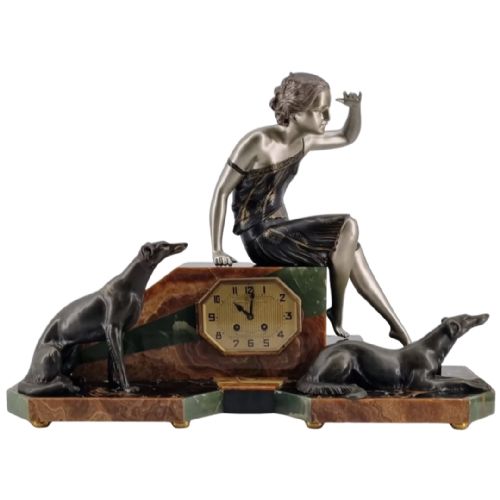
Uriano contributed a figural clock titled Waiting, proving that even clocks sometimes display a touch of dramatic patience.
Markers of Quality and Preservation
Quality rests upon the pedigree of the maker and the presence of precious stones like diamonds set into platinum or white gold. Original components such as matching boxes, papers, and factory bracelets elevate an example significantly.
The integrity of the case metalwork, the condition of the dial, and recent servicing of the jewelled movement determine the operational standard of the watch. Art Deco platinum work and solid gold construction represent the finer tiers of production.
Uriano·Omega·Rolex Tudor·Rolex·Wilsdorf and Davis·Waltham·Accurist·Tissot·Bucherer·Asprey·Elgin·Vertex·Movado
The Ladies Timepiece Glossary
- Cocktail watch
- A small dress watch designed primarily for evening wear, often heavily set with diamonds and precious gems. These pieces prioritize jewellery craftsmanship alongside timekeeping.
- Fob watch
- A small pocket watch attached to a ribbon or short chain, worn pinned to a garment or tucked into a pocket. Popular in the Edwardian period before wristwatches became standard.
- Swiss jewelled lever
- An escapement mechanism utilising synthetic ruby or sapphire jewels to reduce friction in the gear train. This system ensures greater accuracy in mechanical timepieces.
- Tank style
- A rectangular watch case with vertical brancards extending into the strap attachments, popularised during the Art Deco era. The geometry mirrors the tracks of military tanks.
Ladies Timepiece: Frequently Asked Questions
How do I wear a cocktail watch?
These diamond-set pieces function as evening bracelets where the timekeeping is secondary to the jewellery design. Pair them with formal attire to let the platinum and stones catch the light.
Ensure the mesh or leather strap is securely fastened to the wrist, as these vintage mechanisms require careful handling during daily wear.
What is the difference between a fob watch and a wristwatch?
Fob watches hang from ribbons or chains attached to clothing, originating from earlier pocket watch traditions. Wristwatches secure directly to the arm via leather straps or integrated metal bracelets.
Both formats utilise mechanical movements, but wristwatches gained dominance through the twentieth century for practical daily timekeeping.
How do I care for a vintage gold watch?
Keep the piece away from water and moisture, especially older non-waterproof models from the Edwardian and Art Deco periods. Mechanical movements require periodic servicing by a professional watchmaker to maintain accuracy.
Store the watch in a dry box away from direct sunlight when not on the wrist to protect the leather straps and metal finish.
How can I tell an Art Deco watch apart from a mid-century piece?
Art Deco watches from the nineteen-twenties and thirties feature geometric platinum cases, diamond pavé work, and stylized numerals. Mid-century examples from the nineteen-fifties and sixties often display cleaner lines, solid gold Omega or Rolex branding, and minimalist dials.
Examining the case shape and bracelet construction usually reveals the stylistic shift from interwar opulence to postwar modernism.