
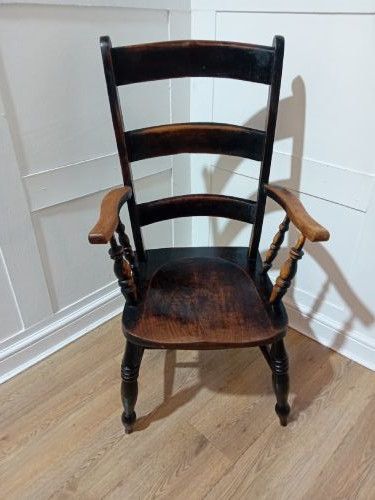
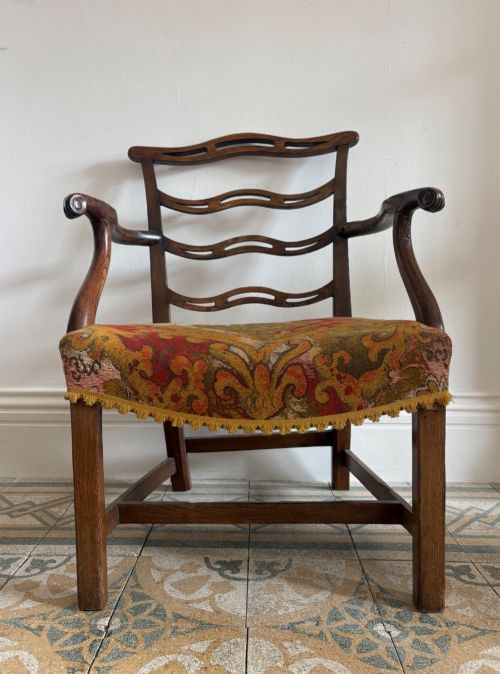
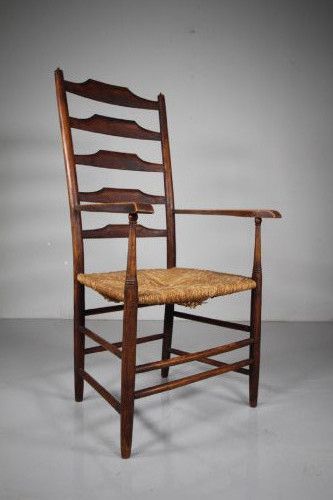
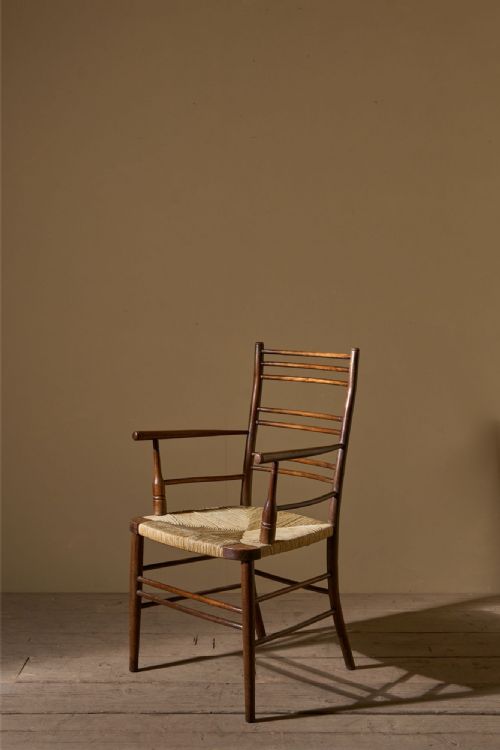
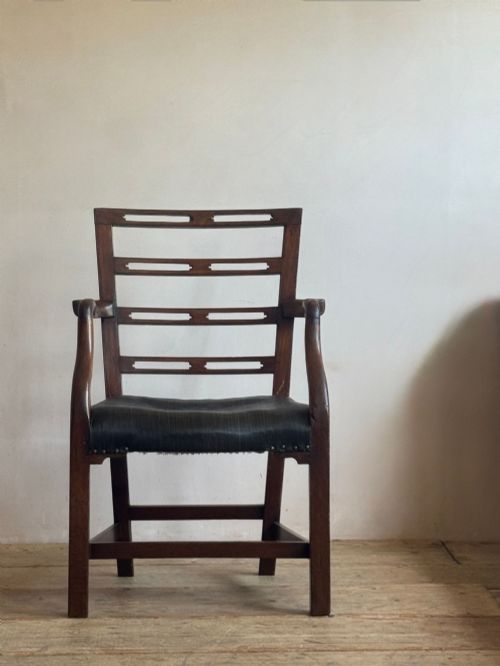


Ladderback Wooden Armchair
A ladderback wooden armchair brings tactile comfort and honest structure to a room through turned spindles and horizontal rails.
Ladderback Wooden Armchair
When you search for a ladderback wooden armchair, you encounter seating built around horizontal slats that curve to support the spine. The pieces here span the Georgian period, the Victorian era, and the early twentieth century.
You meet country vernacular examples in ash, elm, and oak alongside polished mahogany dining carvers. Regional English styles sit alongside French, Scandinavian, and Anglo-Indian variants.
The form stretches from low fireside chairs and rocking chairs to high chairs and adjustable steamer armchairs. Rush and fabric provide the primary seating platforms.
How they were made
Joiners turned local timbers such as ash, beech, elm, and oak on lathes to form the uprights and spindle legs. Steam bending shaped the horizontal rungs and armrests to fit the human body.
Craftsmen wove rush, seagrass, and tape tightly around seat frames to create a resilient platform. Upholstered options integrated tapestry and modern fabrics over traditional stuffing.
Chronological periods span the Georgian era, Victorian period, and the Arts and Crafts movement.
What varies in quality
The integrity of the timber framing and the tightness of the joinery set pieces apart. Chairs retaining their original surface finish command distinct attention from those stripped or heavily restored.
The finesse of the turning on the uprights and the rhythm of the graduated horizontal slats reveal the maker's hand. Regional workshops balance rustic utility with purposeful aesthetic restraint.
Philip Clissett·Dicon Nance·Liberty & Co
The Ladderback Wooden Armchair Glossary
- Ladderback
- A chair design featuring a backrest composed of horizontal slats or rails positioned between two upright posts. This structural arrangement provides ergonomic support.
- Rush seat
- A seating surface woven from dried marsh reeds stretched across the wooden frame. This traditional method yields a flexible and durable texture.
- Carver
- An armchair designed to match a set of dining chairs, typically positioned at the head of a table. These pieces feature supportive armrests.
- Vernacular
- Furniture built by local tradesmen using regional traditions rather than metropolitan pattern books. These objects prioritise functional utility.
Ladderback Wooden Armchair: Frequently Asked Questions
How do I identify a regional ladderback?
Regional pieces display local timber choices like ash or elm and distinctive spindle turning.
Maker attributions often stem from specific turning profiles associated with English counties or Welsh valleys.
Are rush seats durable for daily use?
Rush seats offer surprising resilience and flexibility when maintained in stable humidity.
Avoid placing them in damp environments to preserve the natural reed fibres.
What is the difference between a carver and an armchair?
Carvers traditionally form part of a larger dining set with matching side chairs.
Stand-alone armchairs serve fireside or reading roles with heavier framing.
How should I care for original timber finishes?
Feed dry wood with microcrystalline wax and keep pieces away from direct heat sources.
Preserving the surface patina maintains the historical integrity of the piece.