



Lacquered Tall Clock
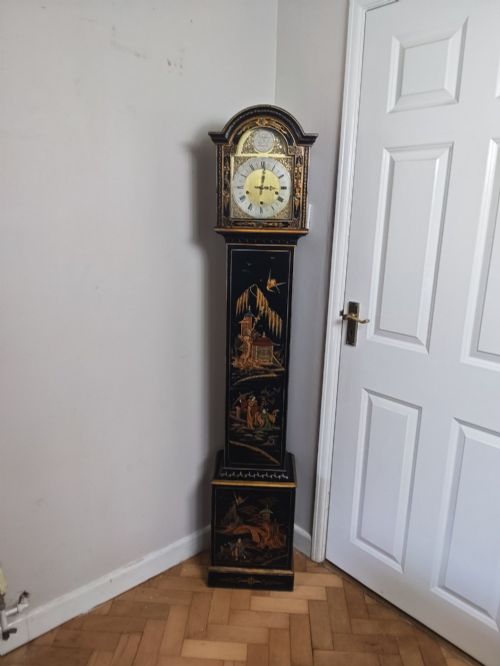
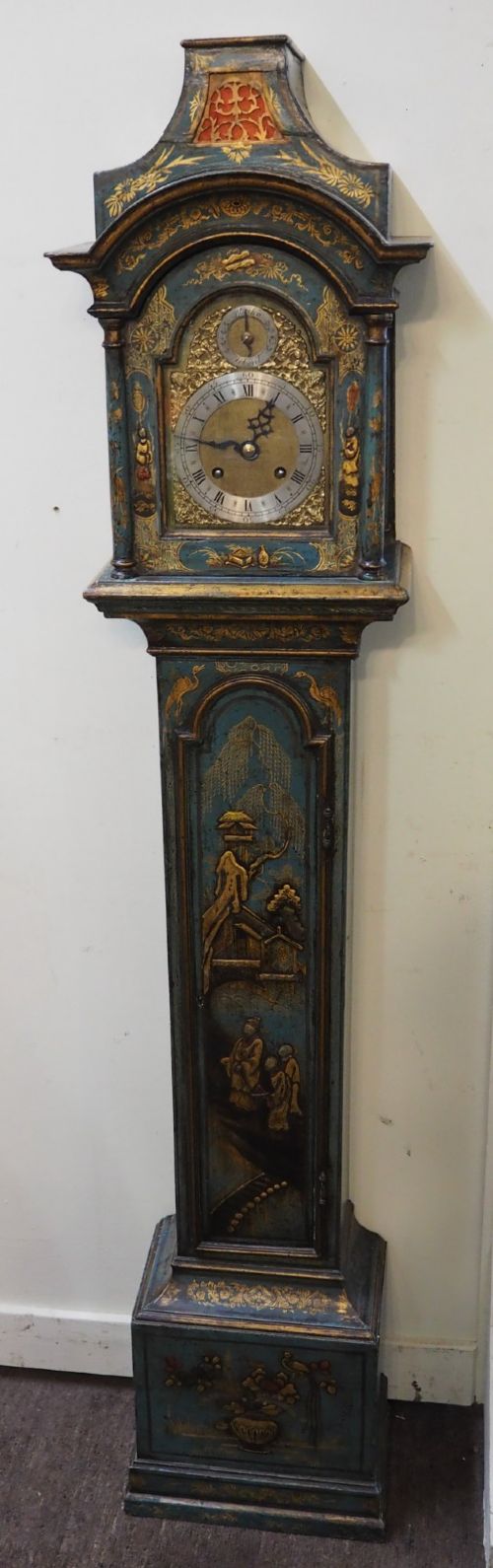
A lacquered tall clock brings architectural presence and intricate Chinoiserie decoration into a room, offering both traditional timekeeping and striking visual depth.
Lacquered Tall Clock
A lacquered tall clock is a vertical timepiece housed in a tall wooden case finished with specialist decorative surface treatments, commonly associated with the Georgian period and the 18th century. These longcase clocks stand upright to accommodate long pendulum drops and heavy weights, combining mechanical utility with prominent domestic furniture.
Buyers browsing this selection will encounter various iterations ranging from full-sized grandfathers to smaller grandmother clocks dating from the 18th century up to the 1930s. Regional British origins appear among the entries, including makers based in London, Edinburgh, and Yarmouth.
The aesthetic leans heavily on Chinoiserie motifs, featuring pictorial scenes executed in gilt and coloured lacquer upon wood substrates. Alongside standard timekeepers, the selection includes specialised examples such as musical and automaton clocks.
Materials and construction methods
Makers utilised wood as the foundational substrate for the tall cases, applying successive layers of lacquer to build up a smooth, durable finish. This surface layer then received intricate details in gold leaf, gilt, and painted pigments to depict traditional Chinoiserie scenes.
Internal mechanical components integrated brass for gear trains, wheels, and dial plates, housed behind protective glass panels on the upper trunk doors. Artisans combined precision metalworking with cabinetmaking to construct cases capable of supporting heavy brass movements and swinging pendulums.
Lacquered Tall Clock Retail Price Guide 2026
Typical asking prices for lacquered tall clock among the pieces listed under this phrase on Sellingantiques today, from the lower quarter to the upper quarter. They describe what is for sale here now, not the wider market.
Listings feature periods spanning from early Georgian and 18th-century examples to later 20th-century iterations from 1920 and 1930.
Assessing quality in lacquered tall clocks
Quality diverges significantly in the depth and preservation of the lacquer and gilt decoration across the wooden case. Finer examples display crisp detail in the painted Chinoiserie motifs and stable surface layers, whereas lesser pieces show wear or later overpainting.
William Kipling London·Thomas Utting of Yarmouth·Gardner of London
The Lacquered Tall Clock Glossary
- Chinoiserie
- European decorative style reflecting Chinese artistic influences, characterised by pictorial scenes of figures, landscapes, and pavilions rendered in gilt and lacquer. This aesthetic defines the surface ornamentation of most cases seen here.
- Grandmother clock
- A smaller, scaled-down version of the traditional longcase clock, typically produced in later periods such as the 20th century. These share the vertical proportions of larger clocks while fitting lower ceiling heights.
- Longcase clock
- Alternative term for a tall pendulum clock enclosed in a wooden case resting directly on the floor. The design protects the weights and pendulum while displaying the dial at eye level.
- Automaton clock
- A timekeeper featuring moving figures or mechanisms that activate at set intervals alongside the standard chime. These animated elements represent complex additions to the movement.
- Gilt
- Finely ground gold or metallic material applied to surfaces to create a decorative golden finish. It highlights details against the darker lacquer background.
Lacquered Tall Clock: Frequently Asked Questions
How do I wind a lacquered tall clock?
Winding involves using a specialised key to raise the weights inside the trunk via the internal cord or chain system. Care must be taken not to over-wind the movement.
Ensuring the weights reach their correct height maintains accurate timekeeping without putting excessive strain on the brass gears.
Where should I place a tall clock?
These clocks require a stable, dry interior location away from direct sunlight and temperature fluctuations that might affect the wooden case and lacquer. Placing the piece against a solid wall prevents vibrations from disturbing the pendulum.
Sufficient ceiling clearance is also necessary, particularly for standard grandfather clocks as opposed to smaller grandmother variants.
How do I distinguish an 18th-century case from a later reproduction?
Examination of the timber construction, hinge types, and the ageing patterns of the lacquer provides clues to the age of the piece. Eighteenth-century examples exhibit specific cabinetmaking techniques and natural craquelure in the surface finish.
Comparing the style of the brass dial and the signature of the maker against known records helps confirm the period of manufacture.
What maintenance do these movements need?
Regular servicing by a specialist horologist keeps the brass gear trains and escapements functioning smoothly over time. Periodic cleaning removes dust accumulation that can impede the delicate mechanics.
Keeping the case upright and level ensures the pendulum swings evenly without catching on the interior walls.