



Lacquered Container
These lacquered container pieces range from Chinese wedding baskets to English papier-mâché snuff boxes, offering functional storage with distinct regional artistry.
Lacquered Container
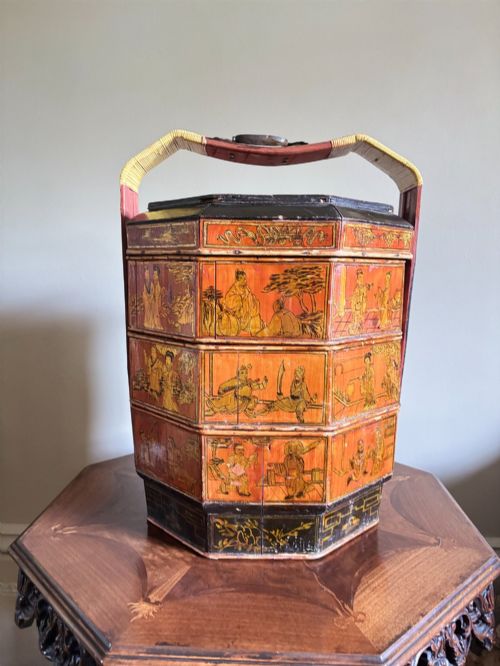
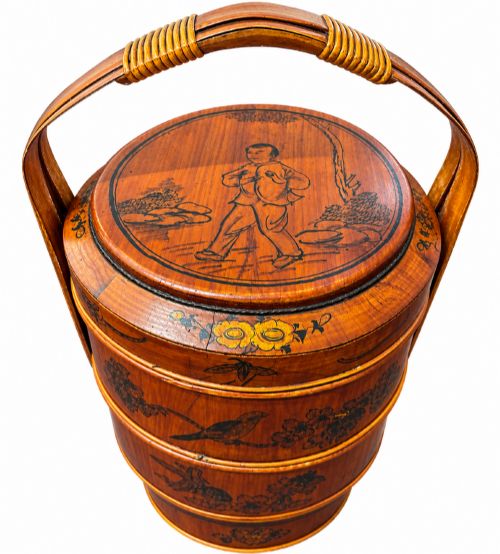
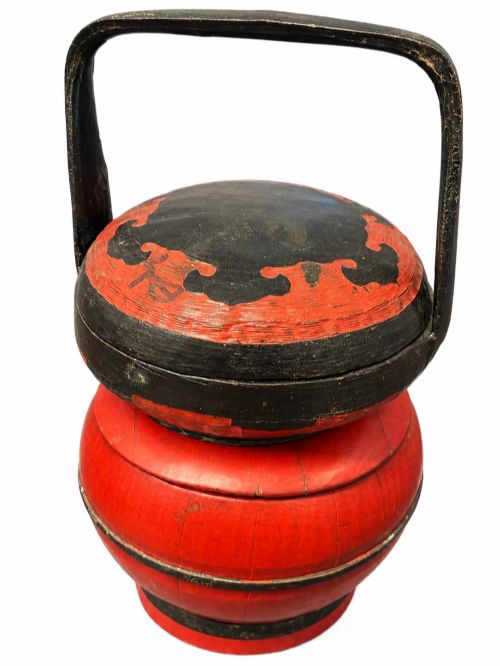
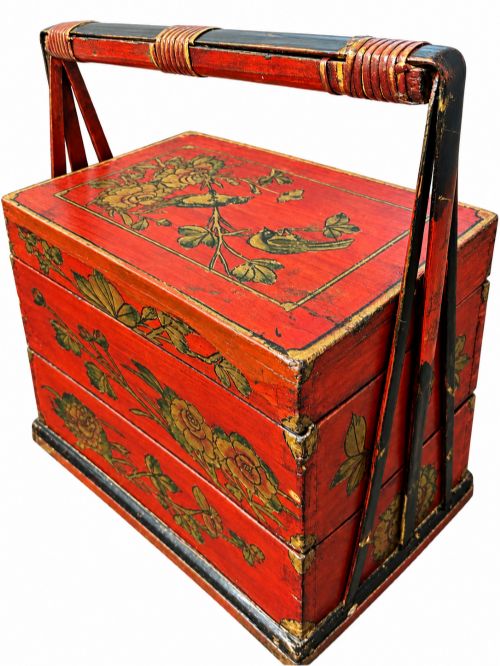
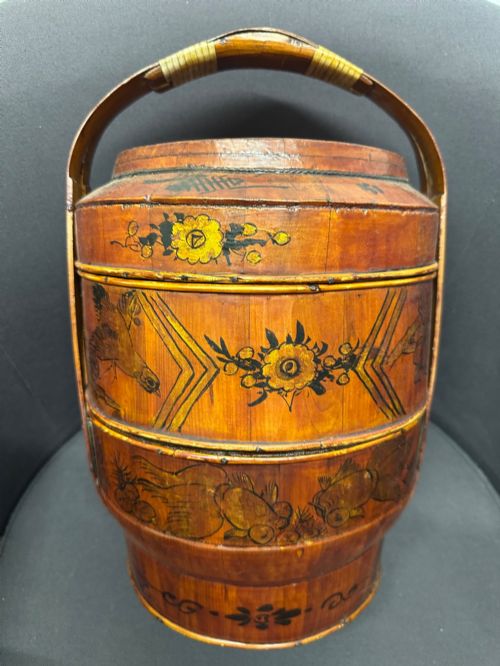
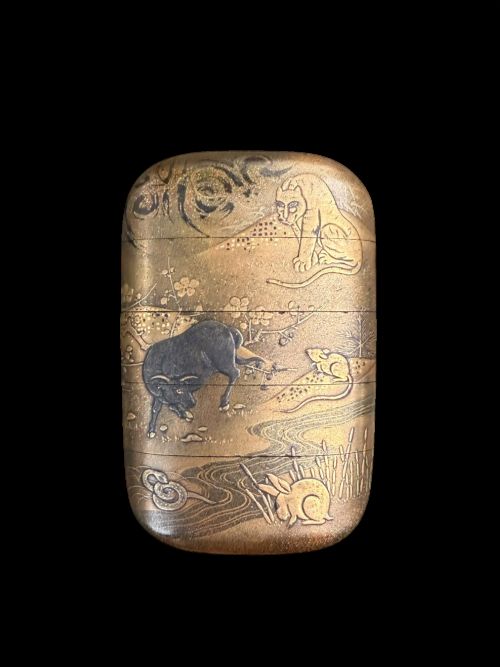
A lacquered container encompasses a diverse group of objects designed for storage, transport, or personal use, appearing across Asian and European traditions. When searching for a lacquered container, buyers encounter everything from multi-tier Chinese wedding baskets to English papier-mâché snuff boxes and Japanese inro.
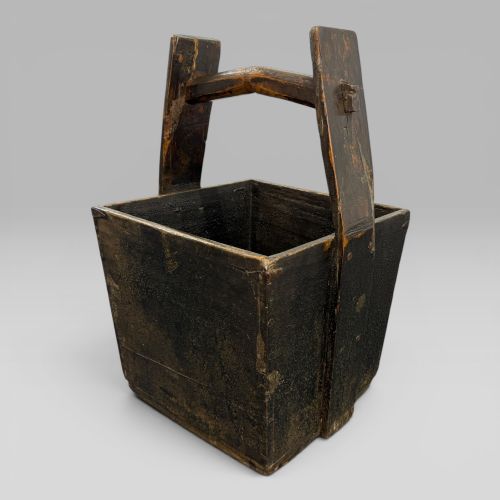
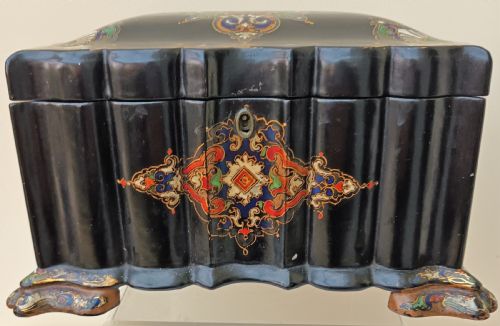
The pieces on this page span several centuries, with a strong representation from the nineteenth century, including Regency, Victorian, and Edwardian examples alongside Qing Dynasty and Meiji period works. Forms vary widely from utilitarian rice carriers and harvest baskets to delicate tea caddies, spectacle cases, and table snuff boxes.
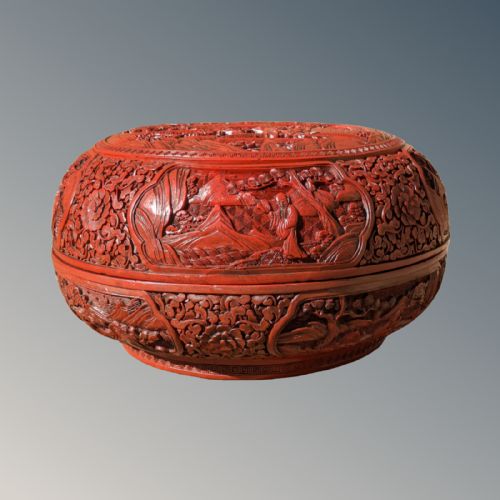
Asian traditions supply much of the larger scale variety, such as red lacquer dowry baskets and cinnabar lidded boxes, while European makers contribute painted toleware, ebonised wood, and papier-mâché pieces. Each object reflects the specific domestic or ceremonial customs of its origin, whether holding tea, spices, documents, or personal keepsakes.
How they were made
Makers utilised a foundation of wood, bamboo, or papier-mâché, applying successive coats of lacquer, paint, or pigment to build a durable and decorative surface. Organic tree sap or specialised resin formulations required careful drying and polishing between layers to achieve a smooth finish.
Decoration often involved hand painting, gold leaf application, or intricate carving into thick layers of lacquer, as seen in cinnabar pieces. Additional materials such as brass fittings, metal hardware, and natural pigments provided structural reinforcement and contrasting colour accents.
Lacquered Container Retail Price Guide 2026
Typical asking prices for lacquered container among the pieces listed under this phrase on Sellingantiques today, from the lower quarter to the upper quarter. They describe what is for sale here now, not the wider market.
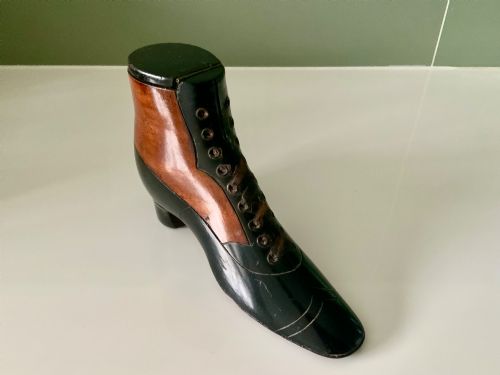
Several nineteenth-century European snuff boxes take the unusual sculptural shape of a miniature shoe or boot.
What varies in quality
Quality rests in the precision of the construction and the depth of the surface decoration, distinguishing robust utilitarian items from finer decorative works. The complexity of the layering, the crispness of carved details in materials like cinnabar, and the skill of hand-painted scenes set individual examples apart.
The survival of the original surface finish dictates the visual impact of each piece, as natural wear affects lacquer, paint, and gold leaf differently over time. Superior execution shows in balanced proportions, secure joinery in bamboo and wood, and intact decorative elements that retain their original colour and definition.
The Lacquered Container Glossary
- Lacquer
- A durable finish applied to wood, bamboo, or paper objects using natural resin or sap. It hardens into a smooth, protective coating that accepts pigments, carving, and gold leaf.
- Papier-mâché
- A composite material made from paper pulp or reinforced sheets of paper mixed with adhesive. It was moulded and dried to form lightweight boxes, tea caddies, and snuff containers before being lacquered and painted.
- Inro
- A traditional Japanese multi-tiered case used for carrying small items such as seals and medicines. These containers hung from the sash of a kimono using a cord and a toggle.
- Cinnabar
- A carved lacquer technique involving dozens of layers of red pigment applied to a core. Artisans carved intricate patterns into the thick buildup before the material fully cured.
- Toleware
- Metalware, usually iron or tin, coated with lacquer or paint and finished with decorative motifs. Regency and Georgian makers utilised this technique for spice boxes and domestic containers.
Lacquered Container: Frequently Asked Questions
How do you care for a lacquered container?
Keep these items out of direct sunlight and away from extreme temperature shifts to prevent the surface lacquer from drying out or cracking. Dust gently with a soft, dry cloth without applying modern chemical polishes.
Handling pieces by their main body rather than protruding delicate parts preserves structural stability over time.
What is the difference between an inro and a snuff box?
An inro is a Japanese multi-compartment container secured with a cord, traditionally worn suspended from traditional garments. A snuff box is a European pocket-sized container designed specifically to hold powdered tobacco.
While both serve personal storage functions, their cultural origins, internal layouts, and exterior decorations reflect entirely different domestic habits.
How are Victorian papier-mâché boxes identified?
Victorian papier-mâché pieces rely on a dense, compressed paper pulp core that feels surprisingly light yet rigid. They typically feature smooth black lacquered surfaces adorned with hand-painted floral motifs or inlaid mother-of-pearl.
These items commonly take the form of tea caddies, desk accessories, and small table snuff boxes.