



Lacquered Chinese Screen
Lacquered Chinese screen pieces bring depth and intricate detail to a room, ranging from grand multi-fold room dividers to intimate fire screens.
Lacquered Chinese Screen
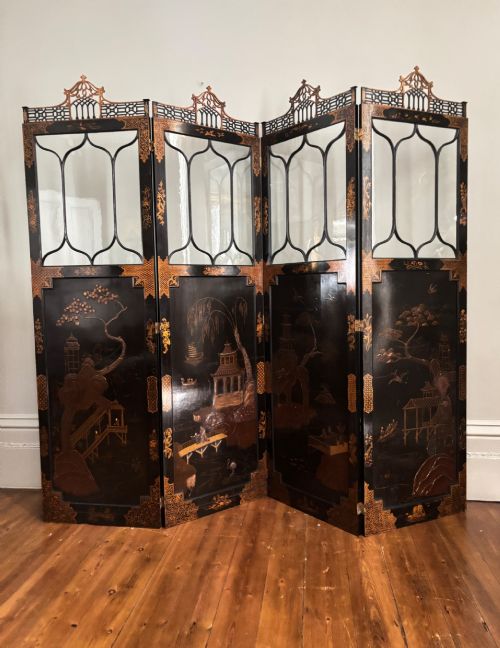
A lacquered Chinese screen serves primarily as a room divider, dressing screen, or decorative wall panel, shaping the spatial dynamics of an interior. Buyers encountering this selection will find examples ranging from small three-fold dressing pieces up to grand eight-fold room dividers.
The objects span multiple centuries and stylistic interpretations, including nineteenth-century works, early twentieth-century examples, and pieces executed in Regency or Chinese Chippendale idioms. Folding screens and wall plaques dominate the forms, utilising wood and lacquer as foundational elements.
How they were made
Constructed predominantly from wood or papier mâché as a core substrate, these pieces receive multiple coats of lacquer to build a smooth, durable surface. Artisans then apply surface decoration using techniques associated with Coromandel or Bantam work.
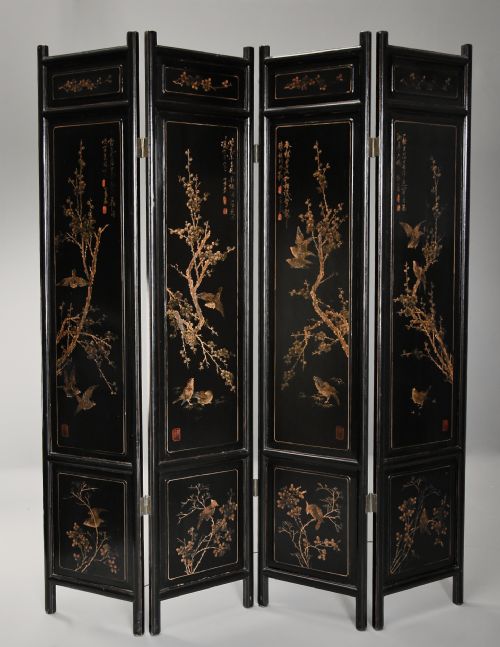
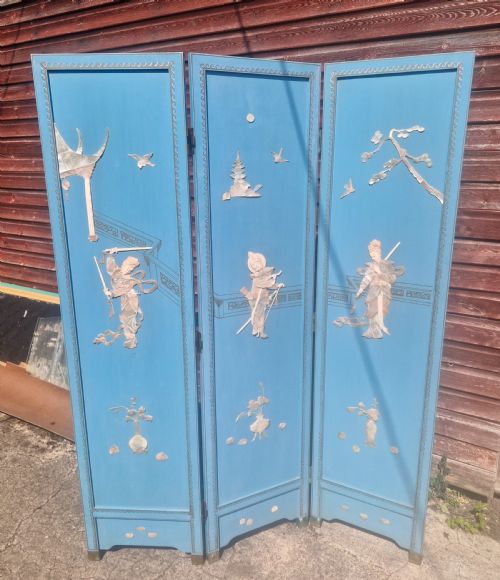
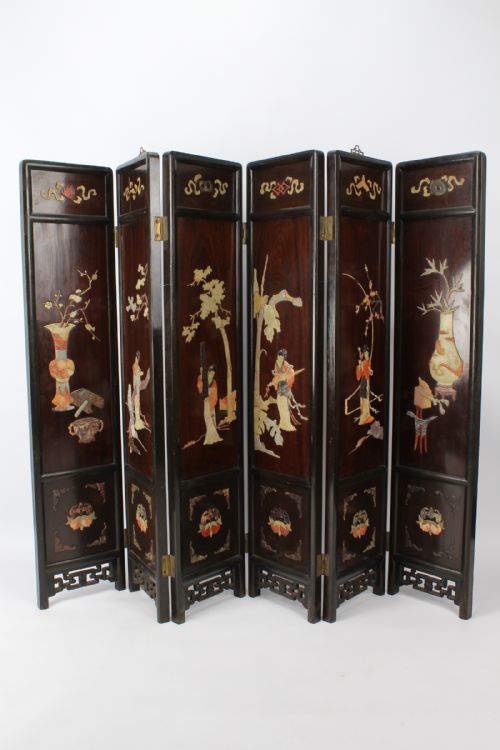
Detailing often incorporates gold leaf, brass fittings, mother-of-pearl, abalone, and hardstone inlays. These materials are meticulously set into the lacquer ground to depict birds, branches, and figurative scenes.
Several panels feature delicate mother-of-pearl birds permanently frozen mid-flight among gilded branches.
What varies in quality
The sophistication of the surface carving and the precision of the inlay work distinguish finer examples from standard decorative items. Depth of lacquer application and the intricacy of painted motifs directly influence the visual impact of a panel.
Coherence of style also matters, whether observing the restraint of an eighteenth-century Coromandel piece or the distinct interpretation found in Victorian Chinoiserie and Chinese Export Art Deco items.
The Lacquered Chinese Screen Glossary
- Coromandel
- A type of Chinese incised lacquerware where the background is carved away and filled with pigments or gold leaf. It frequently appears on large multi-fold room dividers.
- Chinoiserie
- European decorative style reflecting Chinese artistic influences, popular across various periods including the Regency and Victorian eras. It shapes the aesthetic of several pieces on this page.
- Mother-of-pearl
- An iridescent inner layer of shell used for inlay work to depict foliage and birds. It creates striking contrast against dark lacquer grounds.
- Hardstone
- Minerals such as jade or agate cut and mounted onto lacquer surfaces for decorative effect. This technique adds tactile dimension to panels.
- Bantam work
- A style of low-relief polychrome lacquer decoration resembling Coromandel work. It appears in export pieces from the eighteenth and nineteenth centuries.
Lacquered Chinese Screen: Frequently Asked Questions
How do I use a folding screen at home?
Folding screens function well as room dividers to zone open-plan spaces, or placed flat against a wall as large decorative art pieces. They provide immediate architectural interest without permanent structural changes.
Shorter three-fold or four-fold versions suit dressing areas or corners, while six-fold and eight-fold pieces anchor larger living rooms.
What is the difference between Coromandel and black lacquer?
Coromandel lacquer involves cutting deeply into the lacquer ground and filling the recessed areas with colour or gold leaf, creating a textured surface. Standard black lacquer often relies on flat painting, gold leaf application, or inlaid hardstones and mother-of-pearl.
Both finishes appear across nineteenth and twentieth-century pieces in this selection.
How should I care for an antique lacquer screen?
Keep lacquer surfaces away from direct sunlight and steady moisture to protect the wood core and prevent the finish from drying out. Dust gently with a dry, soft cloth.
Avoid chemical polishes or water, which can damage delicate gold leaf and inlaid mother-of-pearl elements.
What periods do these screens date from?
The pieces span several centuries, with examples originating from the eighteenth century through the Regency era and into the nineteenth and twentieth centuries. Twentieth-century items include Republic Era works and Art Deco export pieces.
Stylistic markers help distinguish earlier traditional craft from later Victorian Chinoiserie interpretations.