


Lacquer Table Lamp Base
A lacquer table lamp base brings rich hand-painted pigment and gilded detail to an interior, offering a distinct focal point for lighting a room.
Lacquer Table Lamp Base
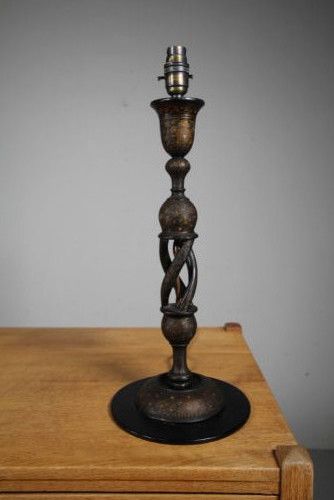
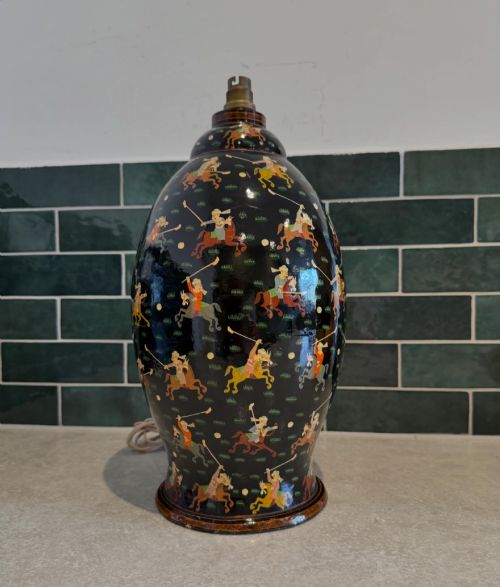
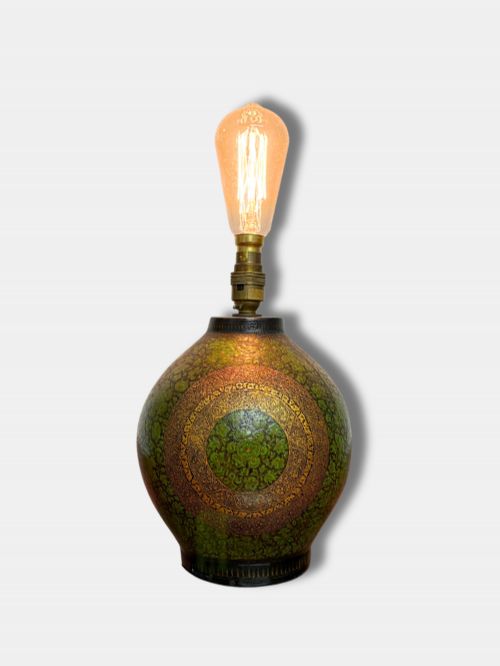
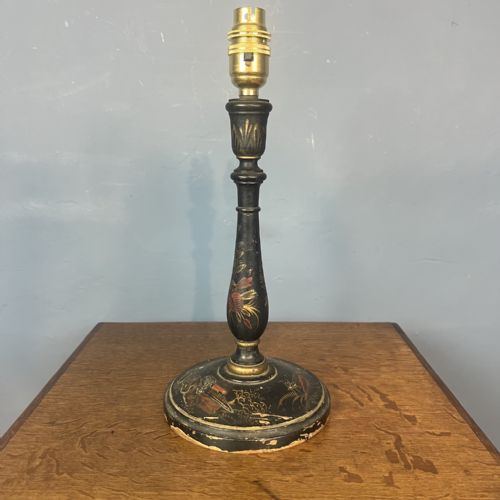
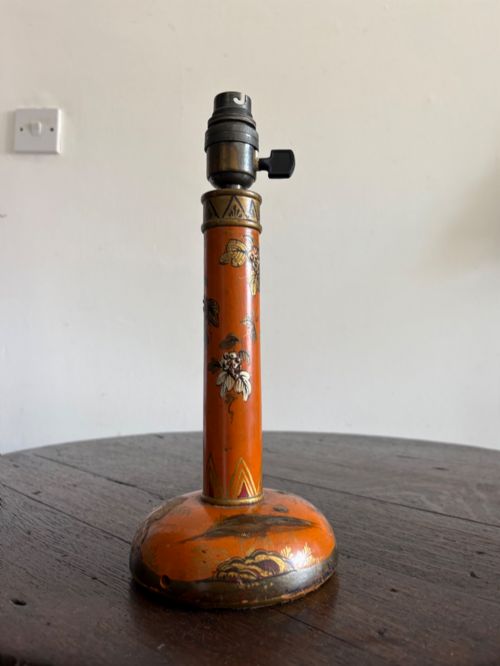
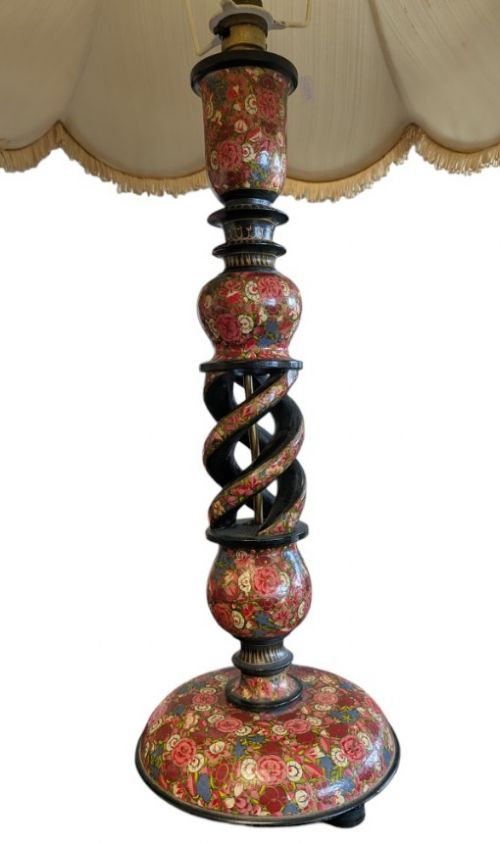
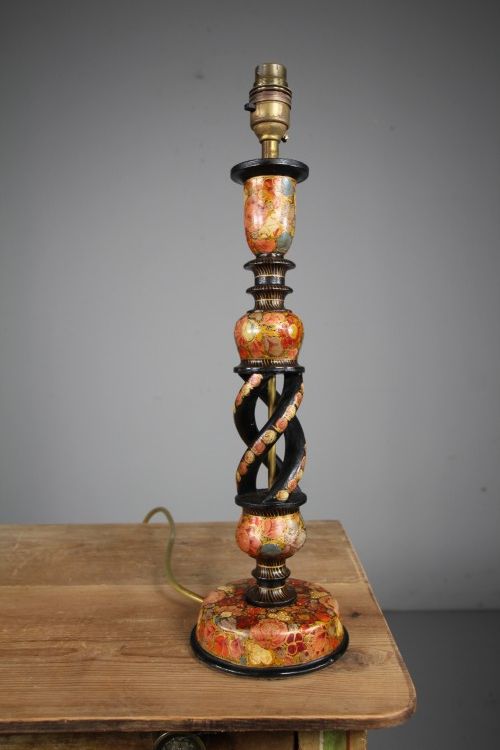
When searching for a lacquer table lamp base, a buyer encounters a focused selection originating primarily from the nineteenth and early twentieth centuries. These pieces encompass Kashmiri and Chinoiserie styles, reflecting regional hand-painting traditions and European adaptations from the Edwardian era onwards.
The versions most frequently met on this page are tall Kashmiri examples and Chinoiserie forms featuring intricate floral or figural motifs. Formats range from slender twists to substantial urn shapes, sometimes adapted from wine tables or produced specifically for lighting.
Origins span British Edwardian workshops and traditional Indian craftsmanship, particularly from Kashmir. Materials involve lacquered wood, papier-mâché, and carved wood embellished with gold leaf and vibrant pigments.
How they were made
Construction relies on turned wood or moulded papier-mâché that forms a stable core for the decorative surface. Artisans apply multiple layers of lacquer to build a smooth base before executing hand-painted details.
Gilding techniques incorporate gold leaf applied by hand to highlight specific motifs against green, cream, or mandarin orange backgrounds. Brass components often complete the hardware assembly for the lamp holder.
Styles represented span Anglo-Indian, Kashmiri Folk Art, and Edwardian Chinoiserie forms.
What varies in quality
Quality rests in the execution of the hand-painted brushwork and the depth of the lacquer finish. Finer examples display meticulous detail in floral or gilt patterns that remain crisp across the curved surface.
The integrity of the underlying papier-mâché or turned wood structure dictates durability. Superior pieces maintain their original surface pigment with minimal loss to the gold leaf and decorative layers.
The Lacquer Table Lamp Base Glossary
- Papier-mâché
- Composite material made from paper pulp mixed with binders, moulded and dried to form rigid objects. This technique allows for lightweight yet durable lamp bases.
- Lacquer
- Protective and decorative coating applied in successive layers and polished to a smooth finish. It provides a durable ground for intricate painted and gilded ornamentation.
- Gold Leaf
- Extremely thin sheet gold applied to surfaces for ornamentation. It catches the light and contrasts with the coloured lacquer background.
Lacquer Table Lamp Base: Frequently Asked Questions
How do I date a lacquer lamp base?
Dating relies on stylistic markers such as Edwardian Chinoiserie motifs or Kashmiri folk art patterns, alongside the construction materials like early turned wood or papier-mâché.
Examination of the underlying wiring setup and lamp holder hardware also provides clues to the period of production and subsequent adaptations.
Where were Kashmiri lamps made?
Kashmiri pieces originate from the Kashmir region, known for skilled artisans working in papier-mâché and wood painting.
These objects often travelled to Britain, influencing interior aesthetics during the nineteenth and early twentieth centuries.
How do I clean a lacquer lamp base?
Dusting gently with a dry, soft cloth preserves the delicate hand-painted surface and gold leaf detailing.
Moisture and harsh cleaning agents should be avoided to protect the underlying lacquer and pigment layers.
Are these lamp bases rewired?
Many listings indicate that the pieces have been rewired to meet modern electrical standards while retaining their antique bodies.
Buyers should check individual descriptions for details on current fittings and lamp holder types.