



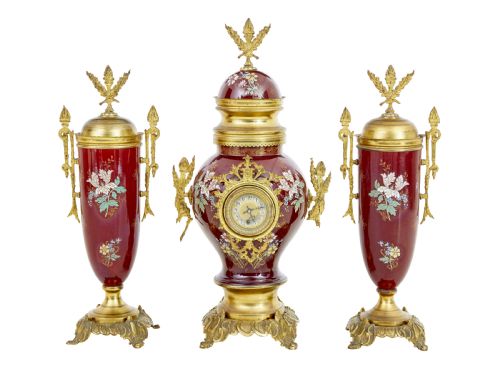


Lacquer Mantel Clock
These lacquer mantel clock pieces bring striking Chinoiserie and period elegance to any interior.
Lacquer Mantel Clock
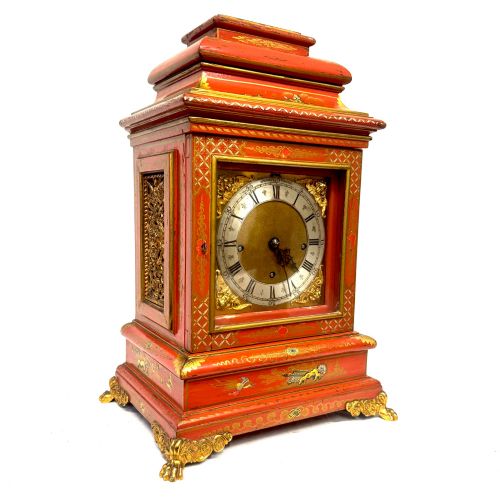
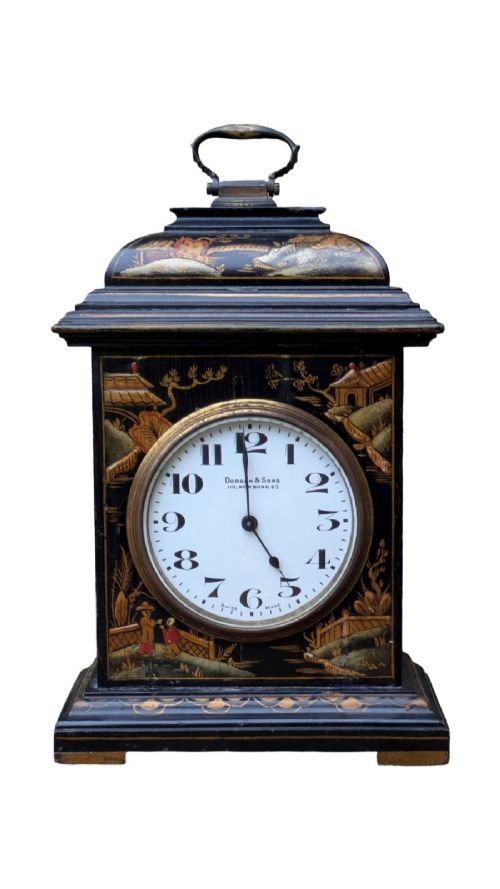
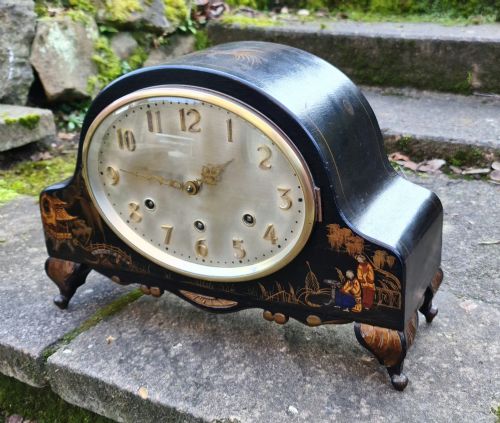
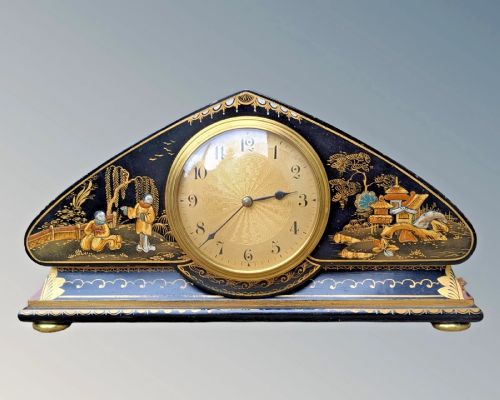
A lacquer mantel clock brings together traditional timekeeping and decorative surface finishes, spanning styles from Chinoiserie to French Empire and Georgian periods. When searching for a lacquer mantel clock, collectors encounter works ranging from early eighteenth-century London bracket clocks to twentieth-century mantel pieces.
Forms include bracket clocks, smaller mantel clocks, and desk clocks, often accompanied by brass fittings, glass panels, and enamel dials. The physical presence of these clocks relies heavily on the depth of the lacquered surface and the intricacy of the painted or gilt decoration.
Materials and construction methods
The construction of a lacquer mantel clock relies on a wooden carcass finished with multiple layers of lacquer, often detailed with gilt decoration or faux tortoiseshell effects. Brass components, glass panels, and enamel dials provide structural contrast and functional clarity to the clock face.
Movements vary from English eight-day bracket clock mechanisms to French movements and specialised escapements like the chaff-cutter. The integration of metalwork, glass, and wood requires precise cabinetmaking and horological skill to house heavy striking movements securely within decorated cases.
Lacquer Mantel Clock Retail Price Guide 2026
Typical asking prices for lacquer mantel clock among the pieces listed under this phrase on Sellingantiques today, from the lower quarter to the upper quarter. They describe what is for sale here now, not the wider market.
Assessing quality in lacquer work and movements
Quality in a lacquer mantel clock rests on the depth and preservation of the lacquer finish, the crispness of the gilt or painted Chinoiserie motifs, and the integrity of the wooden case. Finer examples display meticulous layering and polishing that retain their decorative impact over centuries.
The sophistication of the internal movement further defines the tier of the piece, from standard mantel clocks to complex striking bracket clocks by notable makers. The harmony between the decorative exterior case and the mechanical movement determines the overall standing of the clock.
James Smith London·Chater And Son London
The Lacquer Mantel Clock Glossary
- Chinoiserie
- European decorative style inspired by Chinese artistic traditions, frequently featuring figures, landscapes, and pavilions rendered in gold upon a lacquered ground. This style dominates the visual identity of many period mantel clocks.
- Bracket Clock
- A portable mechanical clock traditionally designed to sit upon a wall bracket or table, often featuring a striking mechanism. These clocks typically employ high-grade movements housed in substantial wooden or lacquered cases.
- Gilt Bronze
- Bronze metal treated with a layer of gold or gold-coloured alloy to impart a rich, metallic sheen. It frequently appears alongside lacquer and brass in nineteenth-century decorative pieces.
- Escapement
- The mechanical linkage in a clock that controls the release of gear train energy to maintain the pendulum or balance wheel motion. Different types, such as the chaff-cutter, indicate specific periods and horological origins.
- Garniture Set
- A coordinated group of decorative objects, typically comprising a central clock flanked by matching vases or urns. These sets create a balanced symmetrical display upon a mantelpiece.
Lacquer Mantel Clock: Frequently Asked Questions
How do I identify Chinoiserie mantel clocks?
Chinoiserie mantel clocks are recognised by their distinct painted or gilt oriental scenes set against coloured lacquer grounds such as green, red, or cream.
These decorative motifs often depict figures, landscapes, and architectural elements derived from eighteenth-century European interpretations of East Asian art.
What is a bracket clock?
A bracket clock is a portable mechanical timepiece historically designed to rest on a wooden wall bracket or a sturdy table.
Unlike standard smaller mantel clocks, these often house more complex striking or alarm mechanisms within substantial wooden and lacquered cases.
How should I care for a lacquered wood clock?
Lacquered wood surfaces require protection from direct sunlight and extreme humidity fluctuations to prevent the finish from drying or cracking.
Dusting should be performed gently with a soft, dry cloth without applying modern chemical polishes that might damage the historical surface.
How do English and French movements differ?
English movements in these clocks often feature robust eight-day bracket clock designs associated with traditional London workshops.
French movements incorporated into similar period cases frequently emphasise decorative garniture integration and varied escapement styles.