




Kyoto Pottery Vase
These kyoto pottery vase examples are earthenware and porcelain vessels from the Meiji period, bringing dense enamel and gold work to any mantel.
Kyoto Pottery Vase
A kyoto pottery vase is typically a Satsuma earthenware or porcelain vessel originating from Japan during the nineteenth century and the Edwardian era. You will frequently encounter forms decorated in the Satsuma style, ranging from miniature vessels to monumental pairs.
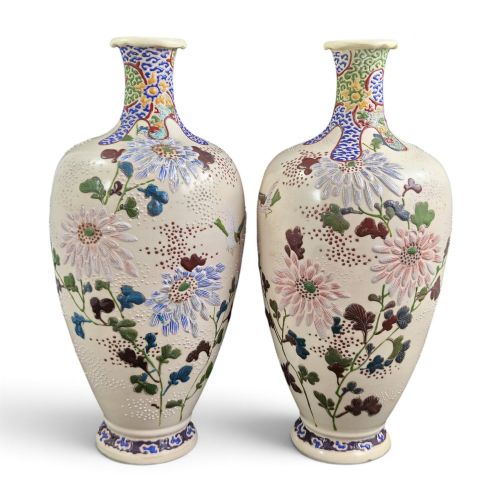
The selection includes specialised decorative items such as koros, tripod miniatures, and incense burners alongside standard vases. Many of these pieces depict complex scenes including family gatherings, religious panels, landscapes with Mount Fuji, and gardens filled with wisteria or chrysanthemums.
Makers and artists working in Kyoto produced pieces defined by distinct regional aesthetics, often incorporating signature panels and figural motifs such as the Seven Gods of Good Fortune or Shi-Shi lions. The pieces span both compact cabinet miniatures and large display objects designed to command attention in a room.
How they were made
The manufacture of these vessels relies primarily on earthenware and porcelain bodies shaped into vases, handles, and tripod forms. Artisans then applied detailed glazes to create the foundational surfaces for subsequent ornamentation.
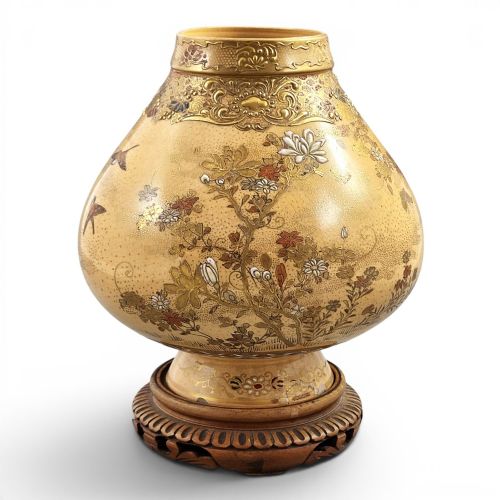
Decoration was achieved through the extensive use of enamel, gold leaf, gold gilt, and heavy gilding. Much of the surface work utilises moriage techniques to build up raised designs that stand proud of the ceramic body.
Many examples feature fine brushwork executed by named artists and workshops, sometimes combined with carved wood elements. The application of gold and enamel required precise firing to bond the metallic highlights to the glazed earthenware or porcelain.
Kyoto Pottery Vase Retail Price Guide 2026
Typical asking prices for kyoto pottery vase among the pieces listed under this phrase on Sellingantiques today, from the lower quarter to the upper quarter. They describe what is for sale here now, not the wider market.
Several miniature vases in this category require a magnifying glass to appreciate the intricate expressions on the faces of painted deities.
What varies in quality
The quality of a kyoto pottery vase rests on the density and precision of its enamel and gilt decoration. Superior examples display meticulous hand-painting in the moriage style where raised dots and lines form crisp, complex patterns.
Artist signatures and workshop attributions strongly influence the standing of a piece, with recognised names from Kyoto commanding greater attention for their execution. The crispness of figural details, such as facial expressions in family scenes or deities, marks the difference between standard production and masterwork output.
The physical scale and ambition of the form also dictate distinction, moving from simple cabinet miniatures to monumental vases featuring elaborate panels and handles. Preservation of the fragile gold leaf and enamel surfaces across the entire vessel remains central to the overall standard.
Kinkōzan Workshop·Chosei·Seiko-en Chokei·Choshuzan·Jissei·Yoshisada·Hakusan·Tagawa·Hayakawa
The Kyoto Pottery Vase Glossary
- Satsuma
- A type of Japanese earthenware traditionally characterised by an ivory-coloured, crackle-glazed surface. It serves as the primary canvas for the detailed enamel and gilt painting seen on these vessels.
- Moriage
- A ceramic decorating technique where slip is piped onto the surface to create raised designs, resembling frosting on a cake. This method adds tangible texture beneath the application of gold and enamel.
- Koro
- A traditional Japanese incense burner, frequently supported on tripod feet and fitted with a pierced cover. These are often surmounted by sculptural figures such as Shi-Shi lions.
- Shi-Shi
- A mythical guardian lion or dog frequently modeled in ceramic as a finial or decorative feature on incense burners and larger vessels. These figures derive from traditional Asian iconography.
- Chikusai
- A specific stylistic designation associated with certain Kyoto Satsuma pieces from the nineteenth century. It denotes particular approaches to composition and brushwork within the local tradition.
Kyoto Pottery Vase: Frequently Asked Questions
What is a kyoto pottery vase?
A kyoto pottery vase is an earthenware or porcelain vessel created in Japan during the Meiji period, featuring detailed Satsuma style painting.
These pieces range from small miniatures to large display objects decorated with enamel and gold.
How do I identify a Meiji period piece?
Meiji period vessels are identified by their characteristic nineteenth-century construction, often bearing artist signatures or workshop marks from Kyoto.
The decoration typically combines crackle-glazed Satsuma earthenware with dense gold gilt and narrative panel scenes.
Where were these vases made?
These pieces were produced in Kyoto, a historic centre for Japanese ceramic arts and fine craft production.
Workshops in the city specialised in exporting highly decorated earthenware for international markets during the late nineteenth and early twentieth centuries.
How should I display a koro?
A koro, or incense burner, is typically displayed on a stable surface where its tripod feet and pierced lid can be viewed safely.
Because these vessels often feature delicate Moriage work and gold leaf, they benefit from placement away from high-traffic areas.