





Kingwood Study Desk
A kingwood study desk brings a rich French elegance to a room, combining exotic timber and polished mounts for serious writing.
Kingwood Study Desk
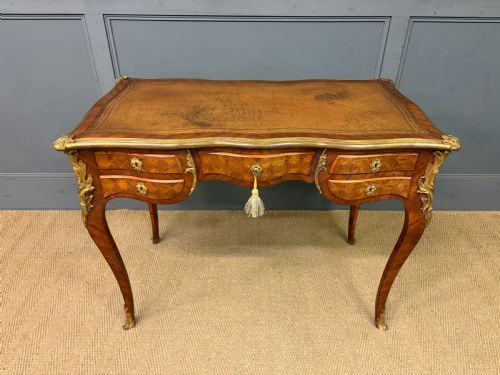
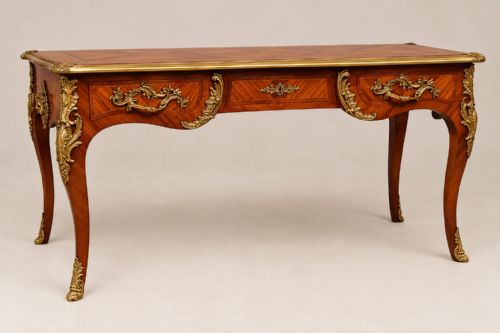
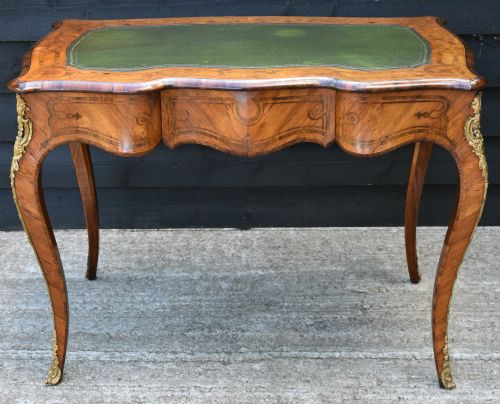
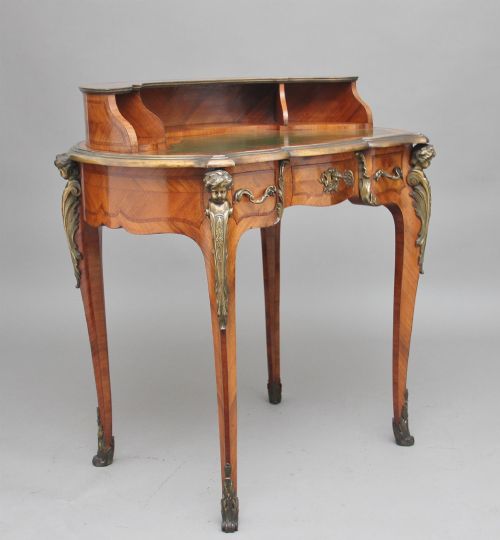
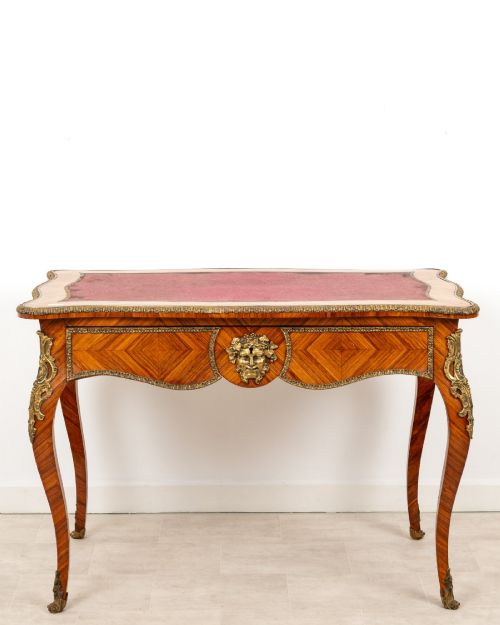
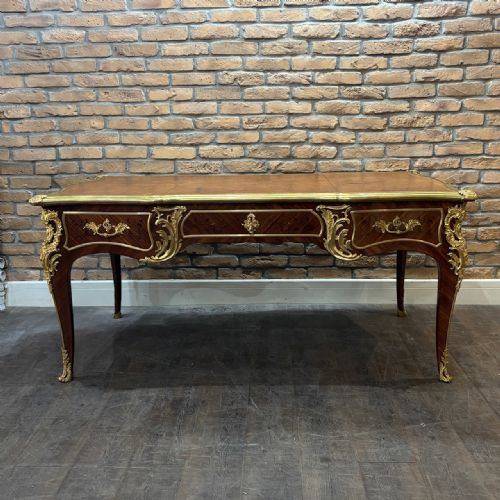
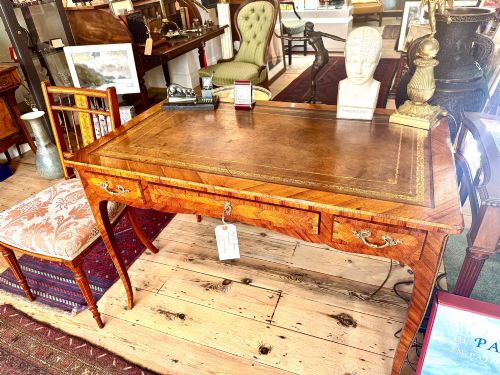
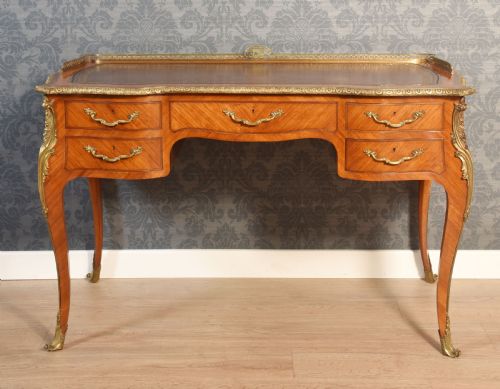
When you search for a kingwood study desk, you encounter pieces designed primarily for correspondence and private administration. The listings here showcase variations from the eighteenth, nineteenth, and twentieth centuries, predominantly drawing upon French Louis XV and Louis XVI revivals.
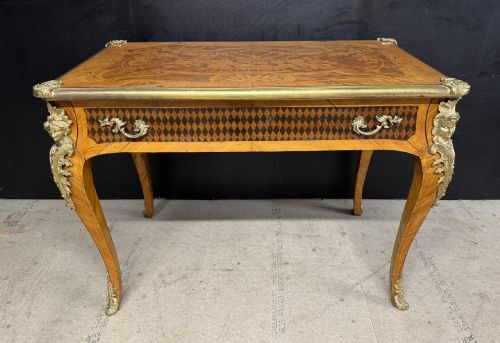
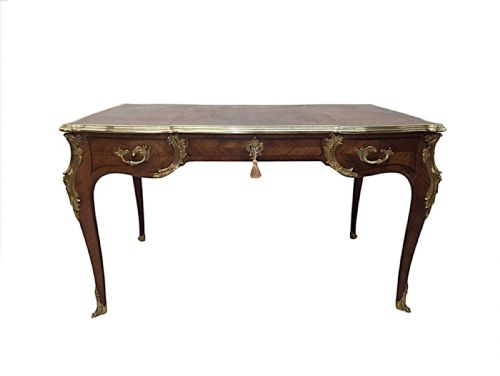
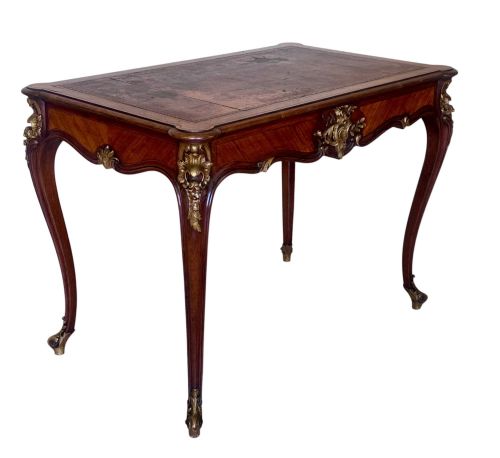
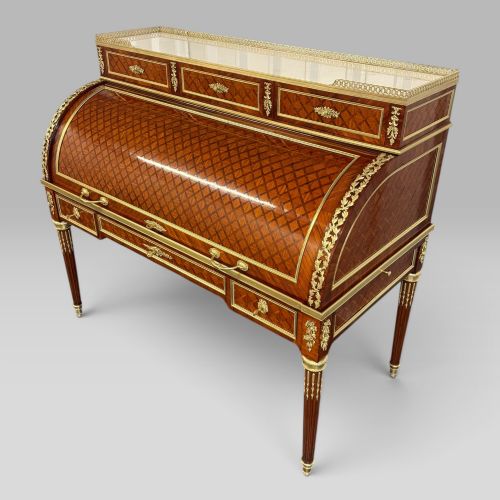
The dominant forms on this page include the bureau plat and the freestanding writing table. These pieces generally feature shaped tops and slender cabriole legs, occasionally arriving as grand partners desks or cylinder desks.
Most examples hail from nineteenth-century workshops inspired by earlier French court furniture. They combine functional drawers with elaborate decorative schemes suited to nineteenth-century drawing rooms and libraries.
How they were made
Cabinetmakers constructed these desks using native carcase timbers like oak, applying kingwood veneers and crossbanding to the visible surfaces. Marquetry and parquetry patterns created geometric or floral designs across the tops and drawer fronts.
Mounts cast in ormolu, gilt bronze, or brass were chased and applied to protect vulnerable edges and accentuate the curves of the design. Leather was frequently inset into the writing surface to provide a smooth plane for quills and pens.
Kingwood Study Desk Retail Price Guide 2026
Typical asking prices for kingwood study desk among the pieces listed under this phrase on Sellingantiques today, from the lower quarter to the upper quarter. They describe what is for sale here now, not the wider market.
The listings here span the Victorian and Edwardian eras alongside nineteenth-century French output, predominantly featuring kingwood, ormolu, and leather.
What varies in quality
The distinction between ordinary and exceptional desks rests on the crispness of the bronze mounts and the precision of the veneer work. Master workshops ensured that ormolu elements were deeply chased by hand rather than left with soft, cast edges.
Secondary timbers and drawer linings also indicate the level of care invested in the piece. Oak-lined drawers and meticulous interior detailing reveal a standard of construction intended for high-status clients.
CH. Jeanselme and Co·Maison Millet
The Kingwood Study Desk Glossary
- Kingwood
- A dense, heavily figured Brazilian timber prized for its rich brown colour and distinct dark figuring. It was widely utilised by elite cabinetmakers for high-end French revival furniture.
- Bureau plat
- A freestanding writing table fitted with one or more rows of drawers beneath the top. This form became standard in eighteenth-century France and remained popular through subsequent revival periods.
- Ormolu
- Gilded bronze applied to furniture mounts, locks, and handles. The process involves coating copper or brass alloy with a mercury-gold amalgam and firing it to leave a durable gold layer.
- Marquetry
- The art of forming decorative patterns using thin veneers of different coloured woods. Craftsmen cut pieces precisely to fit together into pictorial or geometric designs.
- Partners desk
- A large double-sided desk designed for two people to work opposite one another. These versions contain drawers and cupboards accessible from both sides.
Kingwood Study Desk: Frequently Asked Questions
What is a bureau plat?
A bureau plat is a flat-topped writing table with drawers beneath the surface, designed to stand freely in the centre of a room rather than against a wall.
These pieces served as administrative desks for statesmen and nobility, maintaining a finished appearance from every angle.
How do I care for kingwood?
Keep kingwood furniture away from direct sunlight and steady heat sources to prevent the timber from drying out or fading. Regular dusting with a soft, dry cloth maintains the polished surface without building up wax.
Leather writing inserts benefit from occasional gentle conditioning to prevent cracking across the writing plane.
Are these desks strictly French?
Many examples originate from France or were made by French ateliers during the nineteenth century. However, the style inspired makers across Europe and Britain who adopted French revival designs.
English makers frequently combined French kingwood veneers with traditional domestic drawer construction, such as oak linings.
What distinguishes Louis XV from Louis XVI style?
Louis XV furniture embraces asymmetrical curves, cabriole legs, and elaborate rococo ormolu mounts. The overall silhouette feels organic and flowing.
Louis XVI style moves towards straight lines, neoclassical symmetry, fluted legs, and geometric parquetry patterns inspired by ancient Roman discoveries.