
Kingwood Marble Top Chest
When seeking a kingwood marble top chest, collectors find sophisticated French commodes and bedside cabinets combining rich veneers with heavy stone surfaces.
Kingwood Marble Top Chest
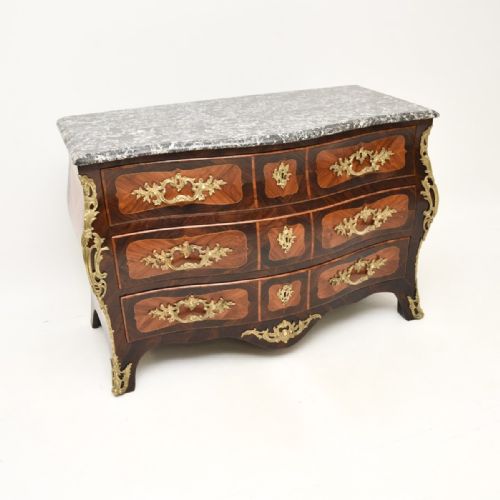
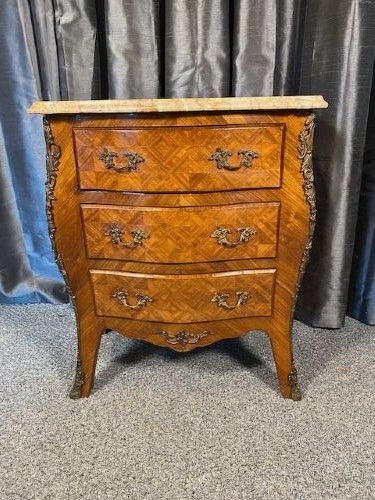
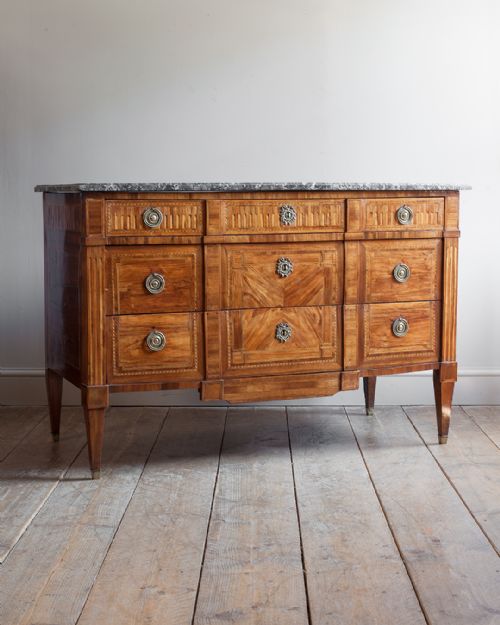
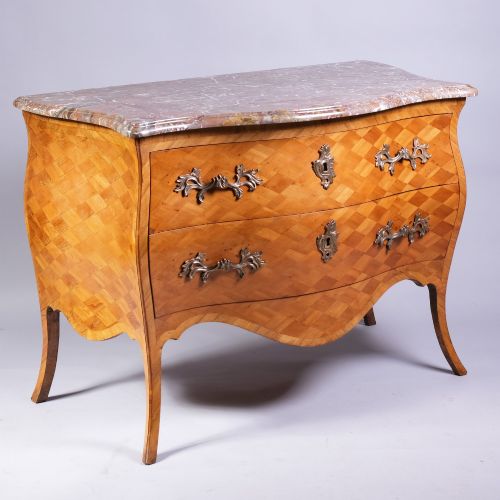
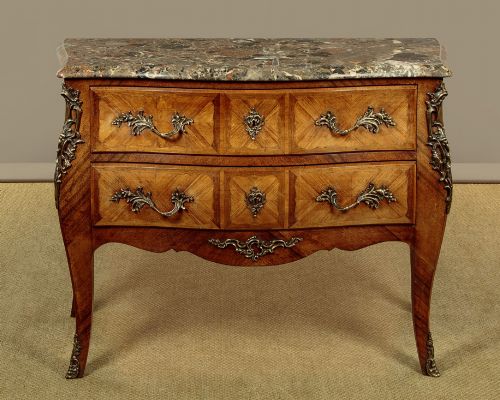
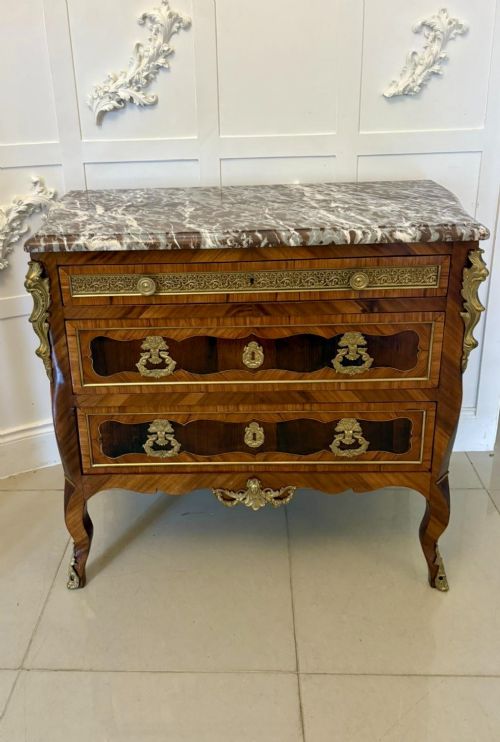
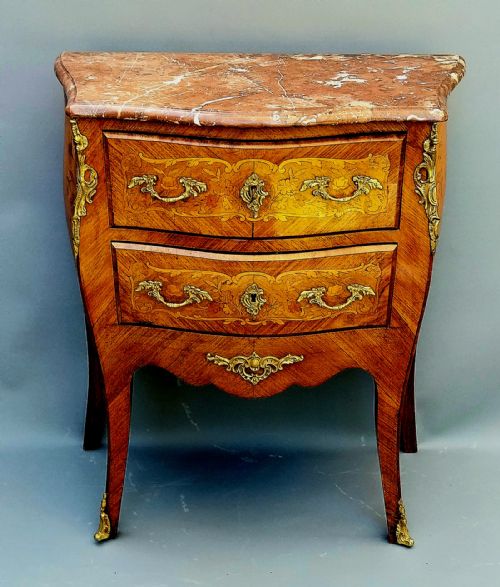
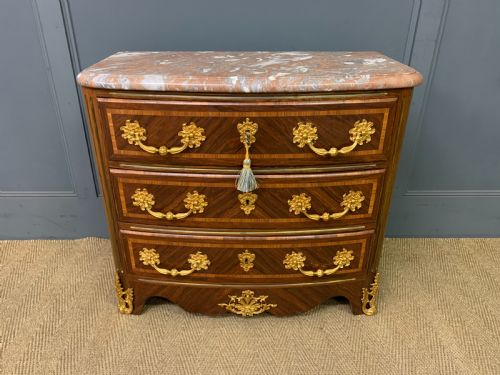
A kingwood marble top chest primarily takes the form of a French commode, bedside cabinet, or small serpentine chest originating from eighteenth and nineteenth century workshops. These pieces serve as functional storage units defined by their substantial stone slabs and decorative wood veneers.
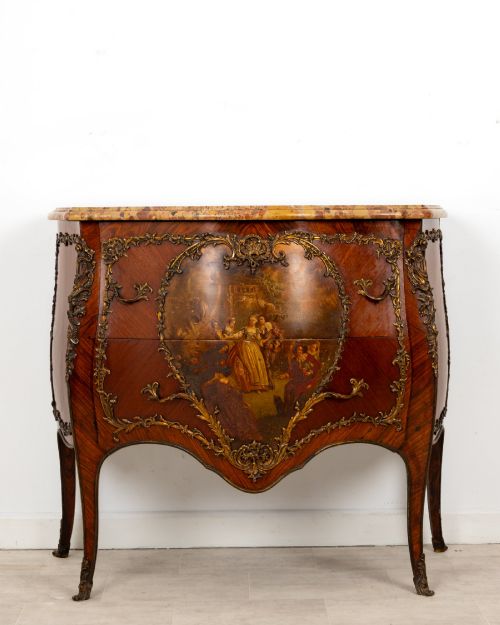
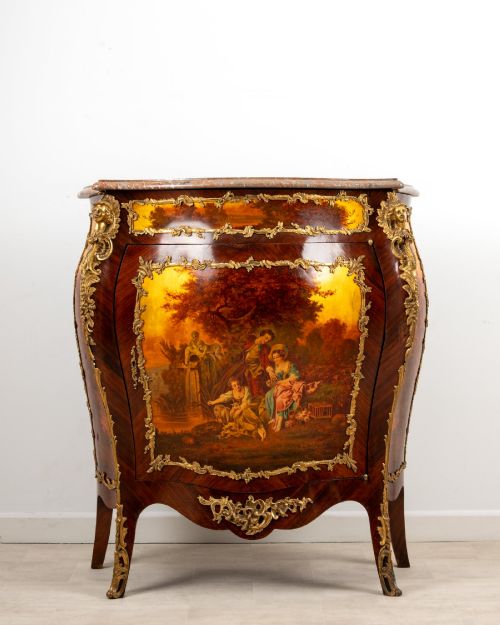
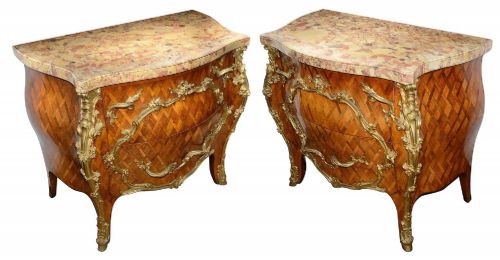
The version most commonly encountered on this page is the nineteenth century revival commode, often featuring a bombe shape and elaborate mounts. Makers of this period frequently drew inspiration from earlier French court styles to construct decorative cabinets for domestic interiors.
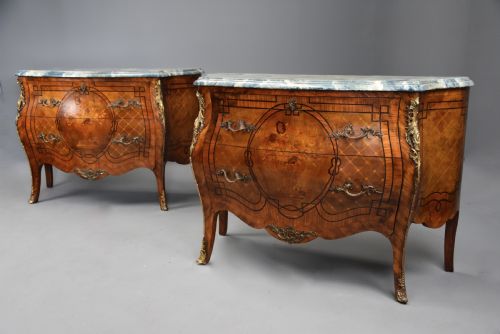
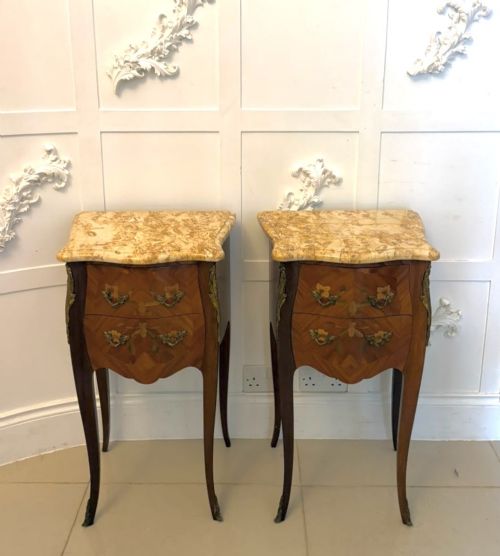
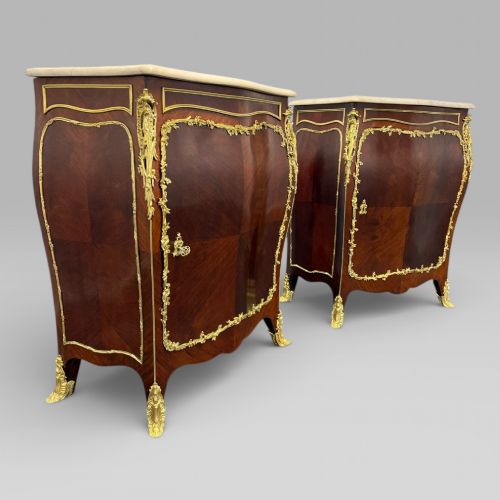
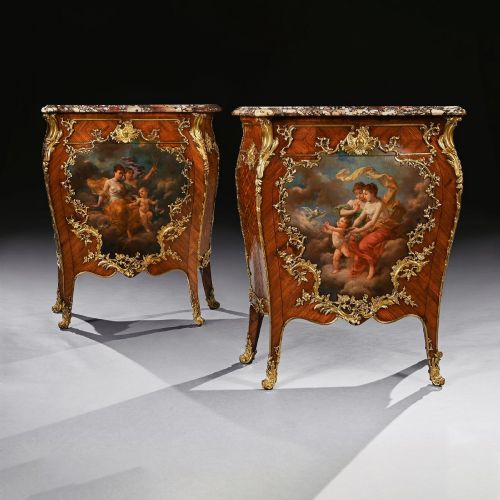
Alongside larger chests, buyers regularly find matched pairs of bedside cabinets and smaller side tables surfaced in polished marble. These smaller formats maintain the same veneered construction and curved silhouettes as their larger counterparts.
Materials and Construction
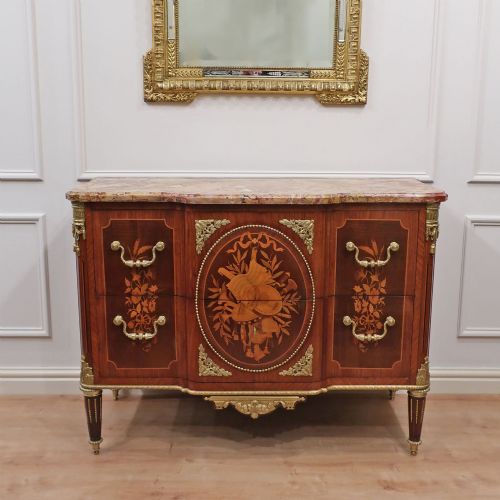
Makers built these pieces using a sturdy carcase of pine or oak, then applied decorative veneers of kingwood, rosewood, and walnut across the exterior surfaces. Marquetry and parquetry patterns were carefully arranged in geometric or floral motifs across the drawer fronts and sides.
Heavy marble slabs, shaped to follow the contours of the commode or chest, were fitted directly onto the wooden top to provide a durable and cool surface. Gilt bronze and ormolu mounts were cast and chased to accent the corners, handles, and apron.
The combination of dense tropical hardwoods, hand-cast bronze hardware, and thick stone required precise joinery to support the substantial weight. Cabinetmakers shaped the wood using steam and hand tools to achieve the characteristic swelling curves of the bombe style.
Many a midnight reader has lost a spectacle case down the serpentine gap of a bombe bedside cabinet.
Assessing Craftsmanship
The distinction between standard production and top tier work rests on the precision of the veneer matching and the crispness of the bronze mounts. Superior pieces display continuous, symmetrical grain patterns across multiple drawers and complex curved surfaces.
Hand-chased ormolu mounts with deep relief and sharp detail indicate higher workshop standards than mass-cast replacements. The thickness and figuring of the marble top, along with its precise edge bevelling, further separate standard items from exceptional ones.
Internal construction reveals the maker's discipline through hand-cut dovetails on the drawer boxes and solid secondary woods. Cabinets retaining original signed bronze elements or documented maker stamps command greater recognition among collectors.
Jacques Bircklé·E. Kahn·Bruneau
The Kingwood Marble Top Chest Glossary
- Kingwood
- A dense, heavily figured South American timber showing rich violet and dark brown tones, prized for fine cabinet veneers. It was widely utilised by eighteenth century French ébénistes.
- Bombe
- A swollen or bulging convex shape used on the front and sides of commodes and chests. This contour requires advanced woodworking skill to veneer accurately.
- Ormolu
- Gilded bronze used for decorative mounts, handles, and feet on high-end furniture. The metal is cast and then treated with a mercury gilding process to achieve a bright golden finish.
- Vernis Martin
- A type of simulated Japanese lacquer developed in France, featuring painted scenes under a clear varnish. It frequently decorates the panels of revival cabinets.
- Marquetry
- The art of applying small pieces of veneer to a structure to form decorative pictures or patterns. Craftsmen cut various exotic woods to fit tightly together within the design.
Kingwood Marble Top Chest: Frequently Asked Questions
What rooms suit a kingwood marble top chest?
These decorative chests function well as focal points in drawing rooms, hallways, or bedrooms where their polished stone surfaces can reflect light. Their compact forms also allow them to serve as practical bedside tables or small side cabinets.
The cool marble top provides a durable surface for displaying lamps or decorative objects while protecting the veneered wood underneath from direct liquid exposure.
How do I distinguish eighteenth century pieces from nineteenth century revivals?
Distinguishing between periods involves inspecting the secondary woods inside the drawers and the construction methods used on the carcase. Eighteenth century pieces typically show hand- sawn oak framing and period-specific locking mechanisms.
Nineteenth century revival pieces often utilise standardised internal components and machine-cut elements while faithfully copying earlier Louis XV and Louis XVI aesthetics.
How should I care for the marble top?
Cleaning requires only a soft cloth dampened with warm water and mild, pH-neutral soap to prevent chemical damage to the polished stone. Acidic substances like wine or citrus juice should be wiped away immediately to avoid etching the surface.
Applying a specialised stone sealer periodically helps protect the marble from staining while preserving its natural sheen.
Are these chests suitable for daily storage use?
The drawer configurations on these commodes provide practical space for linens, clothing, or smaller household items. The traditional wood-on-wood drawer runners require gentle handling compared to modern metal extension tracks.
Regular use benefits from maintaining stable indoor humidity to prevent the underlying timber carcase and delicate veneer from moving.