



Kingwood Floral Inlaid Table
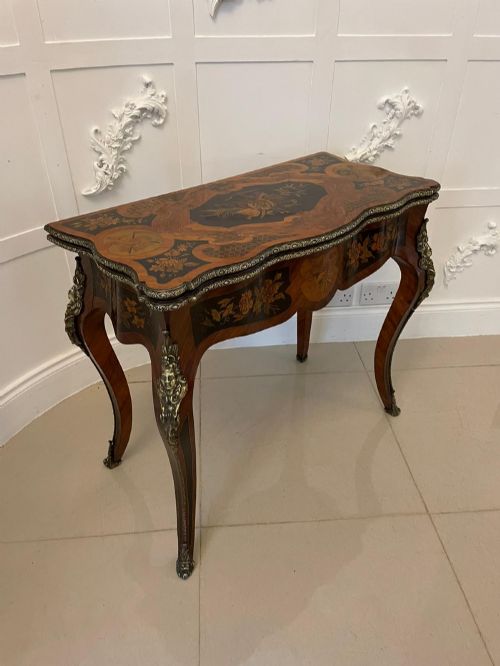
A kingwood floral inlaid table brings rich marquetry and serpentine lines into a room, offering both a functional surface and a piece of French revival artistry.
Kingwood Floral Inlaid Table
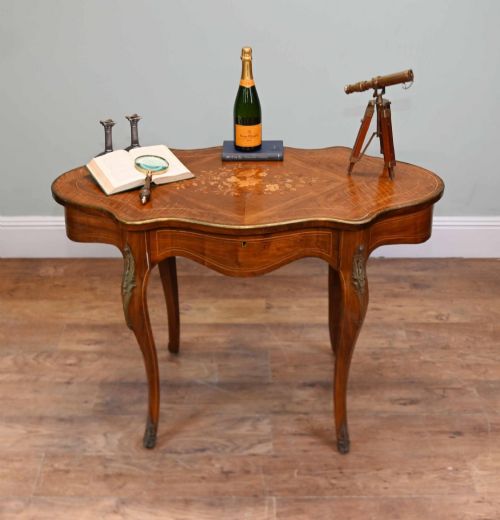
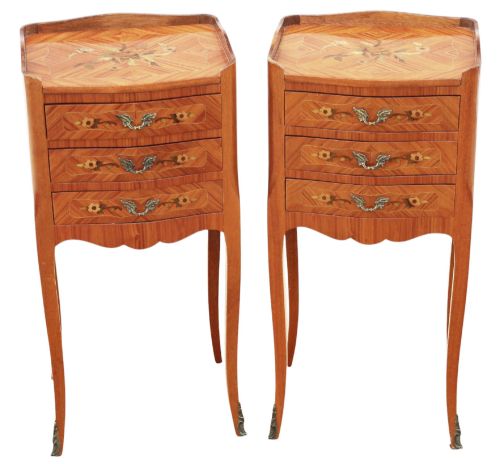
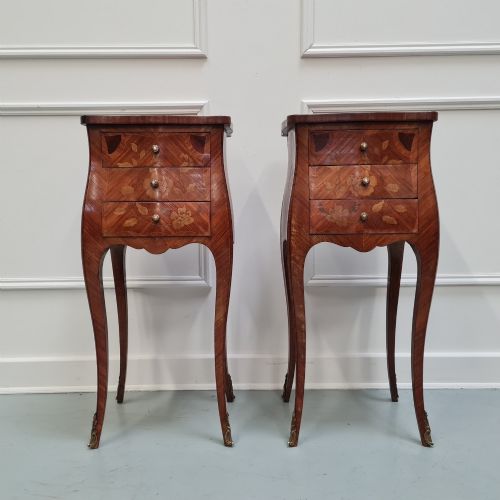
A kingwood floral inlaid table belongs predominantly to the nineteenth and early twentieth centuries, drawing heavily upon Louis XV and Louis XVI design vocabularies. These pieces encompass various forms including bedside tables, occasional tables, centre tables, and writing desks.
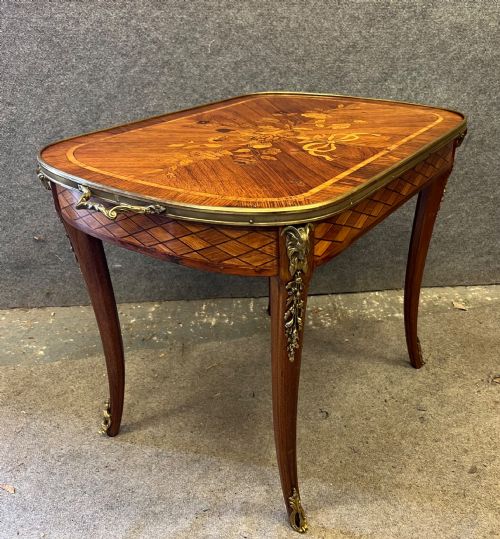
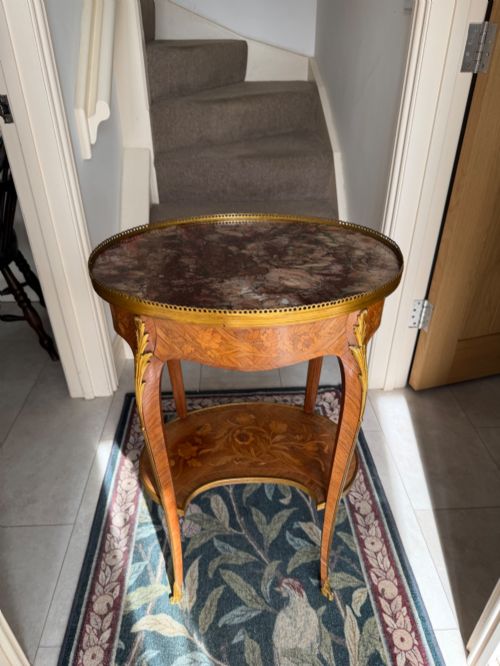
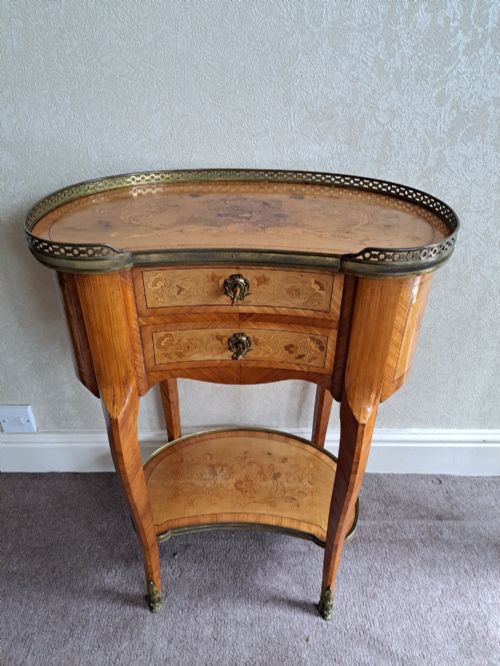
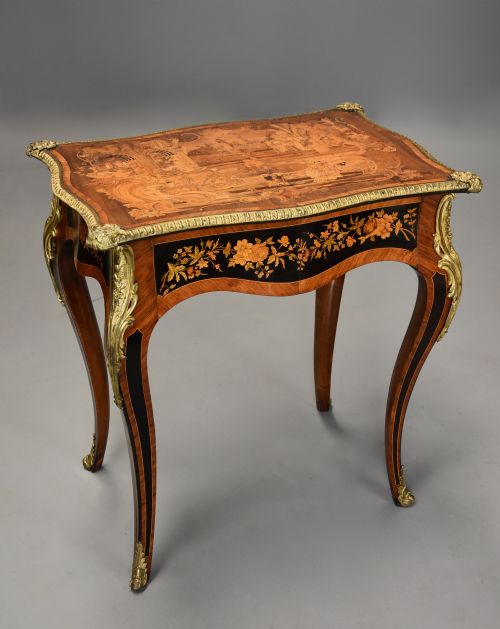
The version most commonly met on this page is the French revival occasional or bedside table, frequently mounted in ormolu and finished with intricate floral marquetry. Such items serve as decorative accents while retaining practical utility in domestic settings.
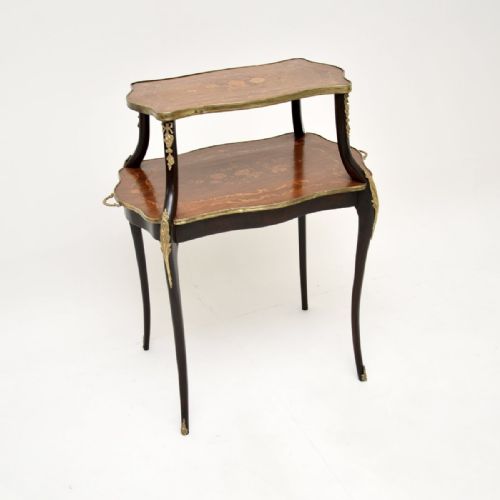
Originating largely from nineteenth-century workshops and subsequent twentieth-century revivals, these tables reflect enduring tastes for continental cabinet-making traditions. Their forms range from freestanding centre tables to compact writing desks and multi-tiered etageres.
How they were made
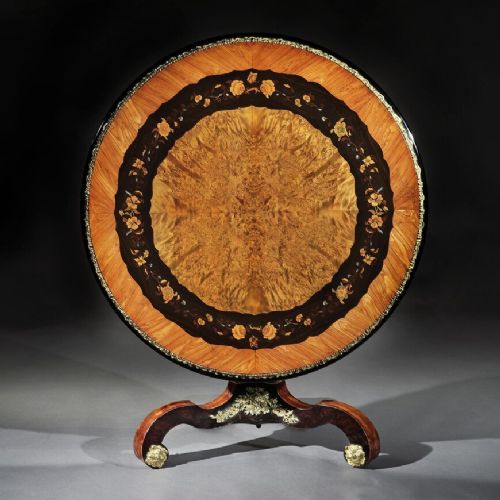
Makers constructed these tables by applying fine marquetry veneers of kingwood, rosewood, satinwood, and walnut over a stable structural carcassing timber. These patterned wood veneers created elaborate floral motifs across the top and sides of each piece.
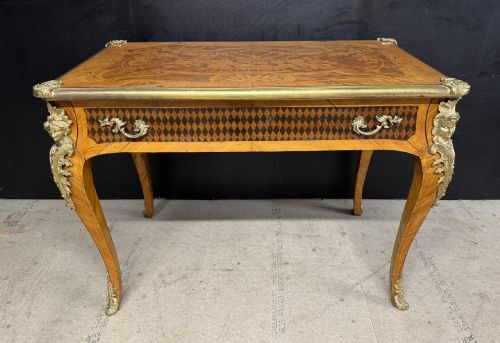
Cast ormolu and gilt bronze mounts were meticulously applied to corners, edges, and legs to accentuate the curved contours derived from French rococo revival styles. Brass details frequently reinforced structural extremities while enhancing the visual richness of the polished timber surfaces.
Kingwood Floral Inlaid Table Retail Price Guide 2026
Typical asking prices for kingwood floral inlaid table among the pieces listed under this phrase on Sellingantiques today, from the lower quarter to the upper quarter. They describe what is for sale here now, not the wider market.
Listings span the nineteenth century through to the 1930s, uniting Victorian cabinet-making with later French revival movements.
What varies in quality
The standard of marquetry work determines much of the distinction between ordinary pieces and those of finer execution, visible in the precision of the floral cutting and the subtle shading achieved across different woods. Selection of the kingwood veneer itself, coupled with the depth of the subsequent polish, dictates the liveliness of the grain.
The refinement and weight of the ormolu or gilt bronze mounts separate standard workshop production from exhibition pieces. Heavier, crisply chased bronze mounts indicate superior craftsmanship compared to simpler cast brass alternatives.
Edward Holmes Baldock·Henry Dasson
The Kingwood Floral Inlaid Table Glossary
- Kingwood
- A dense, beautifully figured timber native to Brazil, prized for its rich brown colour and contrasting dark streaks. It formed the primary veneering choice for high-status French revival furniture.
- Marquetry
- The art of applying decorative pieces of veneer to a structure to form floral and geometric patterns. Different coloured timbers are cut and fitted together meticulously.
- Ormolu
- Gilt bronze ornamentation applied to the mounts and feet of furniture. The technique involves creating a finely chased bronze object coated in a layer of gold amalgam.
- Etagere
- A set of open shelves or a tiered side table used for displaying decorative objects. These multi-tiered pieces often feature delicate marquetry inlay across each surface.
- Bureau Plat
- A formal writing table fitted with drawers and a flat top usually inset with leather. These desks typically display pronounced cabriole legs and elaborate bronze mounts.
Kingwood Floral Inlaid Table: Frequently Asked Questions
Where should I place a kingwood floral inlaid table?
These tables suit drawing rooms, reception spaces, or bedrooms where their decorative marquetry can be fully appreciated. Their compact scale as bedside or occasional tables allows them to sit comfortably beside seating or against perimeter walls.
Because prolonged direct sunlight can fade exotic timber veneers and delicate floral inlays, positioning them away from south-facing windows helps preserve the natural colour of the kingwood.
How do I care for the polished surface?
Routine maintenance requires only a soft, dry cloth to remove dust from the top and intricate ormolu mounts. Avoid standard liquid polishes or silicone sprays, which can build up a film over the traditional finish.
Maintaining a stable room temperature prevents the underlying timber from expanding or contracting, which protects the fragile marquetry veneers from lifting over time.
How do I distinguish nineteenth-century pieces from later revivals?
Nineteenth-century examples often exhibit hand-cut marquetry details, heavier patination in the timber grain, and individually chased bronze or ormolu mounts. Structural elements inside drawers frequently show period-appropriate construction methods.
Twentieth-century revival pieces, such as those from the 1920s and 1930s, tend to display uniform mechanical precision in their veneer work and slightly lighter structural timbers.
What is the difference between an occasional table and a centre table?
Occasional tables are typically smaller, lighter pieces designed to be moved around a room as needed, often serving beside a chair or in a corner. Centre tables are substantial, freestanding pieces intended to occupy a prominent position in the middle of a room, finished on all sides.
While both showcase floral marquetry and kingwood veneers, centre tables usually command greater visual weight and feature more elaborate ormolu mounts.