

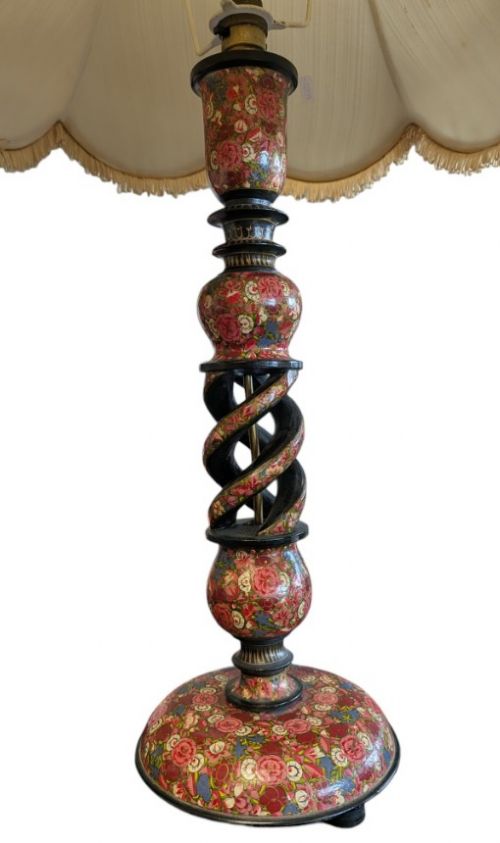


Kashmiri Lacquered Lighting
These kashmiri lacquered lighting pieces bring vibrant hand-painted colour and intricate folk patterns directly to your interiors.
Kashmiri Lacquered Lighting
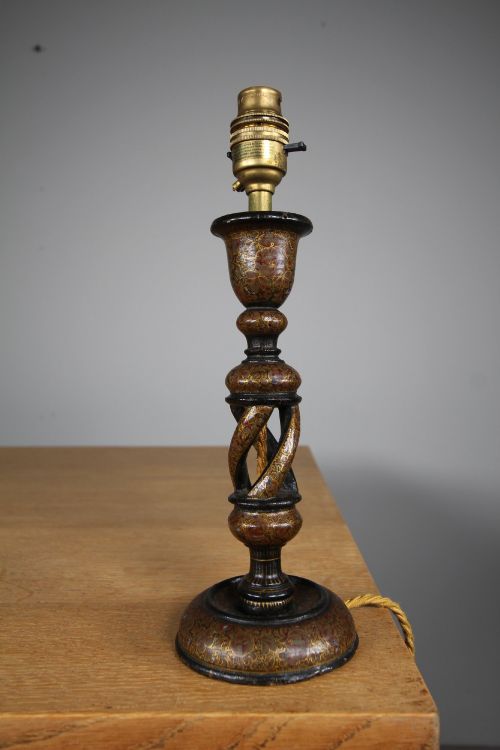
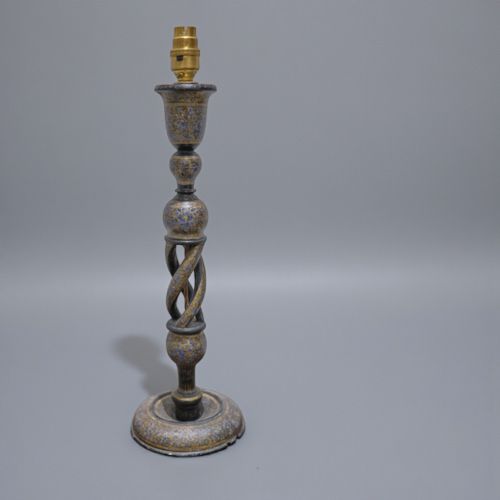
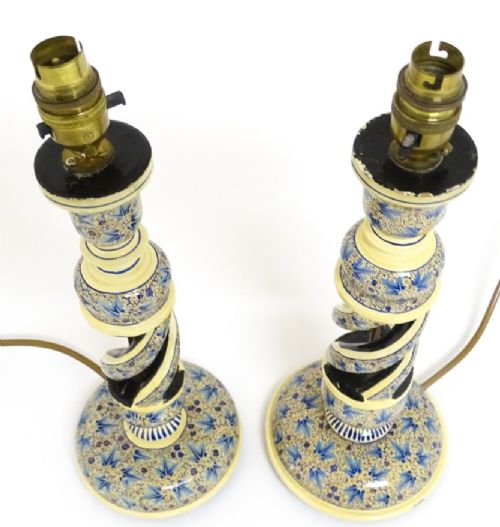
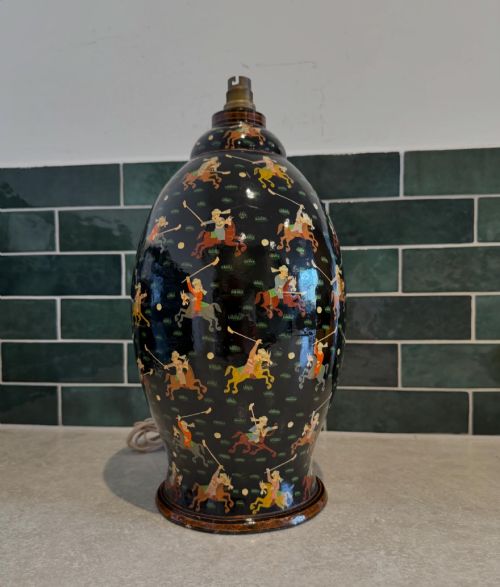
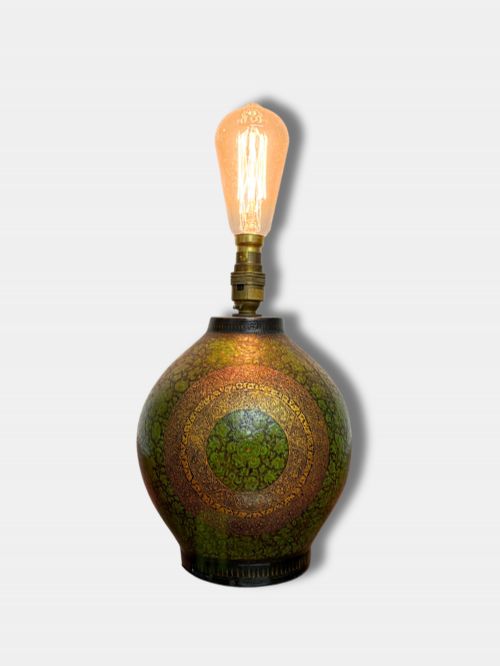
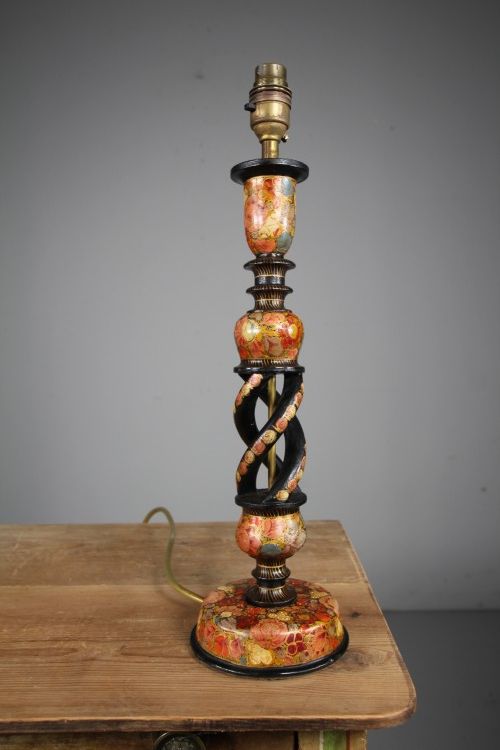
When you search for kashmiri lacquered lighting, you are looking at decorative table lamps originating from the Kashmir region. These pieces date from the nineteenth century through to the early decades of the twentieth century.
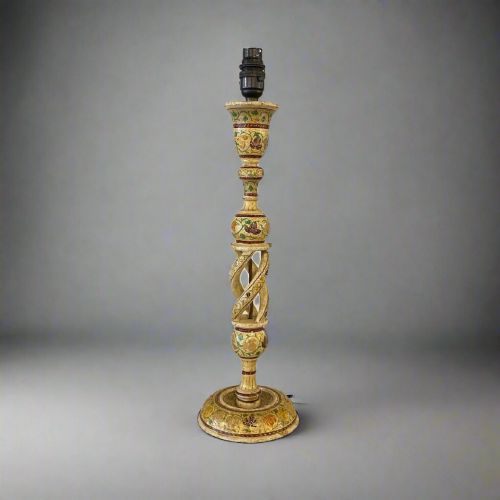
The most common form you will meet on this page is the traditional table lamp. These range from standard bedside sizes up to tall and enormous statement pieces.
The aesthetic bridges traditional Kashmiri craftsmanship and the Anglo-Indian taste. Many examples showcase rich gilt gold, green, or cream hand-painted surfaces.
How they were made
Makers shaped the bodies using wood, papier-mache, and carved wood. These lightweight yet sturdy cores provided an ideal smooth canvas for detailed artistic application.
Craftsmen applied lacquer over hand-painted designs, sealing the intricate pigments and gold leaf beneath a protective glossy finish. Brass components often served as structural fittings and lamp holders.
Kashmiri Lacquered Lighting Retail Price Guide 2026
Typical asking prices for kashmiri lacquered lighting among the pieces listed under this phrase on Sellingantiques today, from the lower quarter to the upper quarter. They describe what is for sale here now, not the wider market.
What varies in quality
The finesse of the hand-painted detailing sets the superior examples apart from simpler workshop output. Look for the precision of the gilt gold work and the complexity of the floral or folk motifs.
The preservation of the original lacquered surface dictates the desirability of the piece. Intact finishes with minimal rubbing preserve the vibrant palette intended by the artisan.
The Kashmiri Lacquered Lighting Glossary
- Papier-mache
- A composite material made of paper pulp or layers of paper bound with glue, moulded into shape and painted. This served as a primary lightweight body for many lamps.
- Anglo-Indian
- A design style reflecting the aesthetic fusion of British tastes with traditional Indian craftsmanship during the colonial period. These objects often catered to expatriate homes.
- Kashmiri Folk Art
- A regional decorative tradition defined by bright colour palettes and dense floral or geometric motifs. Artisans applied these patterns freely across domestic objects.
- Lacquer
- A clear or coloured varnish applied in multiple coats to wooden or papier-mache surfaces. It dried to a hard, durable finish that protected the delicate paint underneath.
Kashmiri Lacquered Lighting: Frequently Asked Questions
What are kashmiri lacquered lighting pieces?
These are hand-painted table lamps originating from Kashmir, typically dating from the nineteenth and early twentieth centuries.
They combine traditional regional motifs with forms suited to Western domestic interiors.
How were these lamps used historically?
They served as decorative illumination within homes influenced by Anglo-Indian interior design trends.
Craftsmen designed them primarily as table lamps to provide functional lighting while displaying intricate hand-painted artistry.
How do I live with them?
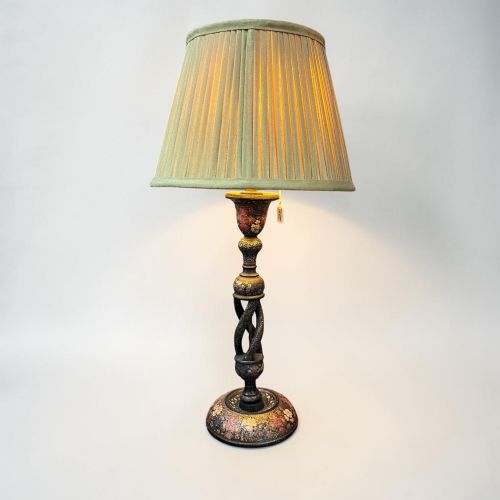
Place them on side tables or desks where their painted surfaces can catch ambient light.
Pair them with simple fabric shades to let the colourful bases remain the visual focus of the room.
How do I identify the periods?
Nineteenth-century examples often feature cream backgrounds and older patination, while pieces from the 1920s and 1930s frequently show bolder gilt gold and green finishes.
Construction materials like carved wood or papier-mache also help indicate the manufacturing era.