

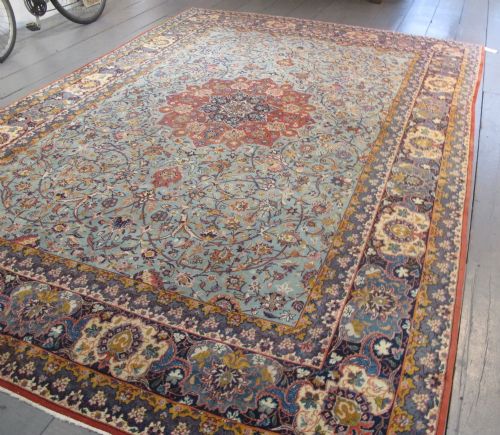
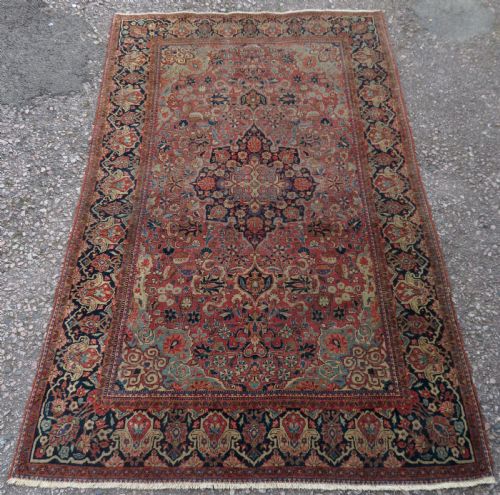

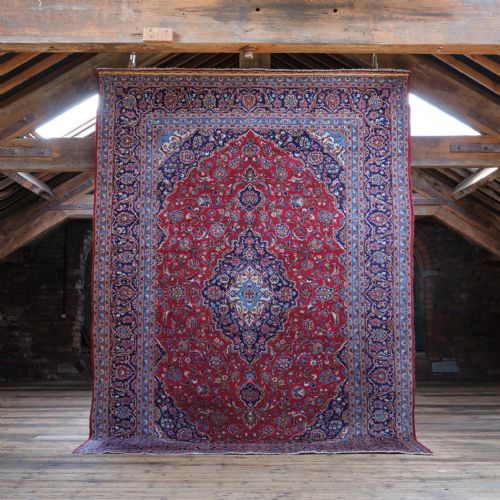


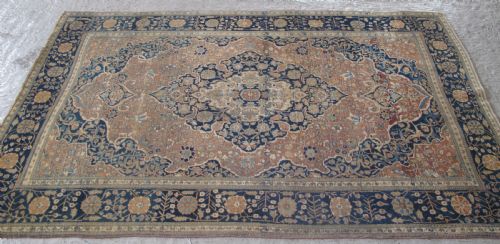


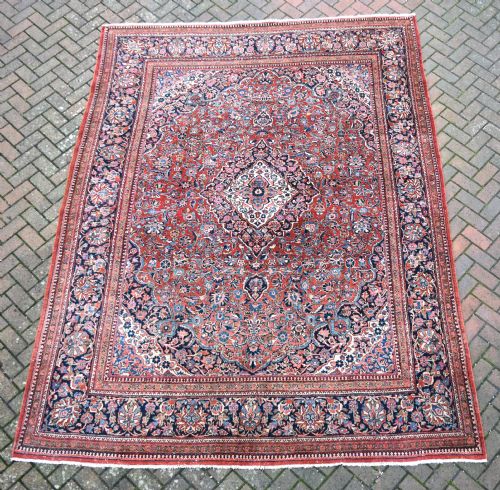

Kashan Medallion Rug
These classic kashan medallion rug examples bring centuries of Persian weaving tradition into a room through intricate central motifs and fine knotting.
Kashan Medallion Rug
A kashan medallion rug forms a central category of Persian weaving, defined by a prominent central motif surrounded by intricate floral fields and detailed borders. These floor coverings range from intimate area formats to palace-size carpets suited to grand reception spaces.
Most pieces encountered on this page date from the late nineteenth century through the mid twentieth century, originating from central Persia or associated regional weaving traditions such as Indo-Persian workshops.
How they were made
Weavers constructed these textiles using hand-knotted techniques on cotton foundations, securing dense wool, part silk, or fine silk pile. The choice of materials dictates the weight and drape of the textile.
Makers utilised soft kork wool and fine silk yarns to achieve high knot densities, allowing for precise rendering of classical Persian floral designs and rose pink colour palettes.
Kashan Medallion Rug Retail Price Guide 2026
Typical asking prices for kashan medallion rug among the pieces listed under this phrase on Sellingantiques today, from the lower quarter to the upper quarter. They describe what is for sale here now, not the wider market.
The listings on this page span several decades, including pieces produced in the nineteenth, twentieth, and early nineteenth centuries using wool, silk, and cotton.
What varies in quality
The fineness of the knotting and the quality of the wool determine the definition of the central medallion and the crispness of the surrounding floral motifs. Softer pile fibres and denser foundation weaves indicate higher tier production.
The complexity of the pictorial elements and the depth of the dye palette distinguish standard workshop output from exceptional examples attributed to master weavers.
Mohtasham Kashan·Haroon Kashan
The Kashan Medallion Rug Glossary
- Medallion
- A central ornamental motif positioned in the middle of the rug field, typically symmetrical and forming the primary focal point of the design. This feature organises the surrounding floral geometry.
- Kork wool
- High quality wool gathered from the neck and shoulders of mountain sheep, prized for its soft texture and natural lanolin content. This material allows for exceptionally fine knotting in antique Persian carpets.
- Hand knotted
- A construction method where individual yarn loops are tied by hand onto warp threads and secured with horizontal rows of weft. This traditional technique creates a durable and flexible textile.
- Pictorial rug
- A woven textile incorporating figurative scenes, animals, or human portraits into the traditional field design rather than relying solely on floral or geometric patterns.
Kashan Medallion Rug: Frequently Asked Questions
Where were these rugs made?
These textiles originate primarily from the city of Kashan in central Persia, which has served as a historic centre for fine weaving since the Safavid dynasty. Additional pieces come from regional workshops influenced by this tradition.
Production methods spread across surrounding districts, creating related styles that share the characteristic central medallion layout and floral field motifs.
How do I care for an antique rug?
Protect the textile by placing it in low traffic areas away from direct sunlight, which can fade natural dyes over time. Regular gentle vacuuming without a beater bar removes trapped dust from the pile.
Professional specialist cleaning is recommended every few years to maintain the integrity of the wool and silk fibres without damaging the cotton foundation.
What is a kork wool rug?
A kork wool rug uses exceptionally soft fleece harvested from the neck of high altitude sheep. This fine material takes dye evenly and permits a higher density of knots per square inch.
Carpets utilising this fibre often exhibit a velvety texture and a distinctive lustrous appearance that sets them apart from standard wool examples.
How do I identify the age?
Age is determined by examining the weave structure, the palette of the natural dyes, and the wear patterns on the wool or silk pile. Nineteenth century examples often display softer vegetable dye colours and finer hand knotting.
Twentieth century pieces tend to feature brighter synthetic or transitional dye tones alongside sturdier cotton foundations designed for daily use.