



Jewelled Mechanical Wristwatch
A jewelled mechanical wristwatch brings traditional horology and hand-wound movement to the wrist, offering lasting mechanical interest and historical style.
Jewelled Mechanical Wristwatch
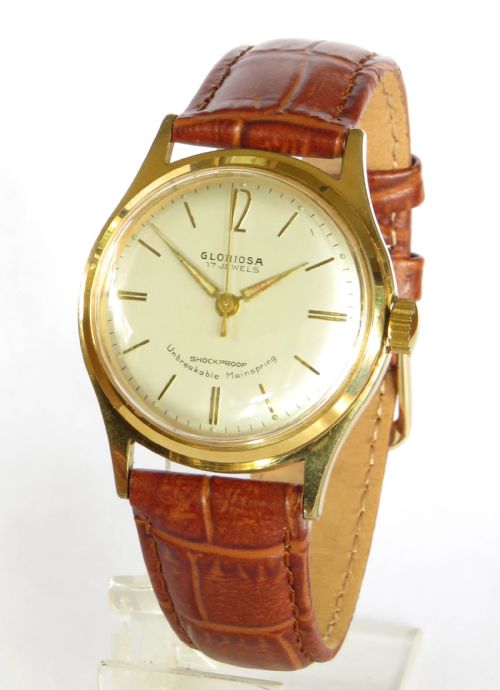
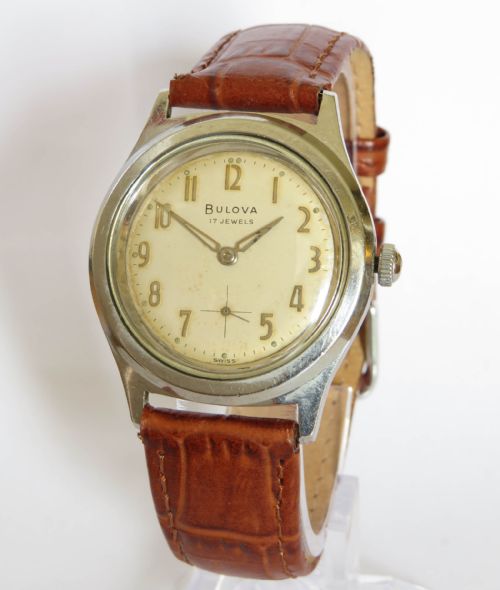
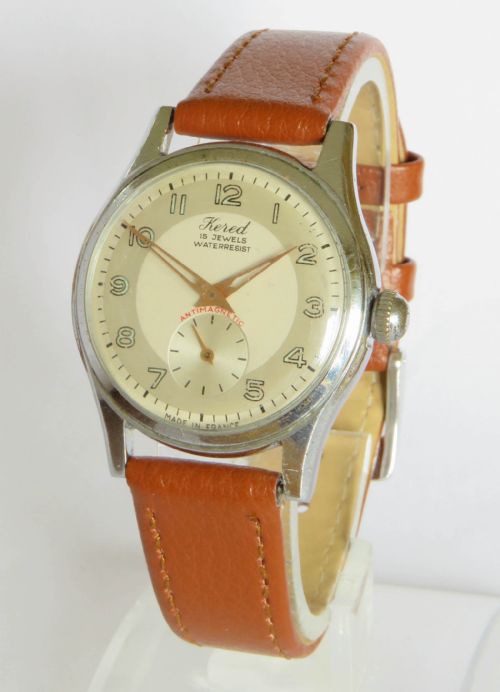
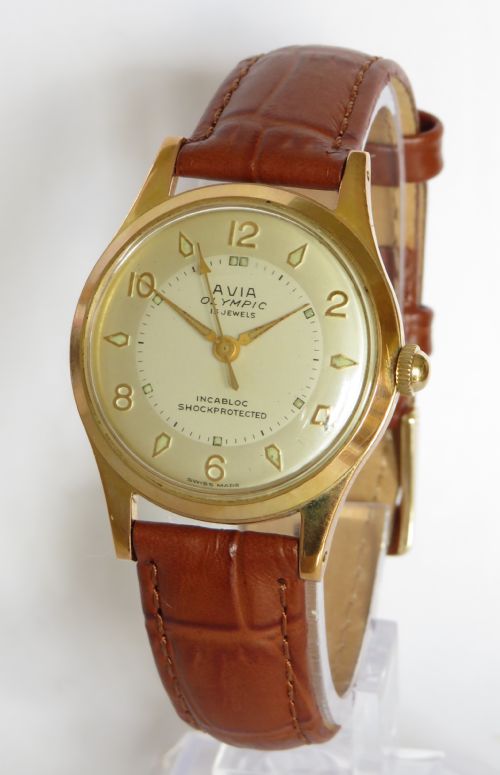
A jewelled mechanical wristwatch is primarily a men's or ladies' timepiece operated by manual or automatic internal movements rather than quartz batteries. When searching for a jewelled mechanical wristwatch, buyers encounter wristwatches and watches spanning the 19th Century, 1930s, 1940s, 1950s, and 1960s. Mid-Century Modern, Mid-Century British, Art Deco, and general Mid-Century styles dominate the pieces available.
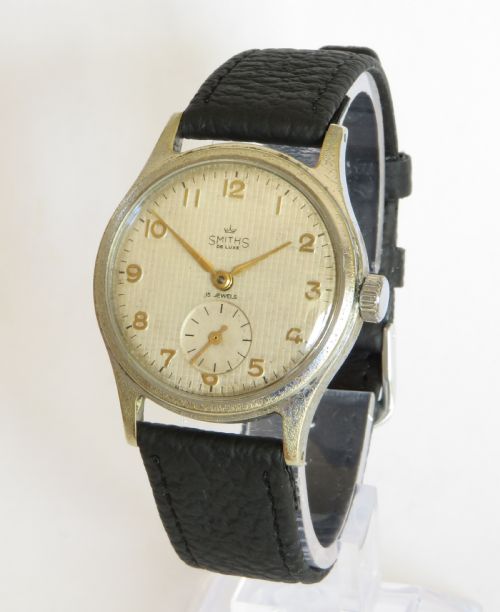
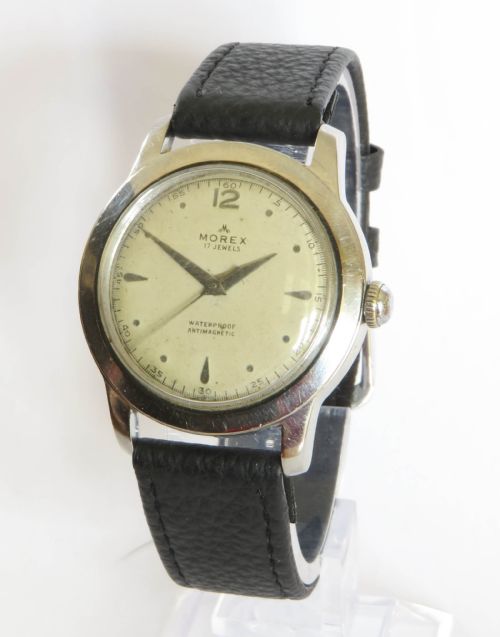
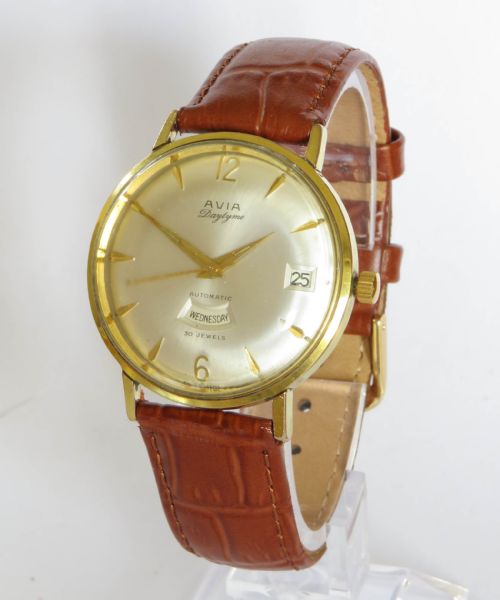
The versions most commonly met on this page are gent's wrist watches originating from the 1950s and 1960s, often produced by Swiss or British makers. These range from simple three-hand dials to more complex chronographs, moonphase displays, and date functions. Forms include round, square, and jumbo configurations designed for everyday wear or dress use.
Materials and construction
Cases utilise metals such as stainless steel, chrome, gold plate, 9ct gold, 18ct white gold, and general metal alloys to house the delicate internal gears. Dials are protected by glass or acrylic crystals, providing a clear view of the hands and hour markers beneath.
Movements incorporate functional jewels to reduce friction on pivot points within the gear train, paired with external straps formed from leather. Structural details like diamond accents and specialised dials - such as two-tone, black 24-hour, or Arabic numeral layouts - reflect the stylistic priorities of each manufacturing period.
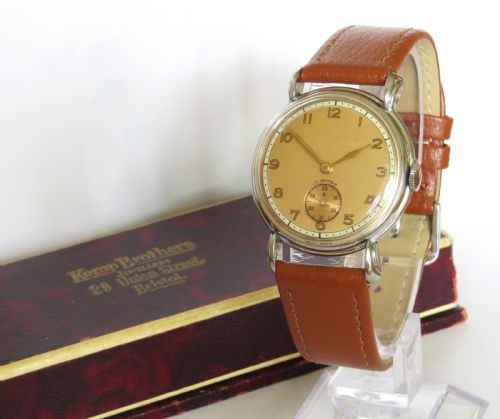
Several watches come with their original boxes, proving that past owners were neat enough to save cardboard packaging for decades.
Separating the ordinary from the exceptional
Quality in a jewelled mechanical wristwatch rests upon the precision and origin of the movement, separating mass-produced utility items from finer horological examples. Watches featuring specialised complications like chronographs, triple-date calendars, or moonphase displays demonstrate higher manufacturing ambition than standard time-only pieces.
The choice of casing materials also defines the tier of a watch, moving from chrome and gold plate up to solid 9ct or 18ct white gold. Furthermore, the inclusion of precious stones such as diamonds and the preservation of original boxes elevate a piece beyond standard utilitarian survival.
Morex·Montilier·Avia·Seiko·Gloriosa·Bulova·Kered·Rotary·Ensign·Lanco·Smiths·Enicar·Belair·Invicta·Mappin·Longines·Vertex·Miramar·Beltane
The Jewelled Mechanical Wristwatch Glossary
- Jewel
- A synthetic ruby or sapphire bearing used in mechanical watch movements to reduce friction on moving parts. These small stones act as bearings for gear pivots.
- Chronograph
- A watch equipped with a stopwatch function alongside the standard time-displaying hands. Independent sub-dials track elapsed minutes and seconds.
- Moonphase
- A complication on the dial that graphically displays the current lunar phase. It tracks the cycle from new moon to full moon and back.
- Manual wind
- A mechanical watch movement that requires the wearer to manually turn the crown to tension the mainspring. It lacks an automatic rotor.
- Acrylic
- A lightweight, shatter-resistant plastic material used for watch crystals during the mid-century period. It can be easily polished to remove surface scuffs.
Jewelled Mechanical Wristwatch: Frequently Asked Questions
What is a jewelled mechanical wristwatch?
A jewelled mechanical wristwatch is a timepiece powered by springs and gears rather than a battery, utilising small synthetic gems as pivot bearings to reduce friction.
These watches rely on manual winding or automatic wrist movement to function, embodying traditional horological craftsmanship from decades past.
How do I wind a manual watch?
To wind a manual watch, you gently rotate the crown clockwise between your thumb and forefinger until you feel resistance.
Care should be taken not to force the crown past the point of resistance, as this can over tension or snap the internal mainspring.
Are these watches waterproof?
Vintage mechanical watches generally lack modern waterproof seals and gaskets. Even models labeled as water-resistant or waterproof originally should be kept away from water today.
Accidental splashes might be tolerated, but swimming or showering with a vintage timepiece risks moisture entering the movement and causing rust.
What do the jewel counts mean?
Jewel counts indicate how many synthetic rubies are used inside the movement to bear the friction of moving axles and gears. Higher counts generally signify more complex or better-finished movements.
Standard manual wind watches often feature between fifteen and seventeen jewels, while automatic or complicated movements may house more.