




Vintage Diamond Wrist Watch
A vintage diamond wrist watch brings together fine jewellery and timekeeping, offering a sparkling accessory designed for evening wear and special occasions.
Vintage Diamond Wrist Watch
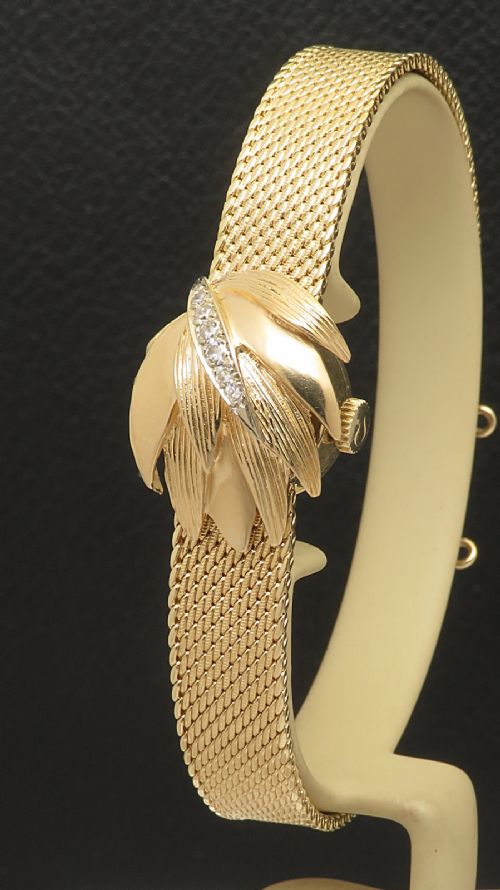
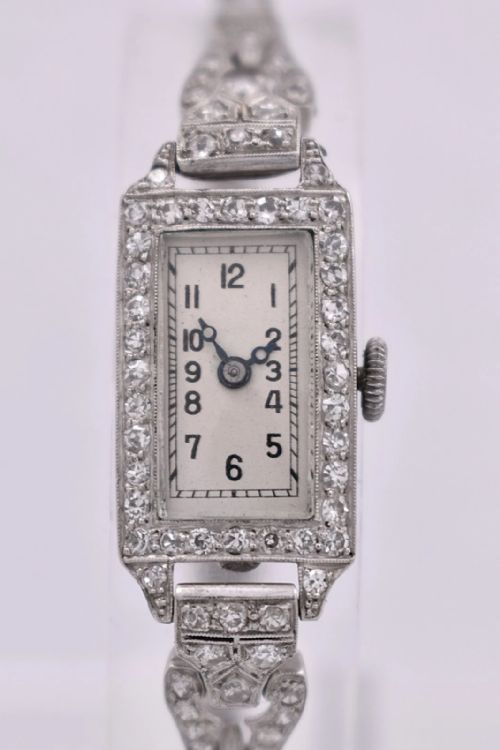
A vintage diamond wrist watch is primarily found in the form of a cocktail watch, designed to be worn as both a timepiece and a piece of fine jewellery. These pieces date across several decades, spanning the 1930s Art Deco period through to the 1940s, 1950s, 1960s, and later twentieth-century examples.
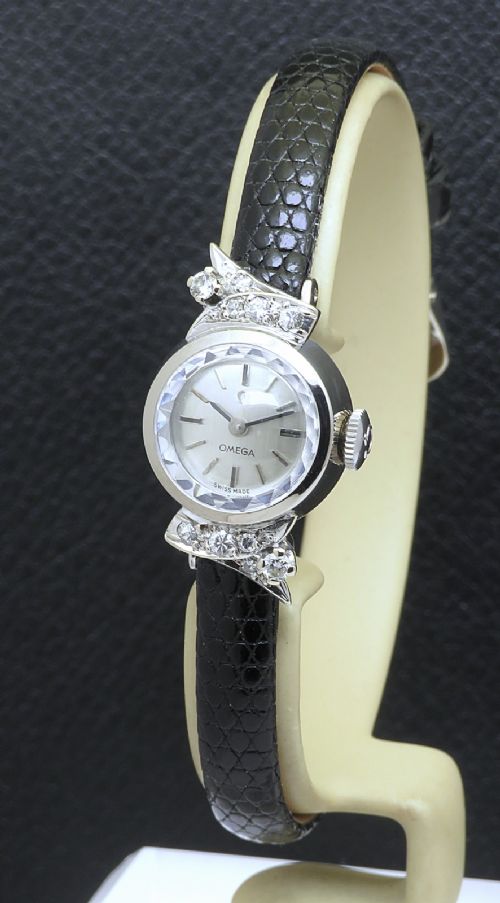
The most common style met on this page is the cocktail watch, frequently styled with geometric Art Deco lines or mid-century modern aesthetics. They typically present as delicate ladies wristwatches powered by manual wind or swiss jewelled lever movements, housed in precious metal cases.
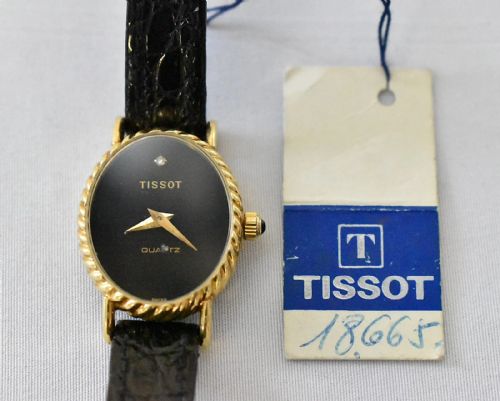
Makers represented include well-known watch houses such as Omega, Tissot, Movado, Longines, Vertex, and Asprey. These watches combine functional horology with substantial diamond settings, often paired with leather straps or integrated metal bracelets.
What varies in quality
The overall weight and stone count of the diamonds create a clear distinction across pieces, ranging from modest accent stones to substantial settings totalling several carats. The choice of metal also influences the tier of the piece, with platinum and high-carat white gold occupying the higher end alongside established retail names.
The prestige of the maker attached to the watch alters its standing, with recognised firms like Asprey, Omega, and Longines commanding attention for their movement engineering and case finishing. Additionally, the complexity of the cocktail watch case design and the integration of the bracelet contribute to the distinction between standard production and higher-end examples.
Listings span multiple decades from the 1930s to later than 1960, utilising platinum, 18ct white gold, 14ct gold, leather, and glass.
Omega·Tissot·Asprey·Movado·Vertex·Longines
The Vintage Diamond Wrist Watch Glossary
- Cocktail watch
- A small, decorative ladies wristwatch intended primarily for formal evening wear rather than daytime timekeeping. These pieces heavily feature diamonds and precious metals.
- Swiss jewelled lever
- A precision escapement mechanism utilising synthetic rubies to reduce friction in the gear train. This is a hallmark of quality mechanical watchmaking.
- Art Deco
- A design style prominent in the 1930s characterised by sleek geometric shapes, symmetrical patterns, and clean lines. It heavily influences the appearance of many platinum diamond watches.
- Manual wind
- A mechanical watch movement that requires the owner to manually turn the crown to tension the mainspring. Most vintage cocktail watches rely on this traditional method.
- Platinum
- A dense, durable, and naturally white precious metal frequently used in jewellery to securely hold diamonds. Its strength allows for delicate claw and bezel settings.
Vintage Diamond Wrist Watch: Frequently Asked Questions
How do I wear a cocktail watch?
A vintage diamond wrist watch is traditionally worn as evening jewellery rather than an everyday timepiece. Its delicate proportions pair naturally with formal attire.
Because many examples feature manual wind movements, owners typically wind them gently before an evening out rather than keeping them running constantly.
What is the difference between Art Deco and mid-century watches?
Art Deco watches from the 1930s feature sharp geometric lines, stepped cases, and precise symmetrical diamond layouts. They emphasise architectural forms.
Mid-century pieces from the 1950s and 1960s often lean towards softer organic shapes or minimalist dials while maintaining heavy gemstone embellishment.
Are these watches mechanical or quartz?
The vast majority of vintage diamond wrist watches on this page rely on mechanical manual wind or swiss jewelled lever movements. These require hand-winding via the crown.
Occasional later pieces incorporate quartz technology, providing battery-powered timekeeping within the same precious metal and diamond case framework.
Which metals are used in these watch cases?
Cases are constructed from precious metals including platinum, 18ct white gold, and 14ct gold. Platinum and white gold are particularly common because their neutral tone enhances the sparkle of the diamonds.
Some pieces also incorporate contrasting materials such as black onyx alongside the primary gold or platinum structure.