



Japanese Wall Cabinet
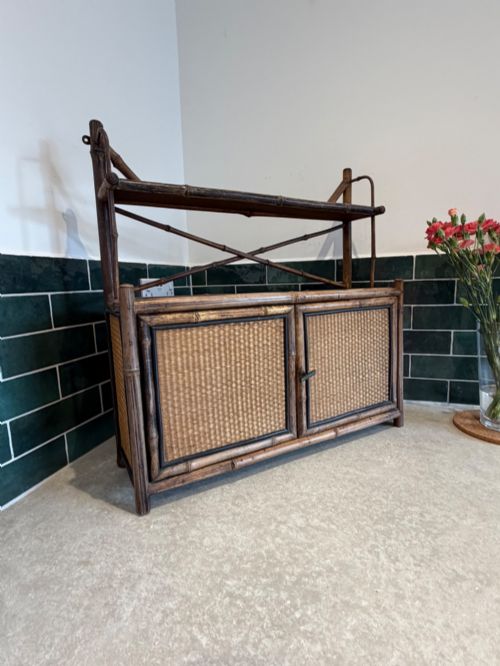
A Japanese wall cabinet brings the clean lines of the Aesthetic Movement and Meiji design straight to your room.
Japanese Wall Cabinet
When you search for a japanese wall cabinet, you encounter hanging display furniture shaped by the Anglo-Japanese taste of the late nineteenth century. These pieces combine walnut timber with structural forms suited for displaying small ornaments.
The primary examples seen here date from around eighteen eighty during the Victorian period. They reflect a strong crossover between British furniture design and Japanese decorative principles.
How they were made
Makers utilised solid walnut to construct the primary hanging frames and shelves. Joinery from this period relied on precise tongue and groove assembly to support the weight of suspended cabinets.
Surface finishing involved polishing the timber to a deep lustre rather than applying heavy paint. This highlighted the natural grain of the wood alongside applied decorative brackets.
Japanese Wall Cabinet Retail Price Guide 2026
Typical asking prices for japanese wall cabinet among the pieces listed under this phrase on Sellingantiques today, from the lower quarter to the upper quarter. They describe what is for sale here now, not the wider market.
Listings for this phrase focus on walnut timber and Victorian craftsmanship from eighteen eighty.
What varies in quality
Construction standards separate standard utilitarian boxes from superior cabinetwork. Better examples demonstrate tight joints, clean internal shelving, and robust hanging fixtures integrated securely into the back panels.
The refinement of the silhouette and the balance of open compartments versus enclosed display space dictate the aesthetic success of each cabinet. Finer pieces maintain proportion without appearing heavy on the wall.
The Japanese Wall Cabinet Glossary
- Aesthetic Movement
- A late nineteenth-century design current that rejected heavy Victorian ornamentation in favour of simplicity and Japanese-inspired motifs. It produced furniture focused on form and refined craftsmanship.
- Walnut
- A dense, dark timber prized for furniture making due to its rich grain patterns and durability. It served as the primary material for Anglo-Japanese hanging cabinets.
- Meiji Period
- The era in Japanese history spanning from eighteen sixty-eight to nineteen twelve, marked by extensive international trade and artistic exchange with Europe. This period heavily influenced Western decorative arts.
- Anglo-Japanese
- A stylistic crossover blending British furniture construction with Japanese artistic motifs and spatial arrangements. This aesthetic defined many domestic interiors of the eighteen eighties.
Japanese Wall Cabinet: Frequently Asked Questions
What is a japanese wall cabinet?
A japanese wall cabinet is a hanging display piece created during the late nineteenth century under the influence of the Aesthetic Movement.
These pieces use walnut construction to provide small shelves and compartments for ornament display.
How were these cabinets used?
They were hung on domestic walls to display small imported ceramics, plates, and decorative curiosities.
The open and closed sections allowed homeowners to exhibit prized possessions at eye level.
How do I date a cabinet?
Dating relies on examining the timber, construction methods, and stylistic cues associated with the eighteen eighties.
Walnut frames and specific Anglo-Japanese joinery point directly to the Victorian period.
How do I hang a wall cabinet?
Hanging requires secure fixings attached directly to the internal mounting points provided on the back of the timber frame.
Given the weight of solid walnut, proper wall anchors ensure the piece remains stable.